Patio Pavers on Concrete: Ideas and 7 Checks
Putting pavers over concrete is fine when the slab is solid, drains well, and has enough room at doors and steps. It is not a fix for bad concrete. If the slab is moving, sinking, badly cracked, or holding water, deal with that first.
So before picking the prettiest paver in the store, look down first. The old concrete is the part that decides whether this project lasts or turns into a bumpy patio you regret next spring. Concrete patio ideas are also covered in this article.
Can You Lay Patio Pavers on Concrete?
You can lay patio pavers on concrete if the slab is structurally sound, has no active movement, and water drains away from the house.
This method is often used to upgrade an old concrete patio, walkway, porch, or outdoor slab without full demolition. However, the concrete below still controls the performance of the new surface.
A patio should always slope away from the house. If water sits near the wall or flows toward the building, it can increase soil movement and may eventually contribute to slab foundation problems. Take a look at the table below to assess if pavers on concrete is a good idea. Also some nice concrete patio ideas are given below.
| Pavers over concrete may work when | Do not cover the slab when |
|---|---|
| Concrete is stable | Slab is sinking or lifting |
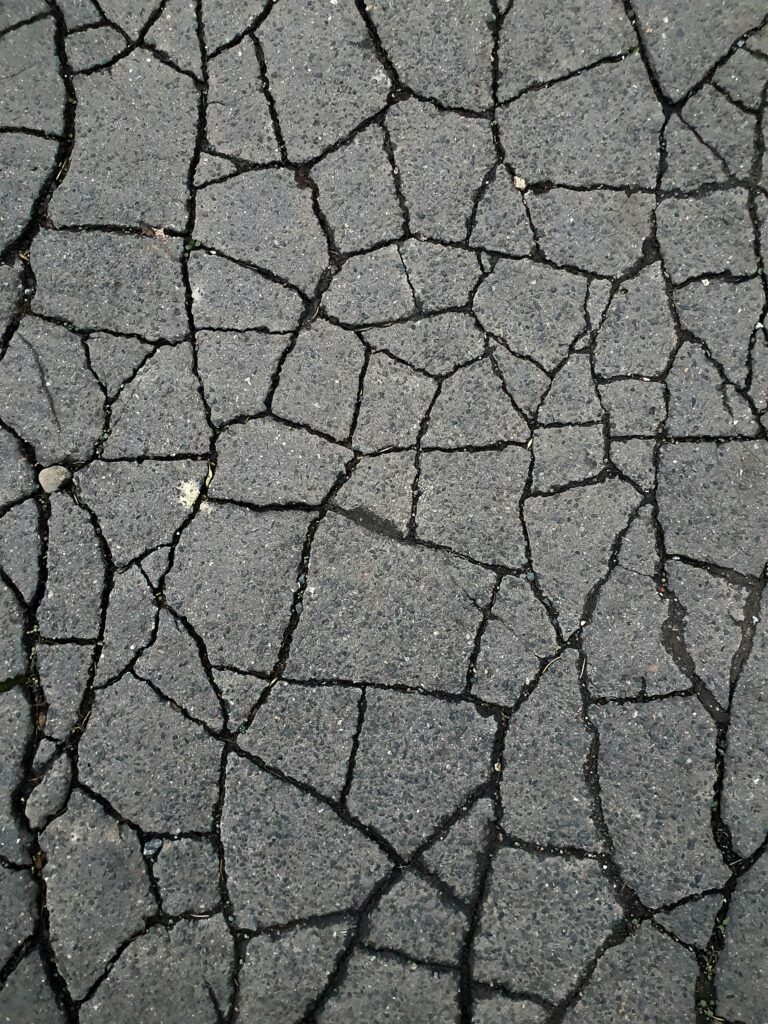
| Cracks are minor and old | Cracks are widening or uneven |
| Water drains away | Water ponds on the slab |
| Height clearance is available | Doors, vents, or steps become too high |
| Surface is mostly level | Large dips or broken areas exist |
Pavers are a surface upgrade, not a structural repair. If the concrete is moving, fix the cause first..
Concrete patio ideas
If the slab is sound, pavers can improve the patio without removing the concrete. Choose the style from concrete patio ideas section after checking height, drainage, edges, and door clearances.
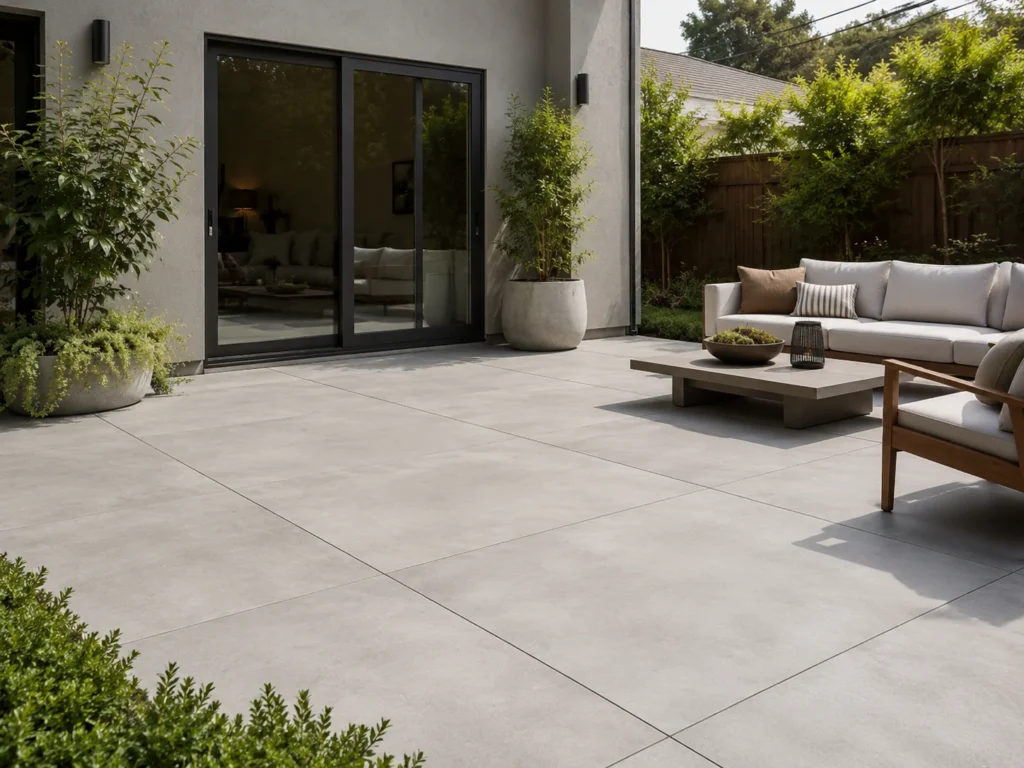
1. Large-format pavers
Good for a clean, modern patio with fewer joints.
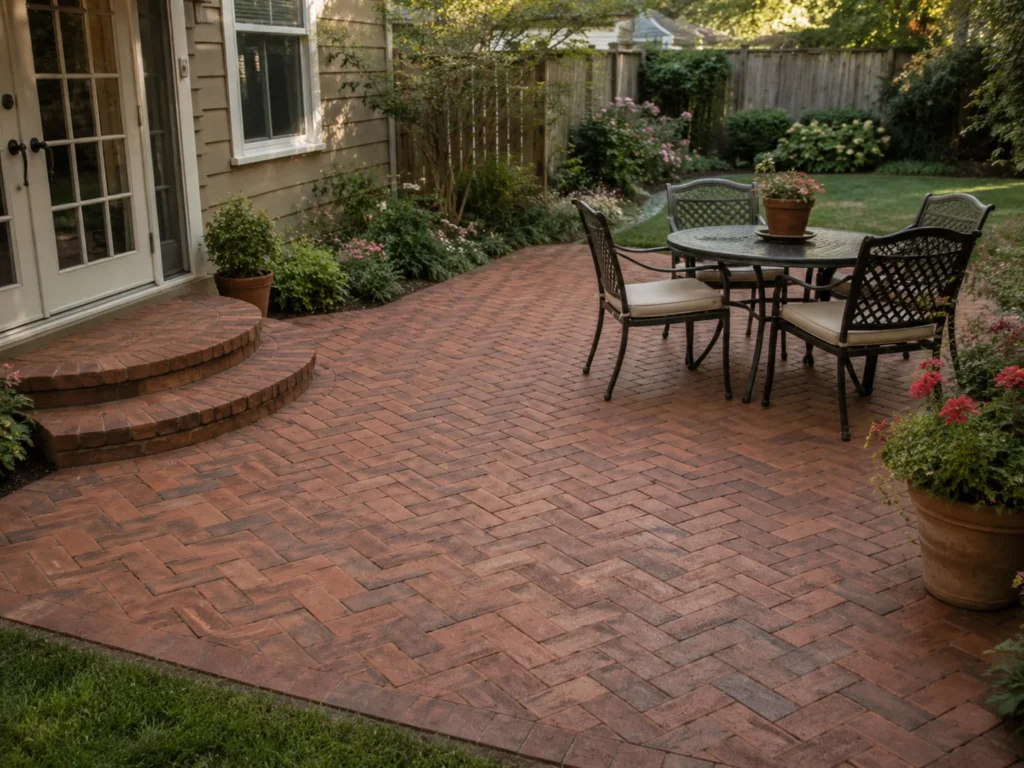
2. Brick-style pavers
Good for garden patios, older homes, and outdoor dining areas.
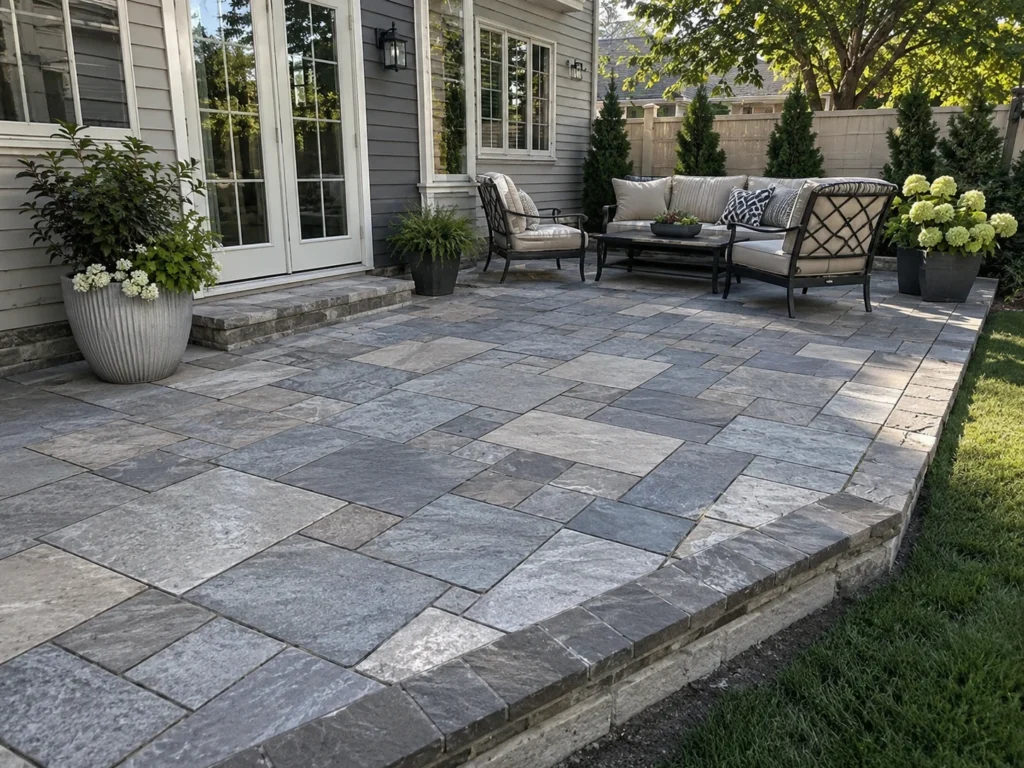
3. Stone-look pavers
Good where the patio meets lawn, planting, or garden edges.
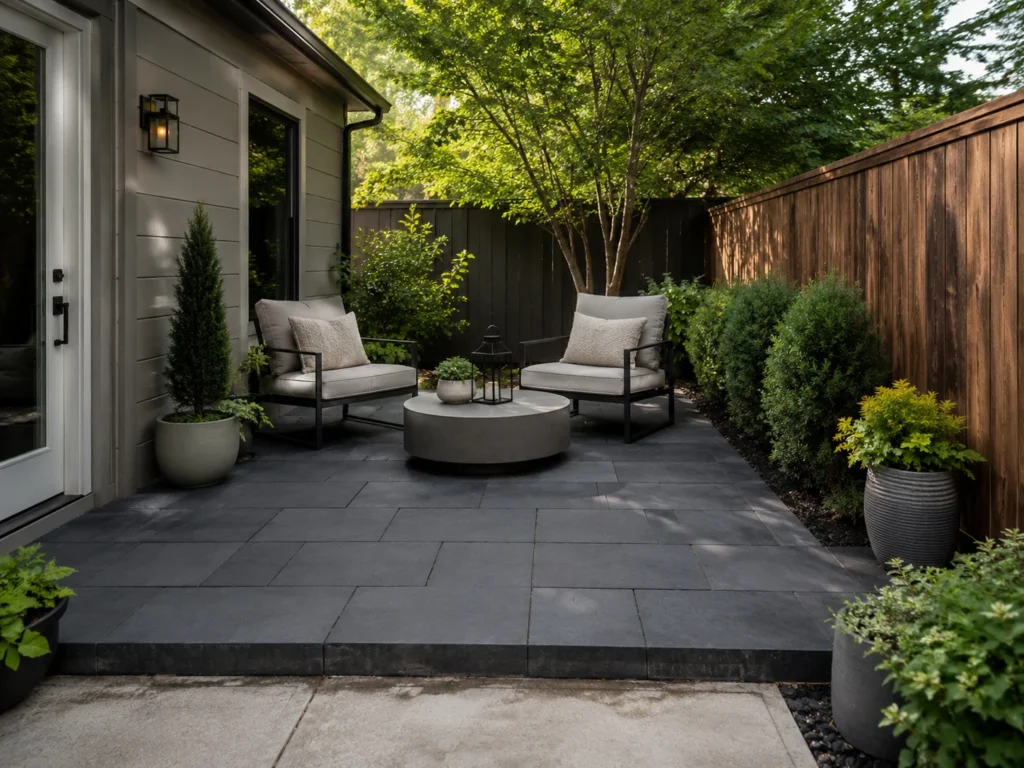
4. Dark pavers
Good for small courtyards and side yards, but warmer in direct sun.
When Patio Pavers On Concrete Make Sense
Installing pavers over concrete can be a good option when the slab has mainly cosmetic problems. The concrete may be stained, weathered, plain, or visually outdated, but still structurally stable.
This approach can work for:
- old concrete patios
- walkways
- porches
- small backyard slabs
- decorative outdoor upgrades.
The main benefit is that you improve the surface without removing all the existing concrete. It may also reduce mess, labour, and disposal cost compared with full slab removal.
For patio upgrades with raised beds or level changes, a corten steel retaining wall can create a clean modern edge, but drainage behind the wall still matters
When You Should Not Install Pavers Over Concrete
Do not install pavers over concrete if the slab has active structural or drainage problems.
Avoid covering the slab if you see:
- wide cracks
- uneven cracks with height difference
- sunken areas
- heaving concrete
- water ponding after rain
- soft or eroded soil near the slab
- broken slab edges
- movement near the house foundation.
These problems can continue below the new paver surface. The pavers may look good at first, but the same movement can later create uneven joints, rocking pavers, trapped moisture, staining, or drainage failure.
If the concrete is cracked because of settlement or soil movement, see our foundation settlement repair guide before covering the slab.
7 Checks Before Installing Patio Pavers on Concrete
Before installing patio pavers on concrete, perform seven important checks listed below.
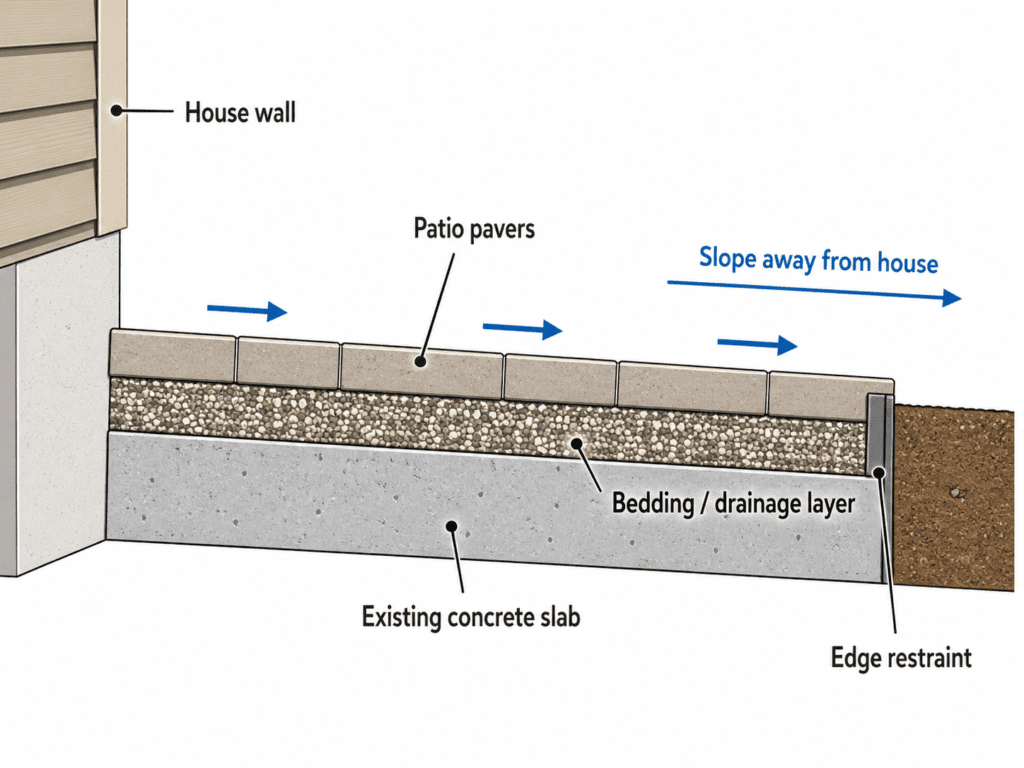
1. Slab stability
Walk over the concrete. It should feel firm, not hollow, loose, sunken, or lifted.
2. Cracks
Small old cracks may be fine. Wide cracks, growing cracks, or uneven cracks need attention first.
3. Drainage
Water should run away from the house. If it sits on the slab after rain, fix the drainage before adding pavers.
4. Finished height
Check doors, steps, vents, drains, and garage thresholds. Pavers and bedding layers will raise the patio.
5. Edge restraint
Open edges need restraint. Without it, pavers can spread and loosen over time. The CMHA explains why edge restraints for interlocking concrete pavements are essential for keeping pavers locked in place.
6. Surface condition
The slab should be clean and sound. Loose concrete, algae, old coatings, or weak areas can affect the installation.
7. Installation method
Choose the method after checking the slab. Sand-set, mortar-set, adhesive-set, and pedestal systems do not suit every patio.
Best Methods for Installing Patio Pavers Over Concrete
There are three common methods. For technical guidance on paver overlay systems over existing concrete or asphalt, see the CMHA paver overlay guide.
1. Sand-Set Pavers Over Concrete
A thin bedding layer is placed over the concrete and the pavers are laid on top. This can work on stable outdoor slabs, but drainage must be handled carefully because water can become trapped in the bedding layer.
Best for: stable patios with good drainage and enough height clearance.
2. Mortar or Adhesive-Set Pavers
The pavers are bonded to the concrete using mortar or a suitable exterior adhesive system. This creates a firm surface, but it depends on proper surface preparation, correct materials, movement joints, and drainage detailing.
Best for: thin paving units, porches, steps, and areas where loose bedding is not suitable.
3. Raised Paver or Pedestal Systems
Pedestal systems lift the paver surface above the slab and allow water to drain underneath. These are more common on roof terraces, balconies, and some modern patio designs.
Best for: areas where drainage below the paver surface is important and extra height is allowed.
Patio Pavers Over Concrete vs Removing the Concrete
| Option | Best when | Main advantage | Main risk |
|---|---|---|---|
| Pavers over concrete | Slab is stable and drains well | Faster, less demolition | Existing slab problems remain |
| Remove concrete and rebuild | Slab is damaged or poorly sloped | Allows full correction | Higher cost and more work |
| Repair concrete only | Appearance is less important | Lower cost | May not improve design |
| Overlay or coating | Slab is sound and cosmetic | Thin surface finish | May be less durable |
If the old slab needs to be removed and replaced, an exposed aggregate concrete patio is another option. It gives the patio a finished stone texture without installing pavers over the new slab.
If you decide to remove the old slab and rebuild the patio over soil, estimate the gravel base and bedding sand first with our paver base calculator.
Common Mistakes to Avoid
The biggest mistake is covering a bad slab because it looks cheaper at first. If the concrete is still moving, the pavers may move too.
Other common mistakes include:
- ignoring drainage
- raising the patio too close to door thresholds
- installing pavers over loose or broken concrete
- skipping edge restraints
- using indoor materials outdoors
- not cleaning or preparing the slab
- choosing appearance without checking the base condition.
A patio surface can be replaced easily. A drainage or settlement problem below it is much more expensive to fix later.
Cost Factors
Installing patio pavers on concrete may cost less than removing and rebuilding the whole patio, but it is not always the cheapest long-term option.
The final cost depends on slab condition, surface preparation, paver type, bedding or bonding method, drainage requirements, edge restraints, labor cost, access, and whether concrete repair is needed first. If demolition, cutting, lifting, or concrete repair is involved, follow OSHA concrete and masonry construction safety requirements or your local site safety rules.
When asking for quotes, ask:
- Will you check the existing slope?
- How will water escape?
- Will the edges be restrained?
- What happens at door thresholds?
- Are cracks being repaired or simply covered?
- What bedding or bonding system will be used?
If budget is a constraint, a pea gravel patio is a common alternative. Use our pea gravel calculator to estimate material cost before comparing it to pavers
Final Engineering Advice
Patio pavers on concrete can be a smart upgrade when the existing slab is stable, dry, and correctly sloped. In that case, the concrete works as a solid base and the pavers improve the appearance and usability of the patio.
But if the slab is cracked because of settlement, poor drainage, frost heave, weak soil, or active movement, pavers will not solve the real problem. They may only hide it and make future inspection or repair harder.
The best approach is simple: fix the base problem first, then install the surface finish.
FAQs
Can you put patio pavers directly over concrete?
Yes, patio pavers can be installed over concrete if the slab is stable, clean, and draining properly. The installation may require bedding sand, mortar, adhesive, or a drainage layer depending on the project.
Should I fill cracks before laying pavers?
Yes. Cracks should be assessed before pavers are installed. Minor stable cracks may be cleaned and sealed, but active, wide, or uneven cracks need further investigation.
Will pavers hide concrete cracks?
Pavers can hide cracks visually, but they do not stop the concrete below from moving. If the crack is active, movement may eventually affect the paver surface.
Is it cheaper to lay pavers over concrete?
Often, yes, because demolition is reduced. However, if the slab has drainage, settlement, or height problems, covering it may lead to higher repair costs later.
Do I need sand under pavers on concrete?
Some systems use a bedding layer, but it must be detailed carefully so water does not become trapped. In some cases, mortar, adhesive, or a drainage mat may be more suitable.
When should concrete be removed instead?
Concrete should usually be removed if it is badly cracked, sinking, heaving, poorly sloped, unstable, or too high near doors and drainage points.