Retaining Wall Drainage: What Keeps Walls from Failing
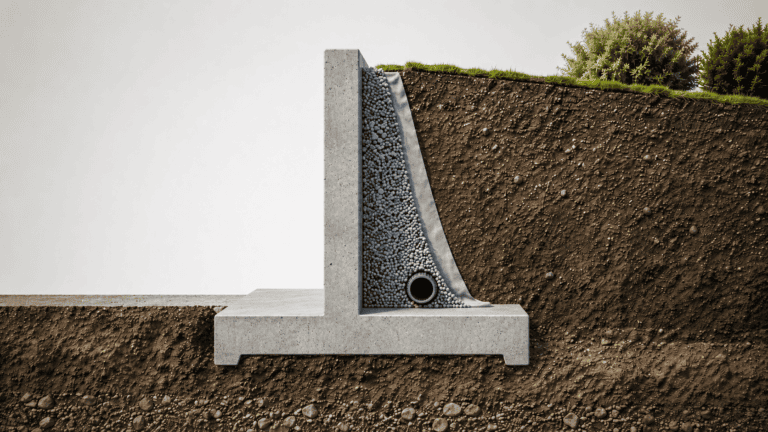
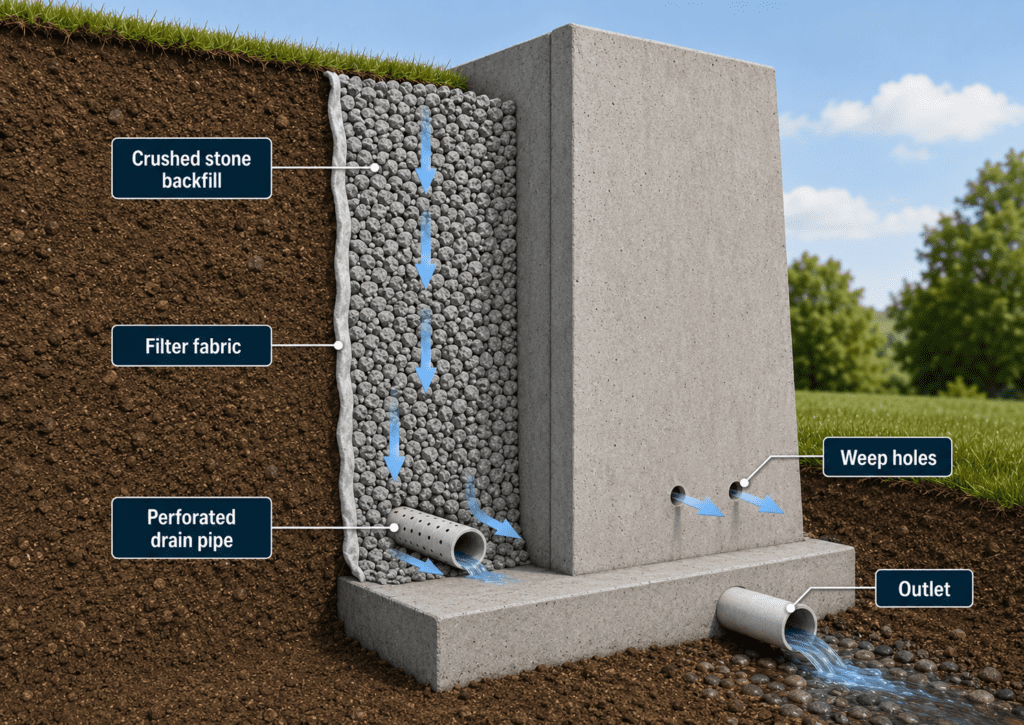
Retaining wall drainage stops water from building pressure behind the wall. A good system needs clean crushed stone, filter fabric, a perforated drain pipe, and a clear outlet or weep holes. Without drainage, trapped water can cause leaning, cracking, sliding, soil movement, freeze damage, and costly wall failure.
Water is why retaining walls fail.
Not the block color. Not the cap style. Water sits behind the wall where nobody can see it. It builds pressure slowly. Then the face starts leaning, cracking, or sliding.
Get the drainage right and the wall has a fighting chance. Skip it and you are not saving money. You are deferring a larger repair bill.
Why Water Behind a Retaining Wall Is a Problem
Soil is not solid. It holds water. When it gets wet, it gets heavier and pushes harder against whatever is holding it back.
Clay soil can hold a lot of water after sustained rain. That added water increases the weight of the backfill and the pressure against the wall.
Engineers call this hydrostatic pressure.
The problem builds slowly. A wall can look fine for years while the backfill holds too much water. I have inspected walls in exactly that condition. The tell is often the weep holes: dry after two days of rain when they should still be running.
Then one wet season the lean is obvious. And the repair quote is not small.
What a Retaining Wall Drainage System Needs
There is no single part called “drainage.” It is a small system. Each component has a job explained in the table below.
| Drainage component | What it does | If it is missing |
|---|---|---|
| Crushed stone | Lets water move freely behind the wall | Soil holds water and pressure builds |
| Filter fabric | Keeps soil fines out of the stone | The drainage layer slowly silts up |
| Perforated pipe | Collects water at the base | Water builds near the footing |
| Outlet or weep holes | Lets water escape | Pressure stays hidden behind the wall |
Drainage is only one part of wall stability. See our retaining wall design guide for earth pressure, sliding, overturning, and bearing checks.
Crushed Stone Backfill
The material directly behind the wall is the first decision that matters.
Native soil holds water and builds pressure. The reason proper drainage stone gets skipped is simple. The soil is already there. It is free. And the difference is invisible once the wall is built.
Until it is not.
For many residential retaining walls, a common detail is about 12 inches, or 300 mm, of clean drainage stone directly behind the wall face. Use clean 3/4 inch crushed stone, or roughly 20 mm aggregate. The exact width still depends on the wall height, soil type, wall system, and local requirements.
Not pea gravel. It can migrate through gaps. Not sand. It holds more moisture than people think. Not the excavated soil.
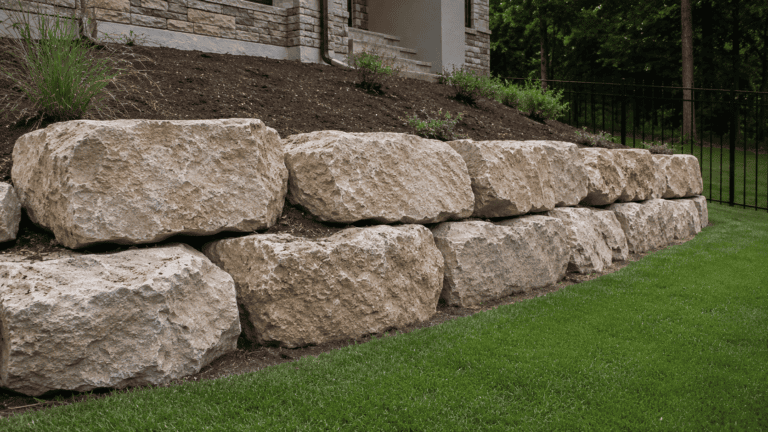
This applies to boulders, block, concrete, wood, timber and corten steel retaining walls. Timber walls are especially unforgiving because trapped moisture behind the wall can speed up decay where you cannot see it.
Crushed stone is the boring, correct answer.
Filter Fabric
Here is what happens without filter fabric.
The gravel works fine for the first few years. Then fine soil particles start moving into the stone. Slowly filling the voids. The drainage looks intact from the outside, but it is silting up from within.
Five or six years later, water cannot move through it properly. The pressure starts building as if the gravel was never there.
Geotextile filter fabric sits between the native soil and the drainage stone. It stops that migration. Place it behind the stone and wrap or protect the pipe as required by the wall system.
The job is simple: let water through, keep soil out.
It is not expensive. The long-term difference is significant.
Retaining Wall Drainage Pipe
The retaining wall drainage pipe goes near the base of the wall. That is where water collects.
Some people call this a French drain behind the retaining wall. It is basically a perforated pipe in a gravel trench, sloped to a visible outlet.
For many residential walls, a 4 inch, or 100 mm, perforated pipe is commonly used near the base of the wall. The pipe should discharge through weep holes, daylight to a lower area, or connect to a working drainage system, as recommended in retaining wall drainage guidance.
For small gravity drains, a drain pipe slope of about 1 percent is a useful rule of thumb, which equals roughly 1 inch of fall over 8 feet.
Waterlogged ground at the base is one of the main routes to sliding failure. The wall does not always topple from the top. It can slide from the bottom as the bearing soil softens.
The pipe helps prevent that.
A pipe with no outlet is not a drainage system. It is a tube underground slowly filling with water.
Weep Holes
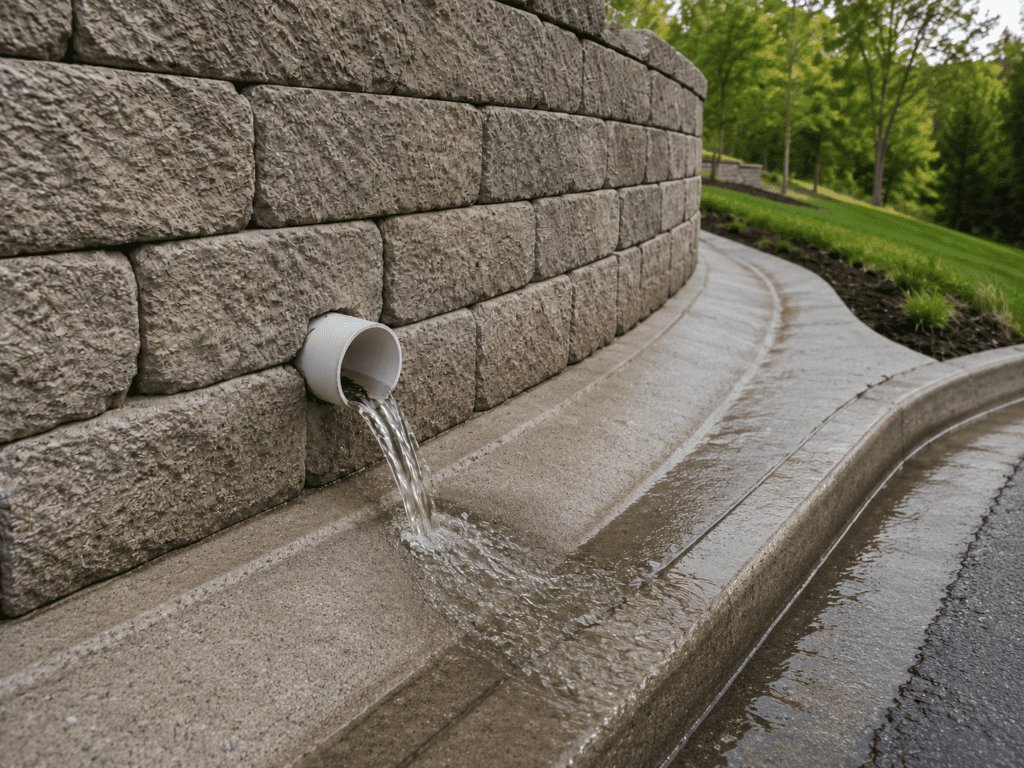
Weep holes are secondary relief points. They allow water to escape through the wall face when pressure builds behind it.
For many small masonry or concrete retaining walls, weep holes are placed at regular intervals near the lower part of the wall. Spacing around 3 to 5 feet is common, but the exact spacing should follow the wall design, wall type, and local requirements.
They also give you something useful to check from the outside. If weep holes used to run after rain and now stay dry, something behind the wall may have changed.
Do not seal them during finishing. I have seen walls failing because homeowner decided to Point over weep holes to make the wall look cleaner.
Soil Type Changes the Drainage Design
Sandy or gravelly soil drains fast. Lower lateral pressure. Standard system, no drama.
Clay is different.
It holds water. It swells when wet. It shrinks when dry. Every season it applies a new cycle of pressure against the wall. That movement compounds over years.
Good retaining wall drainage design accounts for soil type from the start. On a clay site, the system needs to be more conservative. More drainage stone, a reliable outlet, and filter fabric without compromise.
Some engineers use a drainage composite board in difficult clay conditions. Fine clay particles can eventually reduce drainage performance even when the system looks correct from the outside.
The best drainage for retaining walls in clay is usually more than the minimum. That is the honest answer.
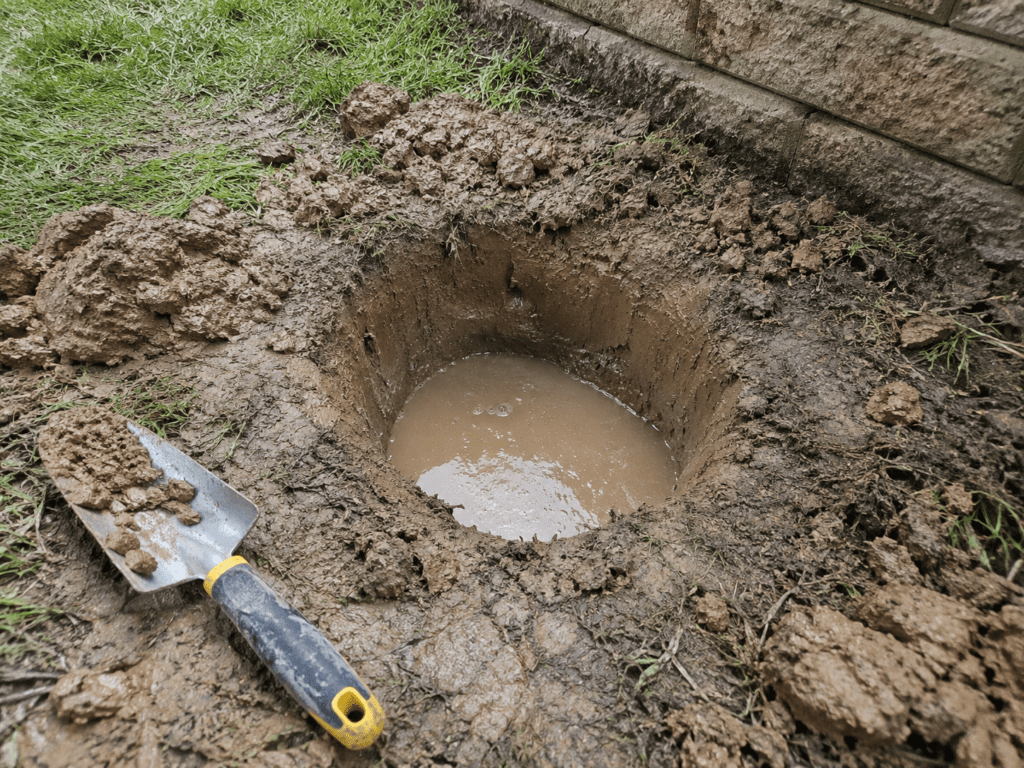
Not sure what you have? Dig a small hole after heavy rain. Come back 24 hours later. If water is still sitting in it, the site drains poorly. Treat it with caution, especially if the soil is clayey.
Where the Water Is Actually Coming From
The drainage system handles water moving through the soil. But if water is being pointed straight at the wall from above, even a good system gets overwhelmed.
Check these before assuming the wall is at fault:
- Downspouts discharging near the top of the retained slope
- Ground sloping toward the wall instead of away from it
- Sprinklers aimed at the backfill
- Blocked swales or surface drains above the wall
- Landscape beds that hold water directly behind the wall
Fix the water source. The drainage system is not designed to handle roof runoff on top of ground saturation.
Seasonal Checks
Spring is often the highest-risk season. Snowmelt and rain can overlap. The backfill saturates fast. If the outlet pipe froze during winter or became blocked, it may not clear before the first heavy storm. Check that water can leave before the rain arrives, not during it.
Fall is the one people forget. Leaves block weep holes and cover outlet pipes. Ten minutes of clearing before the wet season is worth more than it sounds.
Winter is where poor drainage becomes structural. Trapped water freezes and expands. Every freeze-thaw cycle can move things slightly. Not all of it comes back. The displacement can compound year after year.
Warning Signs the Drainage Is Failing
Watch for these after rain:
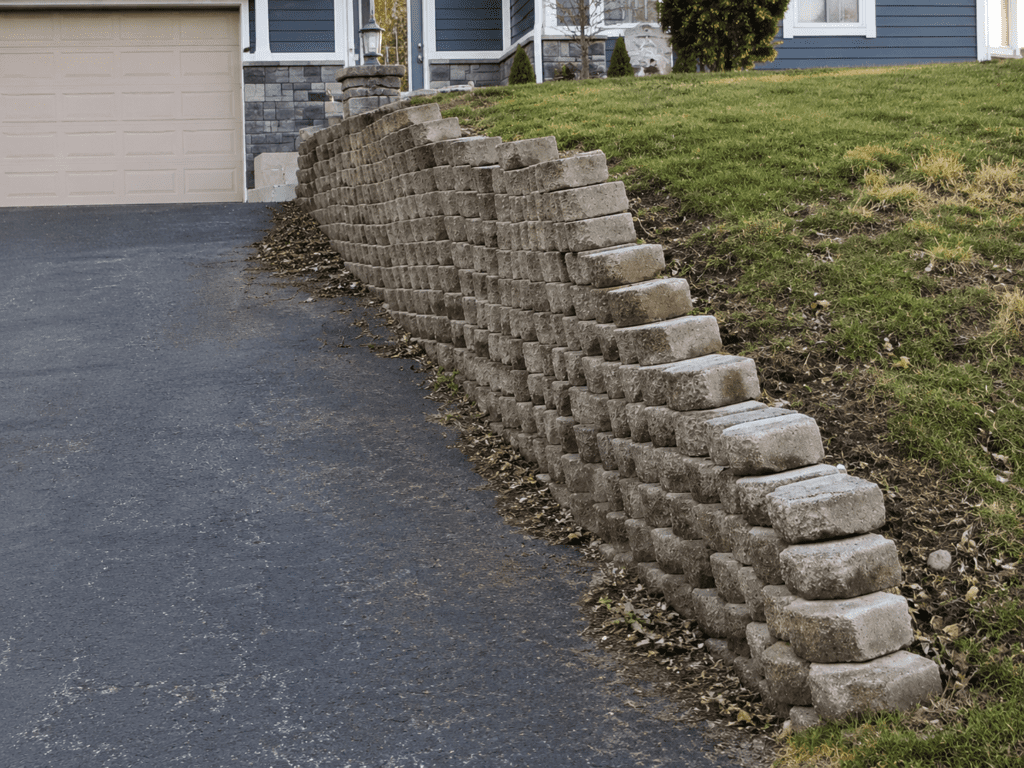
- Wall leaning forward at the top
- Bulging or rotating blocks
- Horizontal cracks along mortar joints
- Weep holes that no longer drain
- White mineral staining on the wall face
- Soil dipping along the top of the retained area
- Soft or boggy ground at the base
- Cracks that widen in winter and close in summer
- Water ponding above or below the wall
None of these are cosmetic. A leaning wall is carrying load beyond its design. That does not fix itself.
Adding Drainage to an Existing Retaining Wall
If the wall is already leaning or cracked, drainage will not fix it. The wall has moved. It likely needs rebuilding from the base with drainage included from the start.
If the wall is still straight but drainage was never installed or has blocked up, there are retaining wall drainage solutions that may help without full demolition.
- You may be able to drill weep holes through the face for pressure relief.
- You may be able to regrade the soil above the wall so surface water flows away.
- Downspouts and surface drains can often be redirected.
- In some cases, partial excavation behind the wall can clear or replace the pipe, stone, and filter fabric.
These are management measures. Better than nothing. Not as good as doing it right the first time.
The cost of rebuilding a retaining wall is almost always higher than the drainage that would have prevented it.
If water is collecting behind your wall, drainage is blocked, or the wall needs drainage improvements, call (888) 985-1657 now to discuss the project with a local landscaping professional.
Call Now: (888) 985-1657Common Drainage Mistakes
Most retaining wall drainage failures come from simple shortcuts.
Using soil as backfill is one of the biggest mistakes. Regular soil holds water. Clay holds even more. Use clean angular drainage stone behind the wall instead.
Skipping filter fabric is another common failure point. Without fabric, soil fines can move into the stone and clog the system over time.
Installing a pipe with no outlet is not drainage. The pipe must discharge somewhere visible or connect to a working drainage system. No outlet, no drainage.
Blocking weep holes is also a problem. Weep holes are not decorative gaps. Keep them open.
Sending roof water toward the wall can overwhelm even a decent drainage system. Downspouts should discharge away from the retained area, not into it.
Maintenance After Construction
A retaining wall drainage system should not need constant attention, but it should be checked.
After heavy rain, look for water leaving the outlet pipe or weep holes. Clear leaves, mulch, and soil from the wall base. Make sure downspouts are still directed away. Watch for new staining, cracking, leaning, or soft ground.
The best time to find a drainage problem is while the wall is still straight.
Final Thought
A retaining wall is not only holding soil. It is holding soil that changes every time it rains.
Use clean stone. Separate it from the native soil. Give the water a pipe. Give the pipe somewhere to go. Keep the outlets clear.
That is the boring version. It is also the version that keeps walls standing.
Quick FAQs
Does every retaining wall need drainage?
Nearly every retaining wall needs some drainage path. Very low walls in free-draining sandy soil carry less risk, but anything over about 2 feet, in clay, or in a wet climate should have a proper system.
What is the best drainage pipe for a retaining wall?
For many residential retaining walls, a 4 inch perforated pipe wrapped or protected with filter fabric is commonly used near the base of the wall. It should slope to a visible outlet or connect to a working drainage system.
What is the best rock for retaining wall drainage?
Clean 3/4 inch crushed stone is a good choice for many residential retaining walls. Pea gravel can migrate, sand holds moisture, and mixed soil backfill can clog or compact. Clean angular crushed stone is usually the safest answer.
Does a small retaining wall need drainage?
Yes. Lower risk, same principle. Soil still holds water. Gravel backfill and a clear outlet cost very little during construction compared with rebuilding a failed wall later.
Why have my weep holes stopped running after rain?
The gravel may have silted up, the holes may be blocked, or the water may be trapped somewhere behind the wall. The water may still be entering the backfill. It just has nowhere to go quickly. Worth investigating.
Can drainage fix a leaning retaining wall?
Usually not. Drainage reduces ongoing water pressure. It does not move the wall back. A leaning, bulging, or cracked wall needs inspection.