Cost of Retaining Wall in 2026: Prices by Foot, Material & Labor
Cost of retaining wall in 2026 is usually $20–$65+ per square foot of wall face. Small garden walls may cost $1,500–$4,000, while taller structural walls can exceed $20,000 when excavation, drainage, reinforcement, permits, access, or engineering are required.
Many homeowners compare quotes without knowing what is included. One contractor may price only the visible wall blocks and labor. Another may include excavation, gravel base, drainage pipe, geogrid reinforcement, cleanup, and engineering review.
That is why retaining wall prices vary so much.
This guide explains retaining wall cost, average prices by size, retaining wall cost per foot, labor rates, material choices, hidden costs, and how to compare quotes intelligently before hiring anyone.
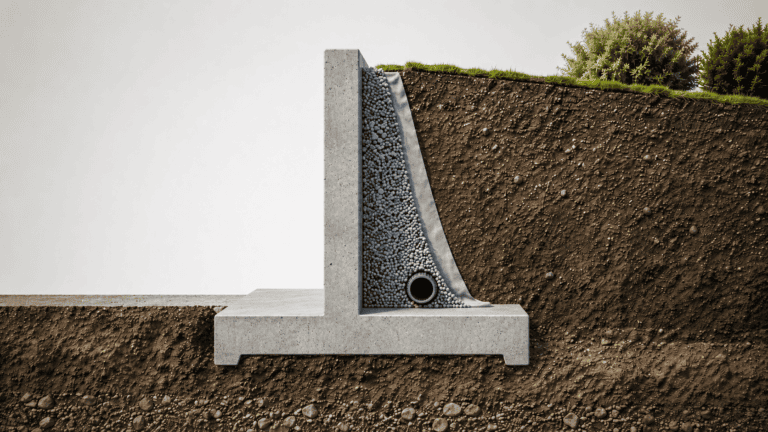
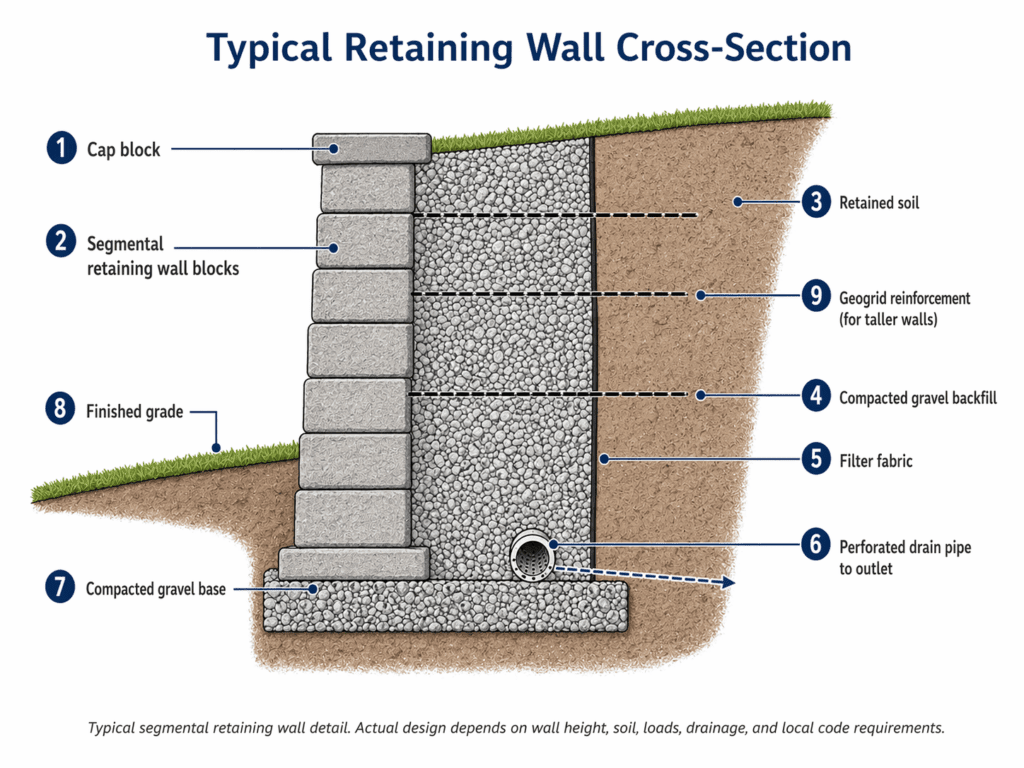
Typical retaining wall cross section is shown in the image below.
Cost of Retaining Wall At a Glance
Most residential retaining wall projects in the US fall within these broad ranges:
| Cost View | Typical 2026 Range |
|---|---|
| Cost per sq ft of wall face | $20–$65+ |
| Small decorative wall | $1,500–$4,000 |
| Standard residential wall | $4,000–$10,000 |
| Larger/taller wall | $10,000–$20,000+ |
| Engineered or difficult-access wall | $20,000+ |
These are planning ranges, not contractor quotes. Real cost depends on wall height, soil type, drainage, material, access, labor rates, permits, and whether the wall supports extra loads such as a driveway, fence, pool, or slope.
Planning a new retaining wall or replacing an existing one? Call (888) 985-1657 now to discuss your project with a local landscaping professional.
Call Now: (888) 985-1657Retaining walls are not priced only by appearance. They are priced by how much soil pressure they must safely resist.
Retaining wall problems can sometimes affect nearby slabs, basements, or house foundations, so homeowners should also understand the basics of foundation repair before choosing a low-cost wall solution.
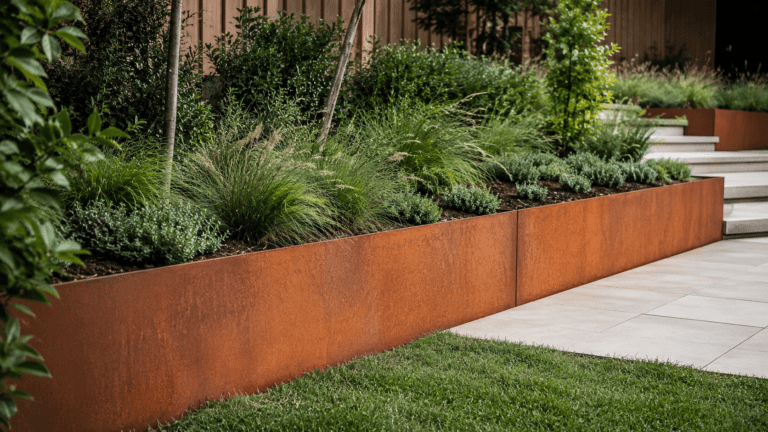
Homeowners who want a modern steel look should also compare the cost, drainage needs, and corrosion risks of a corten steel retaining wall.
Retaining Wall Cost Per Foot: Linear Foot vs Square Foot
Many people search for retaining wall cost per foot, but “per foot” can mean different things.
Contractors may price by:
- Linear foot – the length of the wall
- Square foot of wall face – wall length × exposed height
- Total project price – all labor, materials, excavation, drainage, and cleanup included
Cost per linear foot is only meaningful when wall height is known. Cost per square foot is usually more useful because it includes both length and height.
Example
| Wall Size | Wall Face Area | Why It Matters |
|---|---|---|
| 20 ft long × 2 ft high | 40 sq ft | Light landscaping wall |
| 20 ft long × 6 ft high | 120 sq ft | Much higher load and cost |
Both walls are 20 linear feet, but they are completely different projects.
How Much Does a Retaining Wall Cost by Material?
Material choice strongly affects the cost of retaining wall projects.
| Material | Typical Cost Level | Best For | Watch Out For |
|---|---|---|---|
| Timber | Lower | Small garden walls | Rot and shorter lifespan |
| Concrete block | Mid-range | Most residential yards | Needs proper base and drainage |
| Poured concrete | Mid to high | Clean modern look | Higher labor/formwork cost |
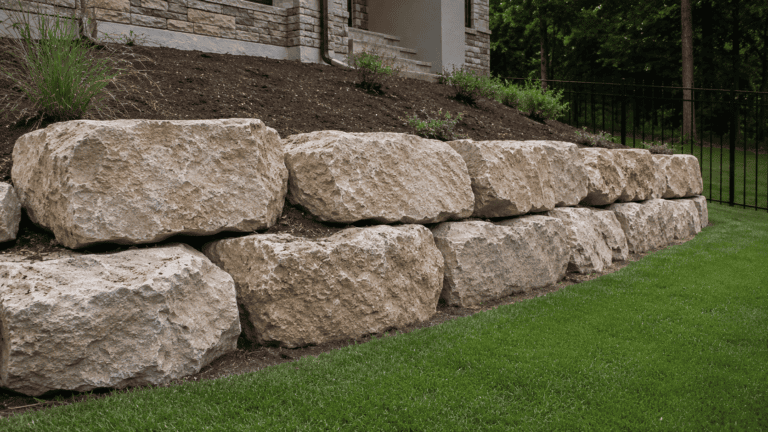
| Boulder / natural stone | Mid to high | Premium natural style | Delivery and machine access |
| Gabion baskets | Variable | Drainage-friendly design | Appearance preference |
| Brick veneer systems | Mid to high | Decorative spaces | Not ideal for heavy retained loads |
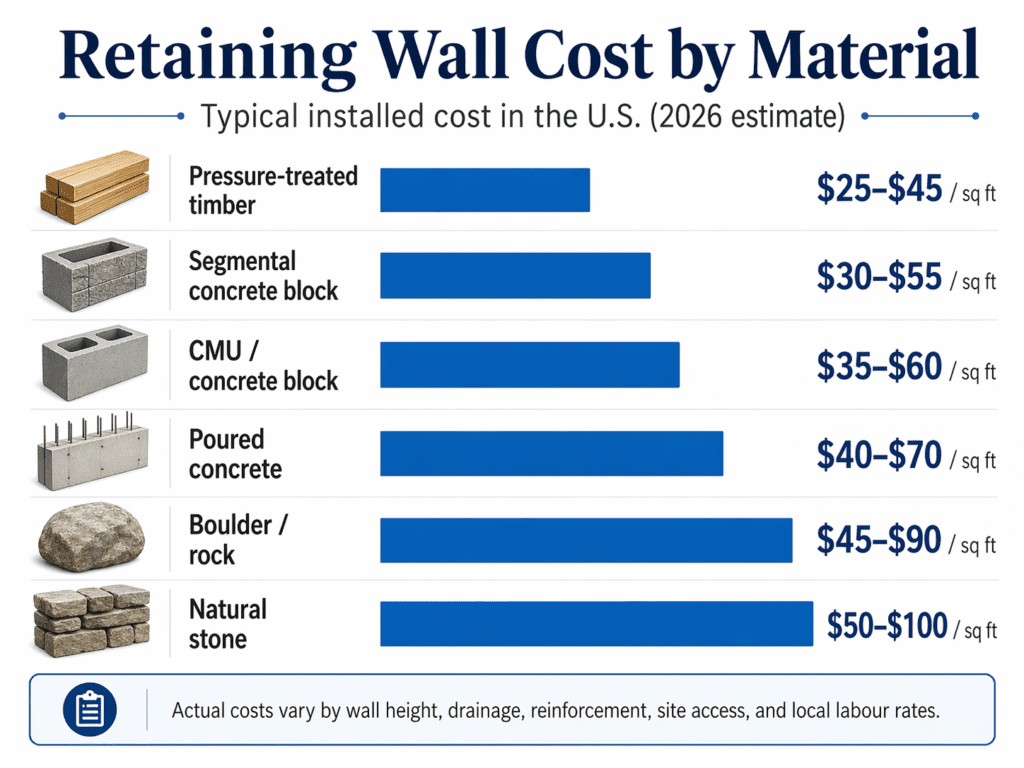
Material prices are another reason these costs can change during the year. Steel, lumber, and some cement imports are currently affected by U.S. trade measures. See how 2026 tariffs are affecting construction costs.
Best value for many homes
Segmental concrete block walls with proper drainage.
Lowest upfront cost
Small timber walls.
Best long-term durability
Properly built concrete block, stone, or engineered reinforced systems.
What Makes Retaining Wall Quotes Jump Fast?
Two walls of similar size can have very different prices.
1. Wall Height
Height changes everything. Taller walls often need:
- deeper excavation
- larger base width
- more backfill
- stronger reinforcement
- permits or engineering review
2. Drainage
Poor drainage is one of the most common reasons retaining walls fail.
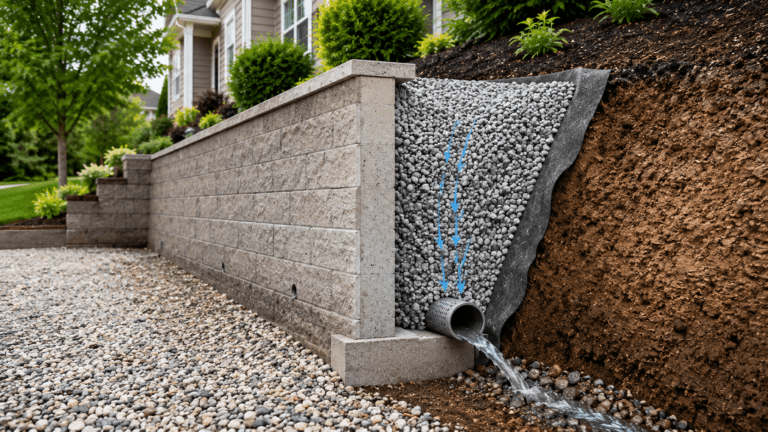
A proper wall may include:
- gravel backfill
- perforated drain pipe
- filter fabric
- outlets or weep holes
- positive grading away from the wall
This adds cost, but skipping retaining wall drainage can be far more expensive later. Poor drainage and weak soil behind a retaining wall can also contribute to foundation settlement repair issues, especially when water is allowed to collect near the house.
If your project also includes decorative gravel around the wall, garden paths, or landscape beds, use our pea gravel calculator to estimate yards, tons, bags, and cost before ordering. For the drainage zone directly behind a retaining wall, use clean angular crushed stone instead of rounded pea gravel.
3. Site Access
If machines cannot reach the wall area and materials must be carried manually, labor cost rises quickly resulting in rise in cost of retaining wall.
4. Soil Conditions
Clay, loose fill, saturated ground, or unstable slopes can require stronger design and more excavation.
5. Curves, Steps, Caps, and Lighting
Decorative features can increase labor and material costs significantly.
Hidden Costs Most Homeowners Miss
Low quotes often exclude the items that make the wall last.
Always ask if the quote includes:
- demolition of old wall
- haul-away and disposal
- excavation
- gravel base
- drainage pipe
- filter fabric
- backfill material
- compaction
- geogrid reinforcement
- permits
- engineering drawings
- cleanup
- final grading
A cheap quote that excludes drainage or base preparation can become the most expensive quote later.
When Engineering or Permits May Be Required
Some retaining walls are decorative. Others are structural systems resisting major soil loads.
Engineering or permits may be needed when the wall is:
- above local code height limits
- near a driveway, pool, building, or deck
- supporting a steep slope
- close to property boundaries
- carrying surcharge loads such as vehicles, sheds, or fences
- built on weak, wet, or sloping ground
Many areas use 4 feet as an important threshold, but local rules vary.
For engineered walls, see our retaining wall design guide for earth pressure, sliding, overturning, bearing, and cantilever wall calculations.
A wall holding back soil beside valuable structures should not be treated like simple landscaping.
Cheapest Retaining Wall vs Best Long-Term Value
The cheapest wall is not always the best value.
Cheapest upfront
Usually:
- small timber walls
- low DIY block walls
- basic decorative garden walls
Better long-term value
Often:
- quality segmental block systems
- well-drained boulder retaining walls
- engineered reinforced walls where needed
If a cheap wall fails in five years, rebuilding it can cost more than building it properly once.
DIY vs Contractor Cost
DIY can reduce labor cost for very small garden walls.
DIY may be reasonable when:
- wall is low
- no major slope is being retained
- drainage is simple
- access is easy
- failure would not damage structures
- you understand leveling and base preparation
Professional installation is usually smarter when:
- wall is tall
- the slope is active
- machinery is needed
- drainage matters
- the wall supports a driveway or structure
- failure could damage property
A crooked border wall is annoying. A failed retaining wall can become a serious repair.
Retaining Wall Quote Checklist
Before hiring a contractor for cost of retaining wall, ask:
| Question | Why It Matters |
|---|---|
| What wall height is included? | Height controls cost and load |
| Is drainage included? | Water pressure can cause failure |
| What base depth is included? | Stability depends on foundation |
| Is geogrid needed? | Reinforcement may be required |
| Are permits included? | Avoid surprise costs |
| Is cleanup included? | Prevent extra charges |
| What warranty is offered? | Shows confidence and scope |
A $6,000 quote and a $10,000 quote may not be pricing the same wall.
Call (888) 985-1657 now to discuss your retaining wall project with a local landscaping professional.
Call Now: (888) 985-1657Red Flags in Retaining Wall Quotes
Be cautious if someone says:
- “Drainage is unnecessary.”
- “We don’t need a base.”
- “All walls cost the same per foot.”
- “No permit needed” without checking local rules
- “Compaction doesn’t matter.”
- “We can start today if you pay now.”
A serious quote should explain materials, drainage, wall height, assumptions, and cleanup.
How to Save Money Without Building a Bad Wall
Smart ways to reduce retaining wall cost:
- keep wall height lower if possible
- terrace slopes instead of building one tall wall
- choose straight walls instead of curves
- improve access before work starts
- compare three detailed quotes
- choose mid-range finishes
- simplify caps, lighting, and steps
Do not save money by removing drainage, compaction, or base preparation.
FAQs About Cost of Retaining Wall
What is the average retaining wall cost?
Many residential retaining wall projects fall around $4,000–$10,000, but small walls can cost less and larger engineered walls can exceed $20,000.
How much does a retaining wall cost per foot?
Short simple walls may cost far less per foot than tall structural walls. Height is one of the biggest price drivers.
What is the cheape
What is the cheapest retaining wall option?
Small timber or simple block walls are often cheapest upfront, but timber usually has a shorter lifespan.
Why are retaining wall quotes so different?
Because some quotes include excavation, base prep, drainage, backfill, permits, and cleanup while others may not.
Is drainage really necessary?
In many cases, yes. Water pressure damage behind retaining walls is one of the most common causes of leaning, cracking, and failure.
Final Engineering Advice
When comparing the cost of retaining wall projects, do not ask only:
“How much is the wall?”
Ask:
“What is included, how long will it last, and how safely will it hold back soil?”
The cheapest quote may omit the most important parts. A well-built retaining wall is not just a landscape feature. It is a structural system resisting soil pressure year after year.
Pay for what matters: base preparation, drainage, suitable materials, compaction, and workmanship.