Pea Gravel Calculator: Yards, Tons, Bags and Cost
Multiply your area in square feet by the depth in feet. Divide by 27 for cubic yards. Multiply by 1.3 for tons. For most paths and patios, 2 to 3 inches is the right depth. Add 10 percent for waste before you order.
Most pea gravel projects go wrong in the same three ways. Too little depth. No edging. Or using it somewhere it should not be used.
Use the pea gravel calculator above first. Then get those three things right and the rest is just maths.
Pea Gravel Calculator
Estimate cubic yards, tons, bags, and cost for pea gravel patios, paths, dog runs, landscape beds, fire pit areas, and decorative ground cover.
Project details
Your pea gravel estimate
0 tons
| Quick coverage guide | Approximate coverage |
|---|---|
| 1 cubic yard at 2 in. deep | About 162 sq ft |
| 1 cubic yard at 3 in. deep | About 108 sq ft |
| 50 lb bag at 2 in. deep | About 3 sq ft |
What this calculator tells you
Enter your project size and depth to estimate pea gravel in cubic yards, tons, bags, and cost. Results appear here after you calculate.
How to Calculate Pea Gravel
Three steps. No complicated formulas.
Step 1: Get your area Length times width in feet gives you square feet. Got an odd shape? Split it into rectangles, calculate each one, add them together.
Step 2: Convert to cubic yards Multiply area by depth in feet to get cubic feet. Divide cubic feet by 27 to get cubic yards.
Step 3: Convert to tons Multiply cubic yards by 1.3.
That is your starting number. Add 10 percent for waste.
Real example: You have a 200 sq ft patio. You want 2 inches of gravel.
- 200 x 0.167 = 33.4 cubic feet
- 33.4 / 27 = 1.24 cubic yards
- 1.24 x 1.3 = 1.61 tons
Add 10 percent. You need about 1.77 tons. Order 2 tons to be safe.
The pea gravel calculator above handles all of this automatically. Just enter your area and depth.
How Deep Should Pea Gravel Be?
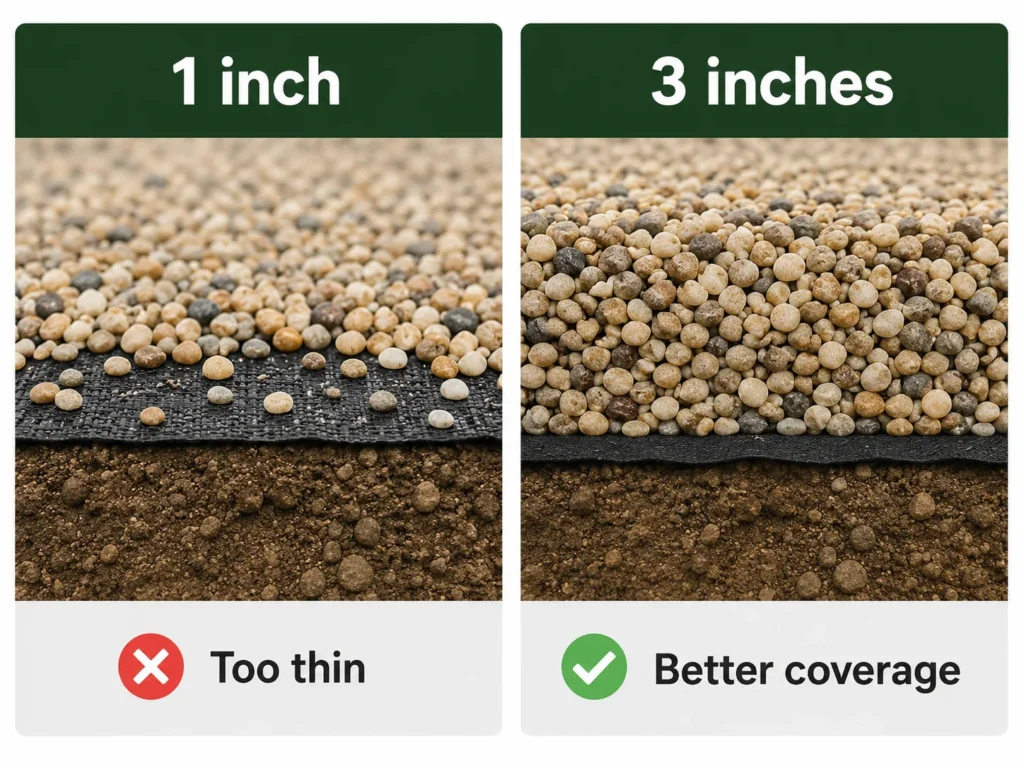
This is where most people undershoot. A thin layer looks fine at first. After a few weeks of foot traffic, the base shows through.
| Project | Depth | Notes |
|---|---|---|
| Decorative landscape bed | 1 to 2 inches | Appearance only, light use |
| Garden path or walkway | 2 to 3 inches | Needs firm edging |
| Patio area | 2 to 3 inches | Compacted base required |
| Dog run | 2 to 3 inches | Good drainage, clean regularly |
| Play area | 3 to 4 inches | Check safety specs for your equipment |
| Driveway | Not recommended | Rounded stones shift under tires |
Stick to 2 to 3 inches for anything people walk on. Less looks patchy fast. More starts to feel unstable, especially under chairs and tables.
Pea Gravel Coverage Chart
Check this before you call your supplier. These numbers are what the pea gravel calculator uses as base values.
| Amount | At 2 inches deep | At 3 inches deep |
|---|---|---|
| 1 cubic yard | About 162 sq ft | About 108 sq ft |
| 1 ton | About 120 to 130 sq ft | About 80 to 90 sq ft |
| 50 lb bag | About 3 sq ft | About 2 sq ft |
Your supplier's density number is more accurate than any chart. Ask for it if you are ordering a large amount.
Pea Gravel Cost: Bags vs Bulk
Bulk pea gravel runs about $40 to $75 per ton. A 50 lb bag from a hardware store costs $5 to $8, which works out to roughly $130 to $200 per ton. You pay a lot for the packaging.
| Option | Best for | Watch out for |
|---|---|---|
| Bags | Small beds, patch jobs, top-ups | Gets expensive fast on bigger areas |
| Bulk by ton | Patios, paths, dog runs | Needs delivery access and somewhere to dump |
| Bulk by cubic yard | Landscape supply orders | Density varies, ask your supplier |
Once your project hits 50 square feet at 2 inches deep, get a bulk quote. On a 200 sq ft patio, the difference between bags and bulk can be $150 or more.
Where Pea Gravel Works Well
Pea gravel is good where you need drainage, a natural look, and you do not need a firm surface.
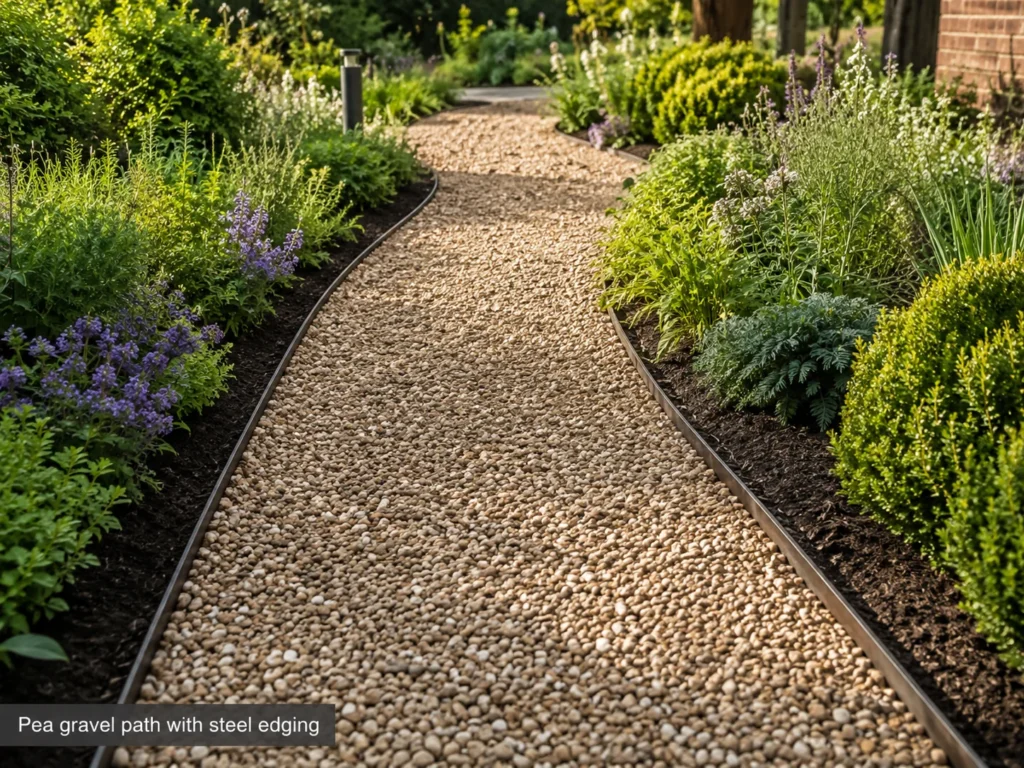
It works well for garden paths, landscape beds, stepping stone borders, fire pit areas, dog runs, and ground cover under trees.
Water drains through it quickly. That is one of its real advantages over compacted surfaces. But do not use it for structural drainage behind retaining walls. Rounded stones shift and migrate over time. Angular crushed stone locks together and stays put. See our retaining wall drainage guide before you mix gravel types in a drainage context.
If water management around your property is part of the picture, our gutter installation cost calculator covers how gutters and downspouts affect surface water near landscaped areas.
Where Pea Gravel Causes Problems
Pea gravel moves. That is its nature. Rounded stones do not lock together.
Skip it if your surface needs to hold up under:
- Wheelchairs, walkers, or mobility equipment
- Heavy outdoor furniture
- Regular car or vehicle traffic
- Steep slopes without solid containment
- Doorways and entry thresholds (you will be sweeping it inside every week)
It also will not rescue a bad base. Lay pea gravel over soft or uneven ground and it follows every bump and soft spot underneath. Sort the base first. Grade it, compact it, make sure it drains. If you are laying pea gravel next to a structure, our guide on footing and stem wall foundations covers how proper base preparation affects anything built above it. Then add the gravel.
Landscape Fabric and Edging: Do You Need Them?
Fabric: Yes, for most projects. It slows weed growth and stops gravel working down into the soil. It is not permanent. Organic matter builds up on top and weeds find their way through eventually. For beds where you plan to plant, think twice. Fabric makes future planting harder and affects soil health over time. Purdue Extension has a practical guide on weed control in landscapes that covers exactly this tradeoff.
Edging: Yes, always. Without it your gravel spreads into the lawn, the flower beds, and every low spot nearby. It happens faster than you expect. Steel edging holds the line best. Concrete, paver borders, brick, and timber all work if installed properly.
Skipping edging to save money is a trade most people regret by the second year.
Pea gravel is one of the most widely used construction aggregates. The National Stone, Sand and Gravel Association covers how different aggregate types are graded and used across construction, drainage, and landscaping applications.
Common Mistakes Worth Avoiding
Ordering too little. Under 2 inches on a path or patio and the base shows through in weeks. Order for 2 to 3 inches and add your waste allowance on top.
No edging. Without it the gravel spreads and your depth drops. Not optional.
Using it for structural drainage. Rounded pea gravel does not perform like angular stone behind walls or under drainage pipes. Use the right material for the job.
Laying it over a bad base. Pea gravel does not fix soft or uneven ground. It maps it.
Buying too many bags. A 200 sq ft patio needing 1.5 tons costs $200 to $300 in bags. The same order in bulk runs $75 to $110. Check the bulk price first on any project bigger than a small bed.
Final Thought
The pea gravel calculator takes two minutes. The mistakes that cost money take months to fix.
Check your depth. Get your edging in. Compare bulk pricing before you load up on bags.
Quick FAQs
How much pea gravel do I need?
Area in square feet, times depth in feet, divided by 27 for cubic yards, times 1.3 for tons. Add 10 percent for waste
How much does 1 ton of pea gravel cover?
A 50 lb bag covers roughly 3 sq ft at 2 inches deep. Enter your exact area and depth into the pea gravel calculator above for a precise bag count.
How much does pea gravel cost?
$40 to $75 per ton in bulk. $5 to $8 per 50 lb bag. Delivery, edging, fabric, and prep work are separate.
Is pea gravel good for driveways?
Not as a loose surface. Rounded stones roll under tires. It can work with a stabilizer grid and strong edging, but there are better driveway materials.
Bags or bulk?
Bags for small patches and touch-ups. Bulk for anything over about 50 sq ft. The cost difference is worth the extra planning.
Pea gravel vs pea rock vs pea stone: what is the difference?
Nothing. Different names for the same material depending on where you are. The calculator works the same for all of them.