Corten Steel Retaining Wall: Cost, Panels & Installation
A corten steel retaining wall uses weathering steel panels to hold back soil and create a modern rust-colored garden edge. It works best for low walls, raised beds, patios, and terraces with good drainage. It is less suitable for constantly wet soil, salt exposure, or tall walls without structural design.
A corten steel retaining wall, often searched as a corten retaining wall, looks clean from the front: thin steel, warm rust color, and sharp garden lines.
Behind that face, it still has one serious job: hold back soil safely.
That means the wall is not only about buying corten steel panels. It also needs the right steel thickness, support posts, embedment or footing, drainage layer, corrosion detailing, and rust-runoff control.
Before choosing corten steel, you must also look at retaining wall cost guide.
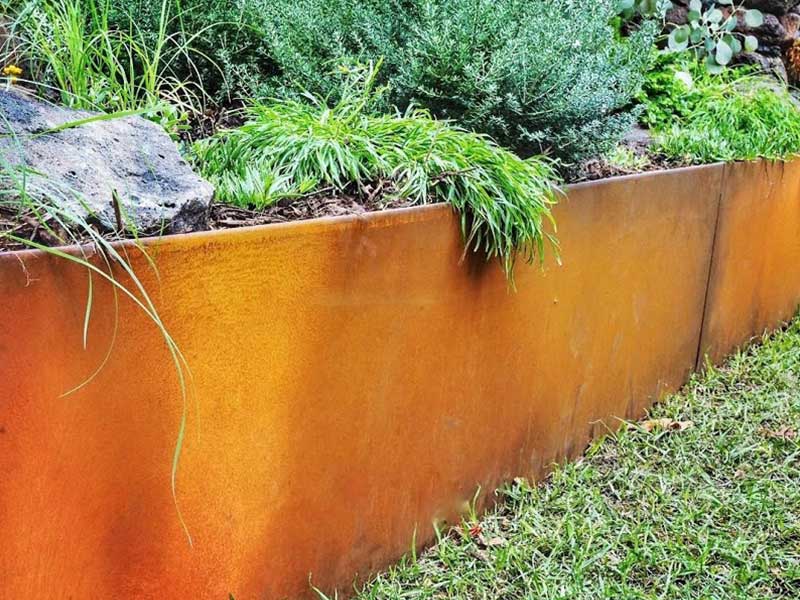
Best for low modern garden walls, raised beds, and terraces with good drainage. Avoid for constantly wet soil, coastal or salt exposure, tall walls without design, or places where rust runoff can stain expensive paving.
What Is a Corten Steel Retaining Wall?
A corten steel retaining wall uses weathering steel panels, plates, or modular steel sections to retain soil.
“Corten” is often used as a common name for weathering steel. The actual grade, thickness, fabrication, and corrosion allowance should still match the site conditions.
Weathering steel forms a protective rust-colored patina when it goes through repeated wet-dry cycles. That patina slows further corrosion and creates the familiar orange-brown finish.
The important point is simple:
Corten steel needs to dry.
If the steel stays buried, damp, covered by vegetation, or exposed to trapped moisture, the protective patina may not work as intended. In those conditions, weathering steel can corrode more like ordinary structural steel unless protected.
The exposed face of corten steel can form a protective patina, but the buried or constantly damp side of a retaining wall may not dry enough for that patina to work properly. For true retaining walls, the soil-facing side may need coating, isolation and drainage detailing
When Corten Steel Retaining Walls Work Best
Corten steel works best where the wall is both a landscape feature and a retaining element.
| Best use | Why it works |
|---|---|
| Low garden walls | Clean look with manageable soil pressure |
| Raised beds | Strong contrast with plants, gravel, and concrete |
| Terraced landscaping | Thin profile saves space |
| Patio edges | Sharp modern finish |
| Decorative retaining walls | Premium visual impact |
Corten steel is a good option when the exposed face can dry and the back side is detailed for moisture, drainage, corrosion, and soil pressure.
A small raised bed may use a modular corten system. A wall holding back a slope, driveway, patio, or structure should be checked by an engineer.
Many modular corten garden wall systems are sold in low heights, often around 200–600 mm. Those product sizes can work for garden features, but they should not be treated as structural design rules for taller retaining walls.
Decorative corten edging panels should not be assumed to work as retaining wall panels unless the manufacturer specifically rates them for soil retention.
When Corten Steel Is a Poor Choice
Corten steel is not always the right retaining wall material.
Avoid it as the default choice when:
- water will sit behind the wall
- the soil-facing side will stay constantly wet
- the site is coastal or exposed to de-icing salts
- heavy clay soil has poor drainage
- irrigation keeps the wall damp
- rust runoff could stain expensive paving
- the wall is tall and no engineer is involved
If the main goal is low cost, concrete blocks, timber sleepers, or segmental retaining wall blocks may be more practical.
Corten Steel Retaining Wall Cost
Corten steel retaining wall cost varies widely because decorative edging and structural retaining walls are very different products.
| Wall type | Cost level | What affects price |
|---|---|---|
| Thin garden edging | Lower | Length, height, finish |
| Low corten garden wall | Medium | Panel thickness, posts, layout |
| Modular corten panels | Medium to high | System type, anchors, drainage |
| Custom structural wall | High | Fabrication, welding, footings, engineering |
Small decorative corten edging is usually priced like a landscape product.
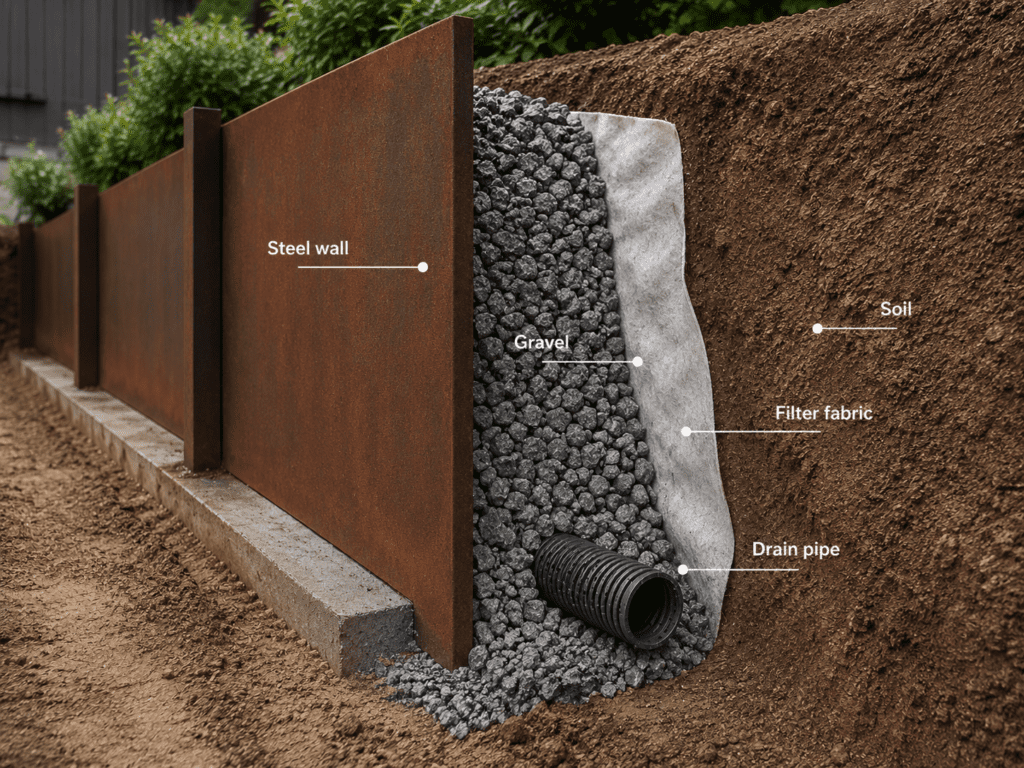
A true corten steel retaining wall should be priced like a fabricated steel system. That may include posts, embedment, footings, drainage gravel, geotextile, drain pipe, corrosion protection, and design work.
For homeowners comparing corten retaining wall cost , the safest approach is to price the visible panels separately from posts, drainage, excavation, delivery, and engineering.
Because corten steel retaining walls are often custom or product-system based, installed prices can vary more than simple block retaining walls.
The biggest cost drivers are wall height, steel thickness, post spacing, fabrication, access, soil conditions, drainage, and local labor rates.
Steel market prices can also affect new quotes. For current context, see our analysis of how 2026 tariffs are affecting steel and other construction material costs.
If the wall needs permits or engineering, the visible steel panel may be only part of the total cost.
Call (888) 985-1657 now to discuss your retaining wall project with a local landscaping professional.
Call Now: (888) 985-1657If the work also disturbs the surrounding lawn, use our sod installation cost calculator to estimate the cost of replacing the turf after final grading.
Corten Steel Panels vs Retaining Wall Blocks
Corten steel panels create a thin, modern wall face. Concrete blocks are bulkier but often easier for DIY retaining walls.
| Option | Best for | Main limitation |
|---|---|---|
| Corten steel panels | Modern gardens and thin profiles | Needs drainage and corrosion detailing |
| Concrete blocks | DIY and modular retaining walls | Bulkier appearance |
| Timber sleepers | Budget garden walls | Shorter lifespan |
| Natural stone | Premium landscapes | Higher labor cost |
| Poured concrete | Structural retaining walls | Less flexible visually |
Corten wins on appearance and thinness.
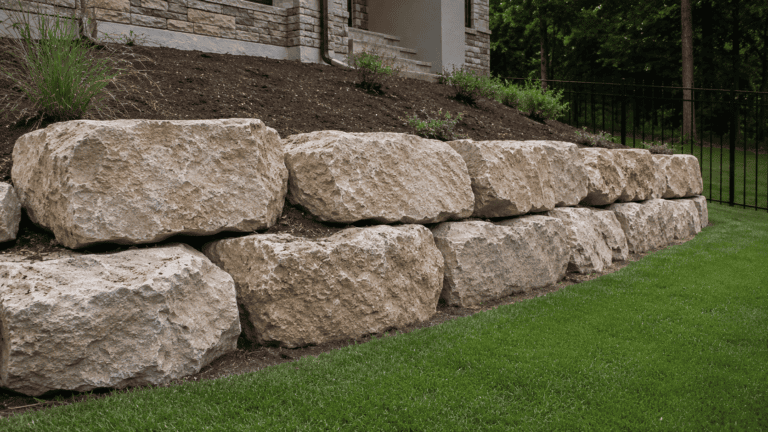
Blocks often win on cost, simplicity, and DIY friendliness. If you want a more natural landscape look instead of a thin modern steel face, see our guide on using boulder retaining wall.
Installation Details That Matter
A corten steel retaining wall is only as good as the hidden work behind it.
A proper installation usually includes:
- compacted base preparation
- correctly spaced posts or anchors
- suitable steel thickness
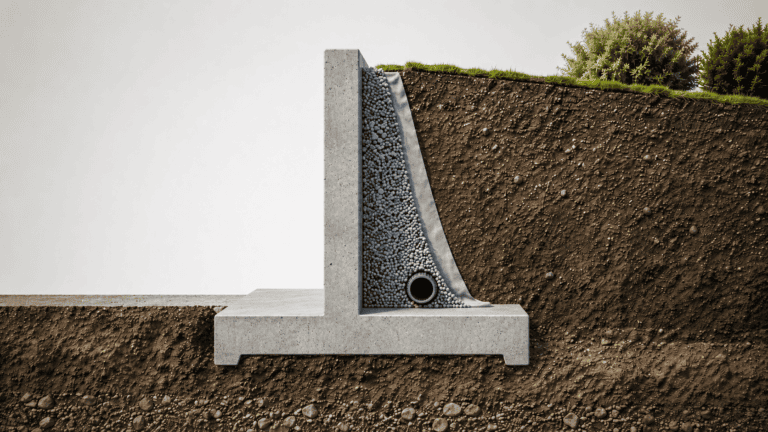
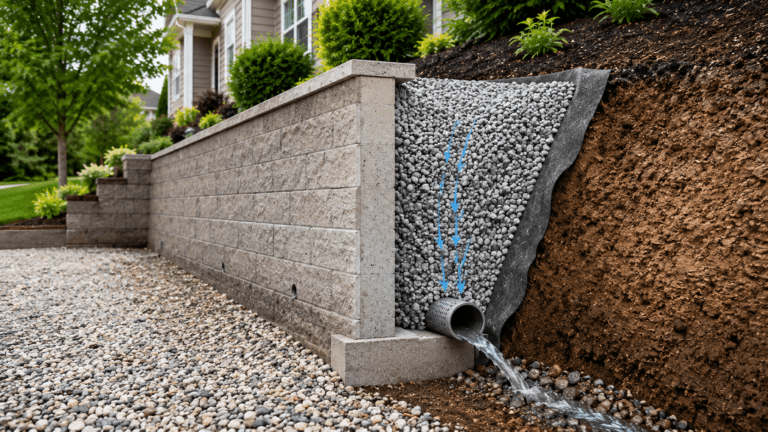
- free-draining gravel behind the wall
- geotextile between soil and gravel
- perforated drain pipe where needed
- a clear outlet for collected water
- corrosion protection or allowance on the soil-facing side
Drainage is not optional.
Proper retaining wall drainage matters because weep holes and maintainable drains help relieve water pressure by giving water a controlled path out from behind the wall.
Will Corten Steel Stain Concrete or Pavers?
Yes, it can.
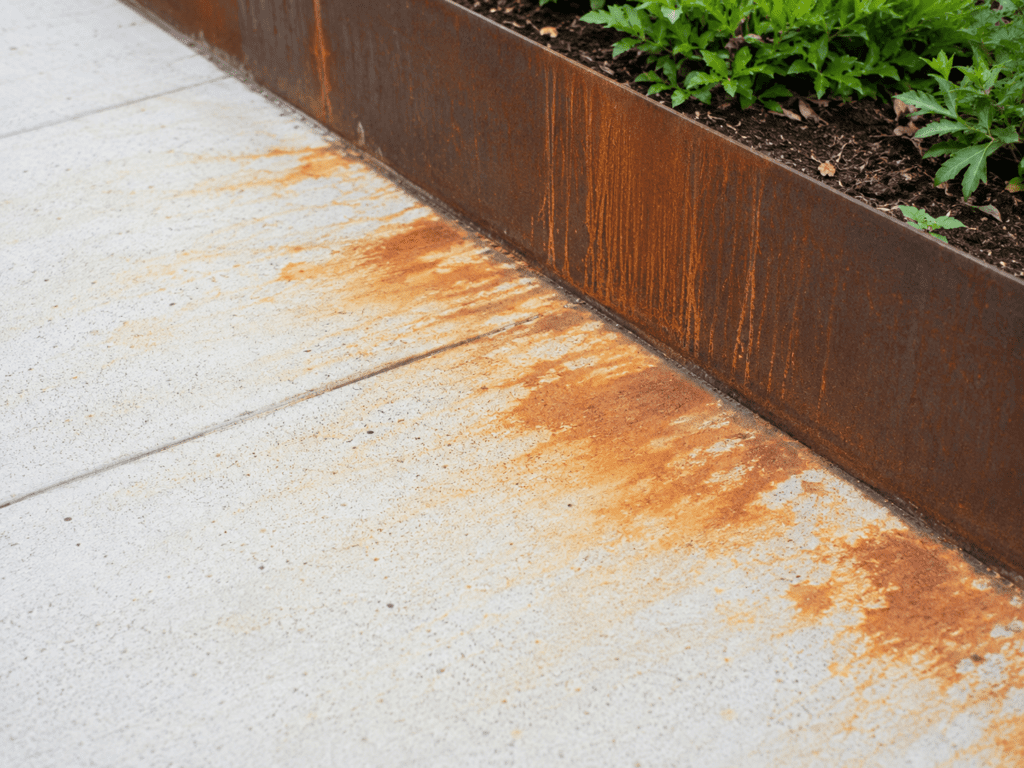
During early weathering, rainwater can carry rust-colored runoff onto concrete, pavers, stone, or light-colored walls.
This is most visible on pale concrete, limestone, and light paving.
To reduce staining:
- use a gravel strip below the steel
- keep runoff away from patios
- avoid direct contact with pale paving
- pre-weather panels when practical
- protect nearby surfaces during early wet-dry cycles
- plan where rust-colored water will drain
This does not make corten a bad choice. It means the runoff path should be part of the design from the start.
Design and Permit Checks
Before installing a corten steel retaining wall, check:
- wall height
- soil type
- drainage route
- steel thickness
- post spacing
- footing or embedment depth
- slope or driveway surcharge
- nearby buildings, fences, or patios
- corrosion exposure
- rust-runoff path
- local permit rules
Many areas require permits or engineering review when retaining walls exceed certain heights, support slopes, sit near structures, or carry surcharge loads.
Local rules vary, so height alone should not be the only trigger.
For the underlying stability mechanics, see our retaining wall design guide covering earth pressure, sliding, overturning, and bearing.
Final Takeaway
A corten steel retaining wall can look clean, modern, and premium.
It works especially well for low garden walls, raised beds, and landscape terraces where appearance matters.
But corten steel is still steel, and a retaining wall is still a structure. The exposed face may form a protective patina, but the damp soil-facing side needs careful detailing.
Best rule: use corten steel for the look, but design it for the soil, water, and corrosion conditions behind it.
FAQs
Is corten steel good for retaining walls?
Yes, corten steel can be good for retaining walls when it is properly designed and detailed. It works best for low garden walls, raised beds, and modern landscape terraces.
Does corten steel need drainage behind it?
Yes. Like any retaining wall, corten steel needs drainage.
Free-draining gravel, geotextile, drain pipe, weep paths, and a proper outlet may be needed depending on the wall.
Will corten steel rust away in soil?
It can corrode faster if it stays buried or constantly damp.
The exposed face may form a protective patina, but the soil-facing side often needs extra protection, drainage, or corrosion allowance.
Will corten steel stain my patio?
Yes. Rust runoff can stain concrete, pavers, stone, and pale surfaces, especially during early weathering.
Gravel strips, drip control, pre-weathering, and runoff planning can reduce the risk.
Can I build a corten steel retaining wall myself?
Small edging or low raised beds may be DIY-friendly if you use a suitable product.
A wall retaining significant soil, supporting a slope, or sitting near a structure should be checked by a professional.