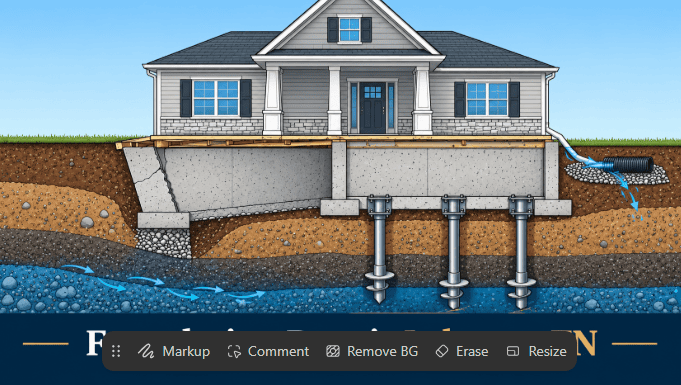
Carbon Fiber Foundation Repair: Cost, Straps & When It Works
Carbon fiber foundation repair uses thin, high-strength straps, strips, or fabric bonded to concrete or masonry foundation walls to help prevent further cracking or inward movement. It works best for minor to moderate bowing, horizontal cracks, crawl space walls, and some stem wall cracks. It does not lift settled foundations, fix sinking footings, or replace poor drainage. Installed carbon fiber straps often cost about $350 to $1,000 per strap.
Carbon fiber is very strong in tension, but the repair depends on the wall, epoxy bond, spacing, and anchorage working together. In plain English: it is not magic black tape.
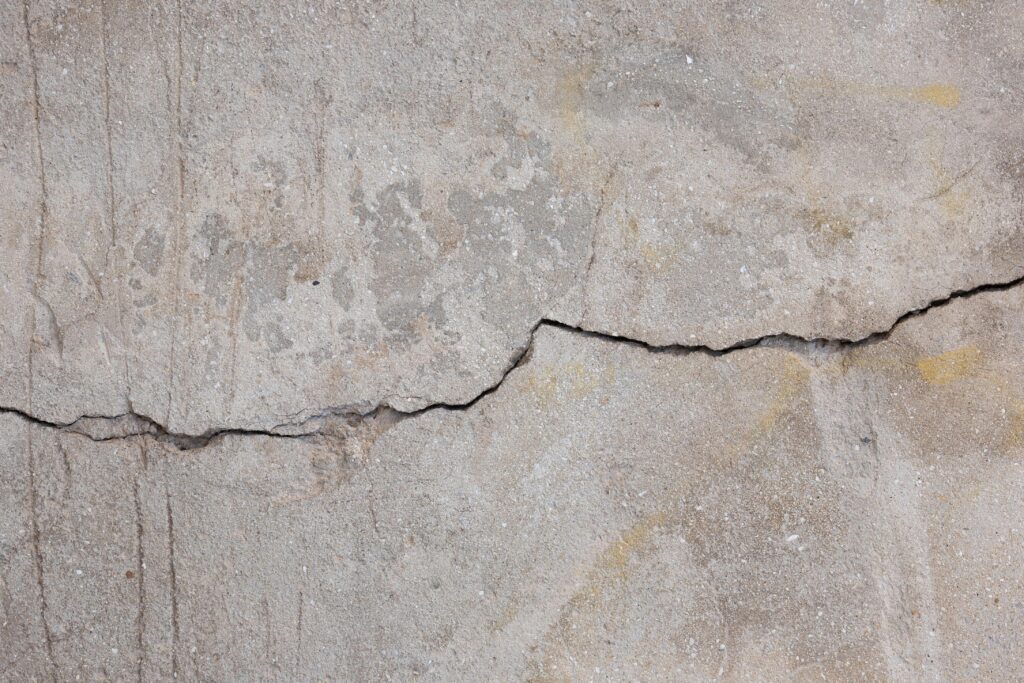
Before choosing any repair, first identify whether the crack is structural, shrinkage-related, water-related, or settlement-related.
What Carbon Fiber Foundation Repair Does
Contractors bond carbon fiber vertically to the inside face of a poured concrete, concrete block, crawl space, or stem wall. The surface is ground clean, structural epoxy is applied, and the carbon fiber is pressed into the wall.
Some systems also use top or bottom anchorage to improve load transfer.
Carbon fiber can help prevent further wall movement when the wall is still within the limits of the repair system. It usually does not push a badly bowed wall back into line.
Is Carbon Fiber Only Used for Basement Walls?
No. Basement wall repair is the most common residential use, but carbon fiber can also be used for:
- crawl space foundation wall reinforcement
- stem wall crack reinforcement
- horizontal, vertical, and stair-step foundation cracks
- some retaining or foundation wall strengthening
- structural crack reinforcement using carbon fiber fabric or strips
Some kits also use carbon fiber fabric or strips across individual foundation cracks, but crack reinforcement is different from correcting settlement or supporting a severely bowed wall.
Carbon fiber does not lift a settled slab, raise a sinking footing, correct major differential settlement, or replace failed soil support. Those problems usually need underpinning, piers, slab lifting, drainage correction, or footing repair.
For settlement-related symptoms, see slab foundation repair guide .
When Carbon Fiber Straps Make Sense
Carbon fiber straps for foundation repair work best when the wall is still mostly intact but showing signs of lateral pressure from soil or water.
| Wall condition | Carbon fiber suitability |
|---|---|
| Horizontal basement wall crack | Good candidate |
| Minor to moderate inward bowing | Good candidate |
| Crawl space wall cracking | Sometimes |
| Stem wall cracks with sound concrete | Sometimes |
| Stair-step cracks in block wall | Sometimes |
| Wall sliding inward at the base | Poor candidate |
| Severe bowing or rotation | Poor candidate |
| Crushed or deteriorated masonry | Poor candidate |
| Foundation settlement | Wrong repair |
The main purpose is stabilization, not full correction.
For larger movement, steel beams, wall anchors, helical tiebacks, or rebuilding may be more suitable.
Some contractors use about 2 inches of wall displacement as a practical limit for carbon fiber foundation repairs, but this is not a universal rule. Wall height, soil pressure, wall type, crack pattern, anchorage, and the specific system all matter.
Call (888) 664-3492 to discuss your foundation wall problem with a local foundation repair professional.
Call Now: (888) 664-3492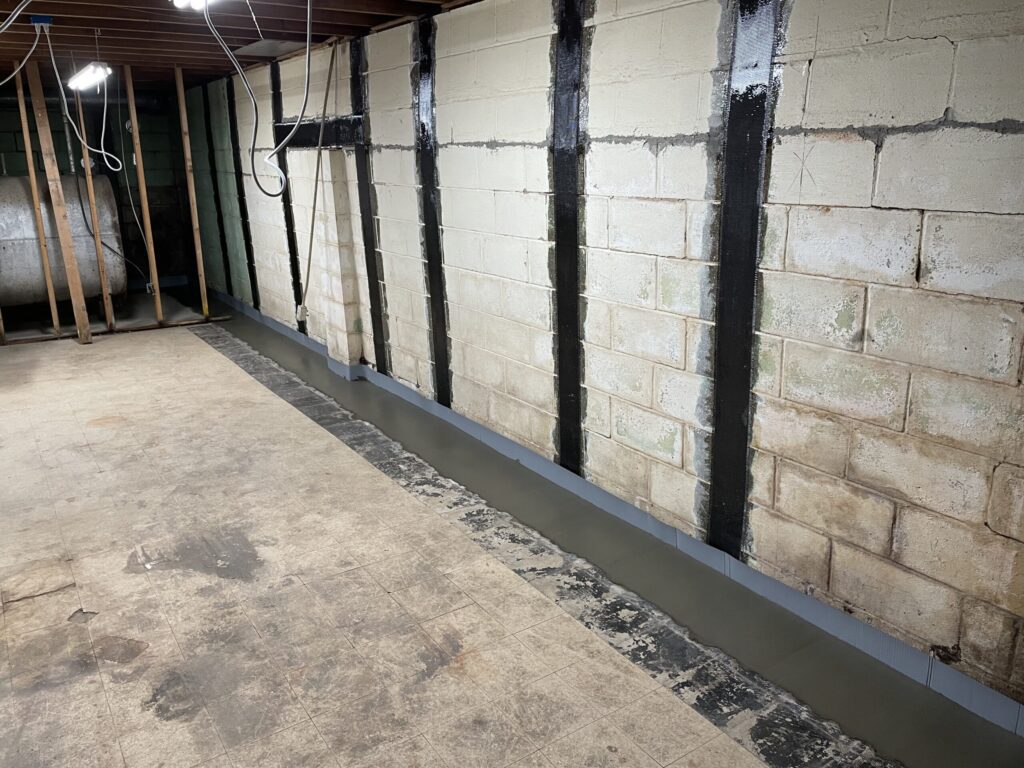
Carbon fiber is very strong in tension, but the repair depends on the wall, epoxy bond, spacing, and anchorage working together. if its not anchored it will peel off and will provide no benefit..
How Carbon Fiber Foundation Repair Works
A foundation wall usually bows because pressure acts from the outside. Wet soil, expansive clay, poor grading, clogged gutters, and failed drainage can all increase that pressure.
Carbon fiber works as bonded tension reinforcement, similar in principle to FRP strengthening used in structural concrete repair.. When the wall bends inward, the inside face of the wall goes into tension. The carbon fiber helps resist that tension and limits further movement.
A proper installation usually includes:
- grinding away paint, coatings, dust, and weak surface material
- filling or preparing cracks where required
- applying structural epoxy
- bonding and saturating the carbon fiber
- placing straps at the correct spacing
- using top or bottom anchorage where required
- allowing the epoxy to cure before finishing the wall
Surface preparation is not a small detail. It is the repair.
If the strap is bonded to paint, dust, weak block faces, or damp contaminated concrete, the system may not transfer force properly. A neat-looking strap is not automatically a good structural repair.
Some manufacturer instructions limit strap spacing to 48 inches, while other systems use spacing charts or project-specific design. Rhino Carbon Fiber’s bowed wall instructions also refer to 4 ft on-center spacing and project-specific design.
Carbon Fiber Foundation Repair Cost
Most installed carbon fiber strap repairs cost about $350 to $1,000 per strap. A 20–24 ft wall may need about five to seven straps, depending on spacing, wall height, wall condition, and the repair system.
| Repair size | Rough cost range |
|---|---|
| 2 straps | $700–$2,000 |
| 4 straps | $1,400–$4,000 |
| 6 straps | $2,100–$6,000 |
| Larger wall system | $4,000–$12,000+ |
Use these numbers for budgeting only. Final cost depends on access, wall height, surface preparation, crack repair, anchorage, waterproofing, and local labor rates.
You can also compare wall repair costs for carbon fiber straps, anchors, and other stabilization methods.
If your foundation wall is cracked, bowing, or moving inward, call (888) 664-3492 now to discuss repair options with a local foundation repair professional.
Call Now: (888) 664-3492Carbon Fiber vs Steel Beams vs Wall Anchors
Carbon fiber is popular because it is thin, clean, and low-profile. It does not take up much basement space and usually avoids exterior excavation.
But every repair method has a different job.
| Repair method | Best use | Main limitation |
|---|---|---|
| Carbon fiber straps | Minor to moderate bowing | Usually does not straighten severe movement |
| Steel beams | Stronger interior bracing | Bulky and harder to hide |
| Wall anchors | Bowed walls needing gradual correction | Needs exterior access |
| Helical tiebacks | Higher lateral restraint | More invasive and costly |
| Epoxy injection | Sealing stable cracks | Does not brace a bowing wall |
| Underpinning/piers | Settlement or sinking foundation | More expensive and invasive |
| Rebuilding | Severe wall damage | Expensive and disruptive |
Carbon fiber is often the cleanest option when the wall needs reinforcement. Steel beams, anchors, or tiebacks are often better when the wall has already moved too far.
Or, in homeowner language: carbon fiber is great before the wall starts doing yoga.
Are DIY Carbon Fiber Foundation Repair Kits Worth It?
DIY carbon fiber foundation repair kits exist. They may be reasonable for small, stable cracks after proper assessment, but bowing or moving foundation walls deserve caution.
The risk is not that carbon fiber is weak. The risk is choosing the wrong repair or installing it badly.
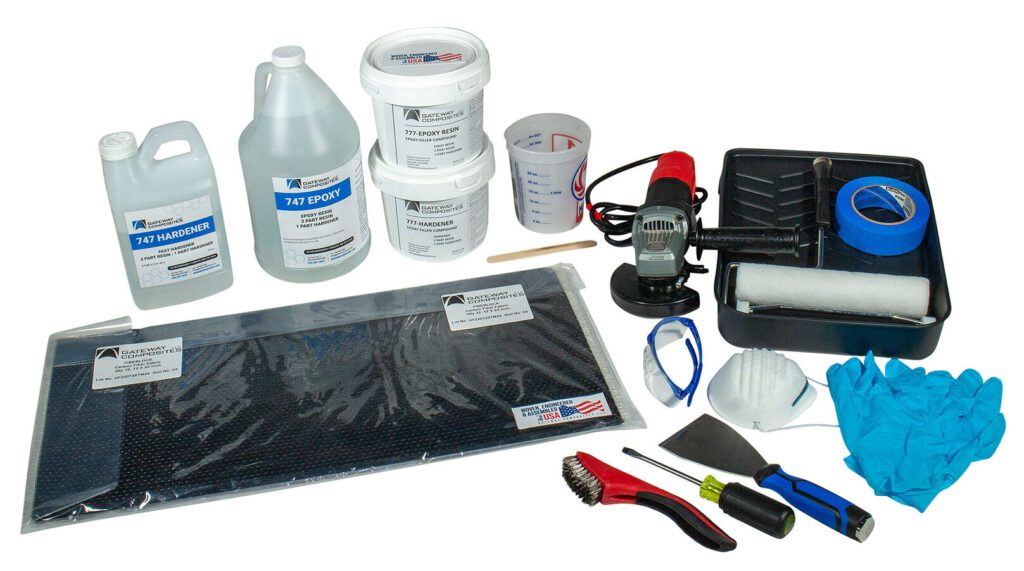
DIY becomes risky when:
- the wall is actively moving
- there is a horizontal crack
- the wall is visibly bowed
- the surface is painted or damp
- blocks are weak or deteriorated
- drainage problems are still active
- the home is being sold or inspected
A DIY kit can look clean on day one and still be structurally questionable. For bowing walls, horizontal cracks, finished basements, or resale situations, bring in a foundation contractor or structural engineer.
The Part That Decides Whether the Repair Lasts
Carbon fiber strengthens the wall. It does not remove the pressure outside the wall.
Before installing straps, check the boring but important things:
- gutters are working
- downspouts discharge away from the house
- soil slopes away from the foundation
- basement leaks are handled separately
- footing drains are not suspected to be clogged
- cracks are not actively widening
This is where many repairs fail. A strap can resist wall movement, but it cannot negotiate with saturated clay forever. Water usually wins long negotiations.
When Carbon Fiber Is Not Enough
Avoid carbon fiber as the only repair when:
- the wall is severely bowed
- the bottom of the wall is sliding inward
- the top of the wall is rotating
- blocks are crushed or displaced
- the wall is wet, soft, or deteriorated
- cracks keep widening
- the footing has settled
- the slab or foundation is sinking
- a previous repair has failed
In these cases, the wall or foundation may need steel beams, wall anchors, tiebacks, excavation, drainage correction, underpinning, piers, slab lifting, or rebuilding.
A structural engineer is especially useful when the wall movement is more than minor, because foundation damage may require broader concrete restoration or structural repair rather than straps alone.
FAQs About Carbon Fiber Foundation Repair
Is carbon fiber good for foundation repair?
Yes, when the wall is still structurally sound and needs stabilization. It works well for many bowing walls, horizontal cracks, crawl space walls, and some stem wall cracks.
It is not suitable for every settlement or footing problem.
Does carbon fiber fix foundation settlement?
No. Carbon fiber does not lift a settled foundation or correct soil support failure.
Settlement usually needs a different repair, such as underpinning, piers, slab lifting, or drainage correction.
Do carbon fiber straps straighten a bowed wall?
Usually, no. Carbon fiber mainly holds the wall in its current position and helps prevent further movement.
If the wall needs to be pulled back, wall anchors or tiebacks may be better.
How far apart should carbon fiber straps be?
Many systems use about 4 ft spacing, and some instructions set a maximum spacing of 48 inches. Final spacing should follow the product system, wall condition, and engineering requirements.
Is carbon fiber better than steel beams?
Carbon fiber is thinner, cleaner, and easier to hide. Steel beams are bulkier but may be better for more serious wall movement.
The better option depends on how far the wall has moved and whether it needs correction.
Final Takeaway
Carbon fiber foundation repair is a smart option for the right wall. It is thin, strong, clean, and often less invasive than steel beams or exterior wall anchors.
It works best for stable basement, crawl space, or stem walls with minor to moderate cracking or bowing. It works poorly when the wall is badly displaced, deteriorated, sliding, settling, or still being pushed by uncontrolled water pressure.
The simple rule is this:
Carbon fiber can help prevent further movement when the wall is still within the limits of the repair system. It cannot save a wall that has already gone too far.