Pier and Beam Foundation Repair: Cost, Problems and Fixes
Pier and beam foundation repair usually means leveling the floor system, adjusting or shimming piers, replacing damaged beams or joists, adding supports, and fixing crawl space moisture or drainage problems. Minor adjustments may be simple, but major sagging, rotten beams, termite damage, or soil movement needs a professional inspection.
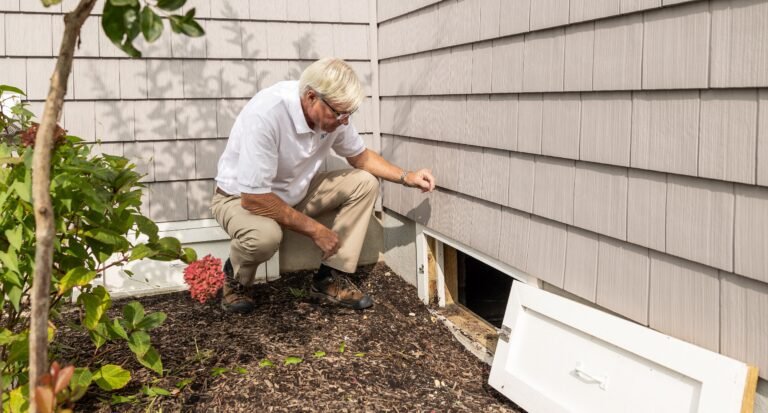
A pier and beam foundation is easier to inspect than a slab because the crawl space gives access to the support system. But that same crawl space can also expose the home to moisture, wood rot, termites, poor drainage, and weak temporary repairs.
This guide explains the warning signs, causes, repair methods, costs, and when to call a professional.
What Is a Pier and Beam Foundation?
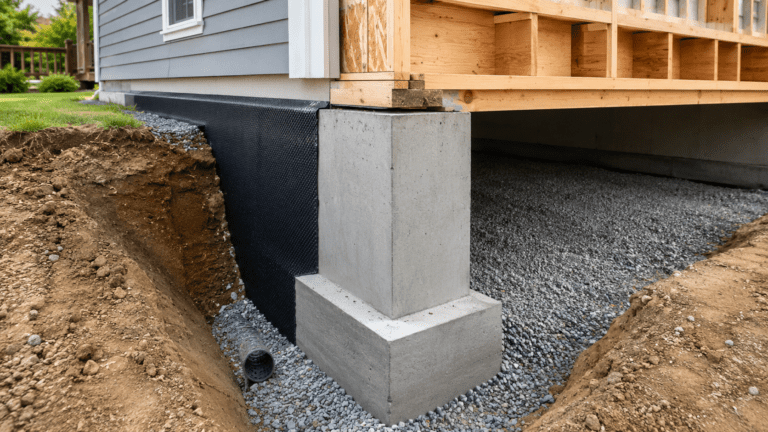
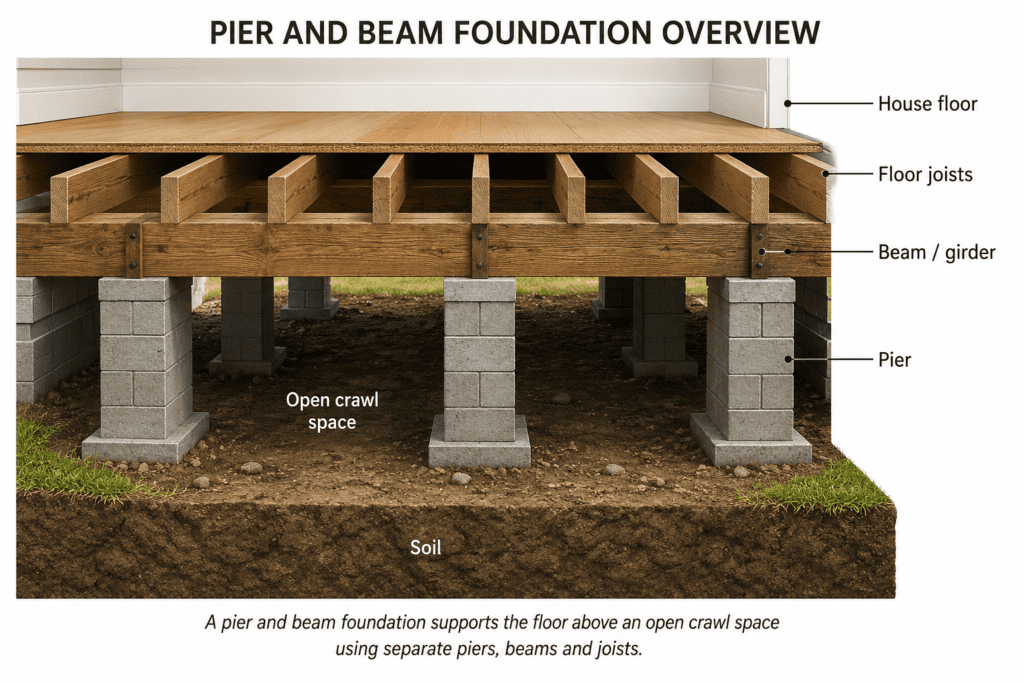
A pier and beam foundation supports a house on piers, posts, beams, and floor joists instead of a continuous concrete slab as shown in the diagram below. The piers carry load into the soil, the beams transfer load across the support points, and the joists support the floor above.
You often see this type of foundation in older homes, raised houses, and crawl space foundations. It gives easier access to plumbing, wiring, and floor framing, but it needs dry conditions and stable support.
Pier and beam foundations are different from continuous footing and stem wall foundations. If your home has a concrete perimeter wall or raised concrete stem wall instead of separate piers and crawl space supports, read our guide on footing and stem wall foundations.
Pier and Beam Foundation Parts
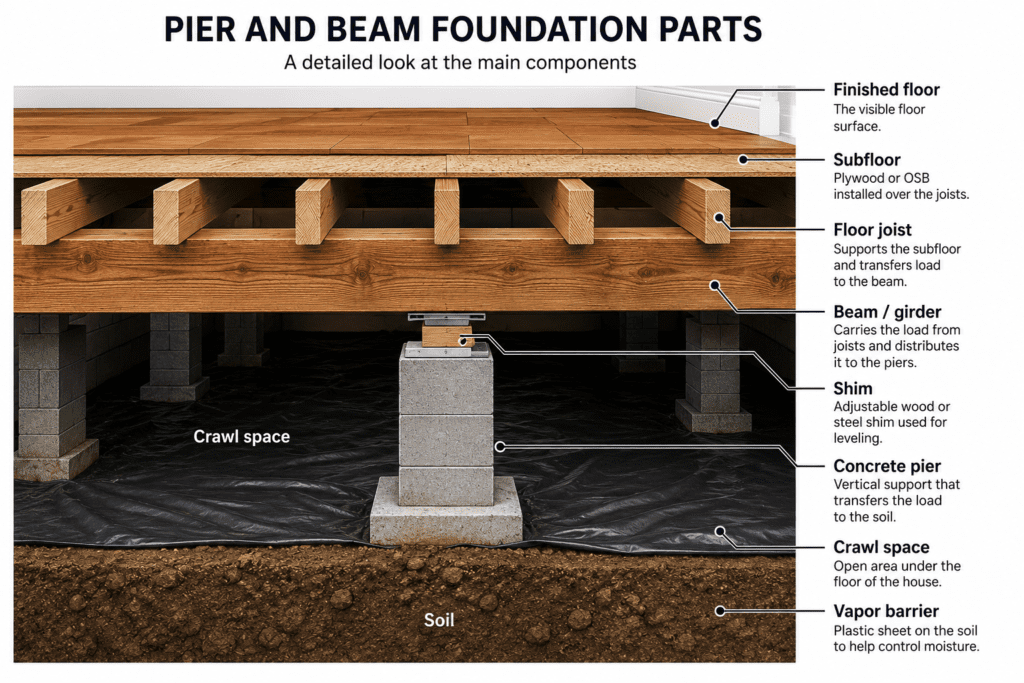
A pier and beam foundation works as a connected system. If one part settles, rots, or loses support, the floor above can start to slope, bounce, or sag. Here is the table and a diagram explaining the common parts function and its associated problems.
| Part | What it does | Common problem |
|---|---|---|
| Piers | Transfer house loads into the soil | Settlement, leaning, cracking |
| Beams or girders | Carry load from joists to piers | Rot, cracking, undersizing |
| Shims | Fill small gaps and help level support points | Compression, slipping, poor installation |
| Floor joists | Support the subfloor and finished floor | Sagging, bounce, termite damage |
| Subfloor | Forms the floor base above the joists | Soft spots, moisture damage |
For general residential framing background, HUD’s Residential Structural Design Guide is a useful reference for understanding how floor joists, beams, loads and connections work together in wood-framed homes.
Signs of Pier and Beam Foundation Problems
Most pier and beam foundation repair starts with finding the cause of movement, not simply lifting the floor back into position.
Homeowners usually notice symptoms inside the house before checking the crawl space.
Common warning signs include:
- uneven or sloping floors
- bouncy or soft floors
- doors that stick or swing open
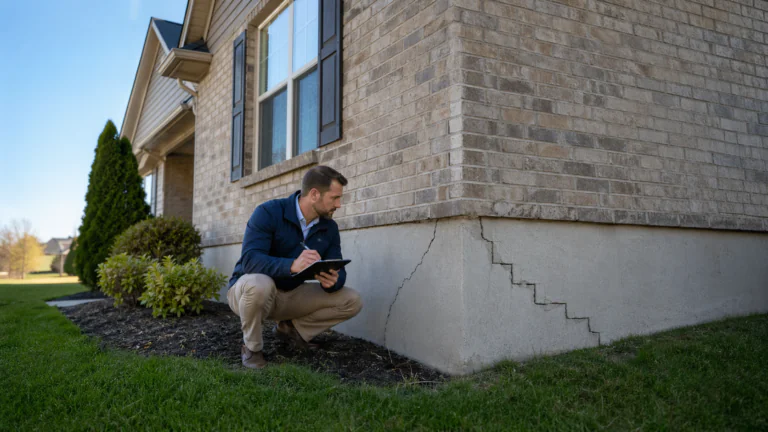
- cracks near doors and windows
- gaps at baseboards or trim
- worsening floor squeaks
- visible sagging beams in the crawl space
- leaning, cracked, or settling piers
- rotten joists or termite-damaged wood
Crawl-space moisture should be treated as a foundation repair issue, not just a comfort problem. The U.S. EPA’s moisture control guidance for building design explains why buildings need controlled drainage, drying and moisture management to reduce long-term material damage.
What Your Symptoms Usually Mean
| Symptom | Possible cause | Likely repair direction |
|---|---|---|
| Bouncy floor | Weak joists, long spans, poor blocking | Sister joists, blocking, added beam |
| Sloping floor | Settled piers or beam movement | Pier adjustment, shimming, leveling |
| Soft spots | Rot, termites, subfloor decay | Replace damaged wood, moisture control |
| Sticking doors | Uneven settlement or frame distortion | Foundation inspection and level survey |
| Recurring movement | Drainage or soil problem not fixed | Drainage correction plus structural repair |
A pier and beam repair is only successful when the support system, wood framing, crawl space moisture, and soil movement are addressed together. Lifting the floor without fixing the cause is usually temporary.
Call (888) 664-3492 to discuss pier, beam, or foundation support problems with a local foundation repair professional.
Call Now: (888) 664-3492What Causes Pier and Beam Foundations to Fail?
Most failures come from moisture, soil movement, wood decay, poor support spacing, or bad previous repairs.
Common causes include:
- expansive clay soil shrinking and swelling
- water pooling near or under the house
- crawl space humidity
- plumbing leaks
- failed wood shims
- rotten beams or joists
- termite damage
- undersized beams
- long joist spans
- leaning masonry piers
- temporary jack posts used as permanent supports
Moisture is one of the biggest issues. A wet crawl space can weaken wood, attract pests, and allow beams and joists to decay. For moisture-related work, our crawl space encapsulation cost calculator can help estimate vapor barrier and encapsulation costs.
How Pier and Beam Foundation Repair Works
The right pier and beam foundation repair should start with an inspection. A contractor or engineer checks floor levels, crawl space access, moisture, beams, joists, piers, shims, and soil conditions.
| Repair method | Best for | Typical difficulty |
|---|---|---|
| Shimming piers | Minor gaps or small settlement | Moderate |
| Pier adjustment | Uneven support points | Professional |
| House leveling | Sloping floors across several rooms | Professional |
| Beam replacement | Rotten, cracked, or undersized beams | Professional |
| Sistering joists | Weak or damaged floor joists | DIY/pro |
| Adding support piers | Long spans or poor support spacing | Professional |
| Moisture control | Rot prevention and humidity control | DIY/pro |
| Drainage correction | Water pooling near the home | DIY/pro |
Pier and Beam Leveling vs Foundation Repair
Leveling and repair are related, but they are not the same.
Pier and beam leveling raises or adjusts low areas so the floor sits closer to level.
Pier and beam foundation repair is broader. It may include leveling, but it can also include replacing rotten beams, adding piers, fixing joists, improving drainage, treating termites, and controlling crawl space moisture.
Leveling alone may make the floor look better for a while. But if the crawl space stays wet or the beams are damaged, the problem can return.
Pier and Beam Foundation Repair Cost
Pier and beam foundation repair cost depends on the home size, crawl space access, number of piers, beam condition, joist damage, pest damage, drainage work, and local labor rates.
Many repairs fall somewhere between $800 and $25,000, depending on scope. Small adjustments cost much less than major beam replacement or whole-house leveling.
| Repair type | Typical cost range | Notes |
|---|---|---|
| Minor shimming or adjustment | $800–$2,000 | Often maintenance-level work |
| Pier repair or added supports | $3,000–$6,000+ | Depends on number of piers and access |
| Joist or sill beam repair | $4,000–$10,000+ | Higher when rot or termites are present |
| General house leveling | $5,000–$15,000+ | Varies by movement and crawl space access |
| Major structural rebuild | $15,000–$25,000+ | Possible when beams, piers, and moisture damage are widespread |
The biggest cost drivers are access, labor, hidden rot, termite damage, and whether moisture or drainage repairs are needed before structural work.
Use our calculator to calculate foundation repair costs by repair type, quantity, and location for your specific project.
If your floors are sagging, piers are settling, or beams need repair, call (888) 664-3492 now to discuss your project with a local foundation repair professional.
Call Now: (888) 664-3492Can You DIY Pier and Beam Repair?
Some small tasks may be DIY-friendly for experienced homeowners, such as improving drainage, adding a ground vapor barrier, installing blocking, or sistering a minor joist under guidance.
But lifting a house is different. Raising floors too quickly can crack walls, damage plumbing, distort doors, split old framing, and create new stress points.
Call a professional if you see:
- major floor slope
- rotten beams
- termite damage
- leaning piers
- repeated settlement
- plumbing leaks in the crawl space
- cracks that keep growing
- doors and windows suddenly sticking
Do not jack a sagging pier and beam floor quickly. Leveling should be gradual and based on the cause of movement, not just the lowest point in the floor.
How to Prevent Future Problems
Prevention is mostly about keeping the crawl space dry and the support system stable.
Good steps include:
- slope soil away from the house
- keep gutters and downspouts working
- avoid water pooling under the crawl space
- repair plumbing leaks quickly
- use a vapor barrier where appropriate
- inspect beams and joists for rot
- check for termites regularly
- avoid storing wet materials in the crawl space
If the movement appears related to soil or settlement around the home, read our foundation settlement repair guide.
Pier and Beam vs Slab Foundation Repair
Pier and beam homes are easier to inspect from below, but they are more vulnerable to crawl space humidity, wood decay, pests, and failed shims.
Slab foundation repairs are different. They often involve concrete cracks, settlement, heave, lifting, underpinning, or slab repair. If your home sits on a slab, see our slab foundation repair guide.
FAQs
Is pier and beam foundation repair permanent?
It can be long-lasting when the cause is fixed. If the repair only lifts the floor but ignores drainage, moisture, termites, or soil movement, the problem may come back.
How often should a pier and beam foundation be inspected?
A basic crawl space check once a year is sensible. Inspect sooner after plumbing leaks, flooding, termite activity, or new floor movement.
Is it safe to buy a house with pier and beam foundation problems?
It depends on the severity. Minor shimming or isolated joist repair may be manageable. Major settlement, widespread rot, or failed beams should be evaluated before purchase.
Does homeowners insurance cover pier and beam repair?
Usually not for long-term settlement, poor drainage, or normal wear. Sudden covered events may be different, so check your policy and ask your insurer.
What is the biggest mistake homeowners make?
Jacking the floor without fixing the cause. A level floor is not a successful repair if the crawl space remains wet or the support system is still failing.