What Causes Concrete to Crack?
Concrete cracks when tensile stress exceeds what the mix can resist. Shrinkage, temperature swings, weak subgrade, overloading, and deterioration all generate that stress. Not every crack signals a structural problem, but the pattern matters. A hairline slab crack, a diagonal wall crack, and a rust-stained crack are three different problems pointing to three different causes
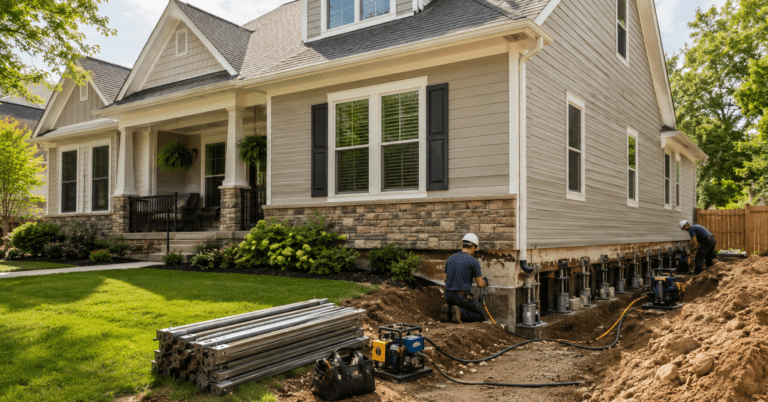
If the crack is in a foundation wall, start with our foundation crack repair guide before choosing a repair method. Here is that cause concrete cracking.
1. Shrinkage Cracks
Shrinkage is one of the most common causes of cracking in concrete.
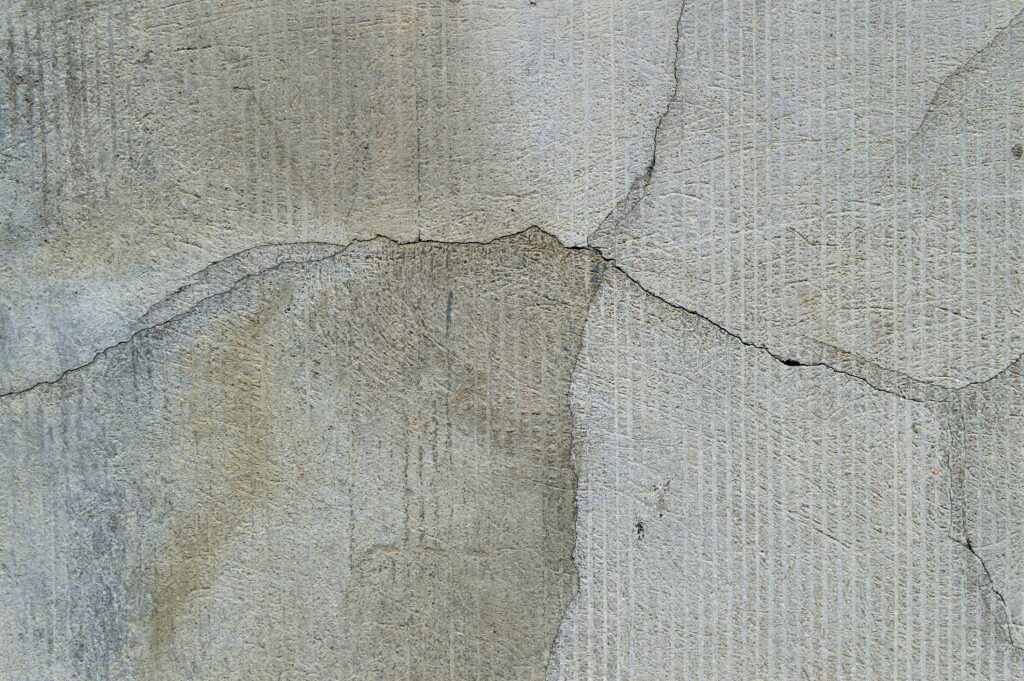
Fresh concrete contains water. As the water evaporates, the concrete shrinks. If the slab is restrained by the ground, walls, reinforcement, or nearby concrete, it cannot move freely. Stress builds up, and a crack forms.
There are two common types:
Plastic shrinkage cracks happen before concrete fully hardens. They often appear in hot, dry, or windy weather when the surface dries too quickly.
Drying shrinkage cracks appear later as concrete continues to lose moisture. These are common in slabs, driveways, patios, and pavements.
This is why control joints matter. They guide the crack to a planned location instead of letting it run randomly across the slab.
Control joints are often spaced roughly 24 to 36 times the slab thickness. For a 100 mm slab, that means about 2.4 to 3.6 m. This is only a rule of thumb. Actual spacing depends on slab thickness, reinforcement, mix design, restraint, and local practice.
For slab construction, jointing and site preparation are especially important. The ACI guide for concrete floors and slabs gives practical guidance for producing high-quality concrete slabs
2. Temperature Movement
Temperature movement is another common answer to what causes concrete to crack, especially in long slabs, driveways, pavements, and exposed concrete surfaces. Concrete expands when it gets hot and contracts when it cools.
This daily and seasonal movement can crack long slabs, driveways, pavements, walls, and exposed concrete surfaces if movement joints are missing.
Control joints and expansion joints are not the same. A control joint guides shrinkage cracking. An expansion joint allows concrete sections to move.
The gap provides the movement. A flexible expansion joint sealant protects the opening from water and debris while allowing that movement to continue.
3. Poor Ground Preparation and Settlement
Poor ground preparation is one of the most serious causes of cracking in concrete because the problem starts below the slab, not at the surface. A concrete slab is only as good as the ground below it.
Before pouring a new slab, use our concrete slab price calculator to estimate material and labor costs.
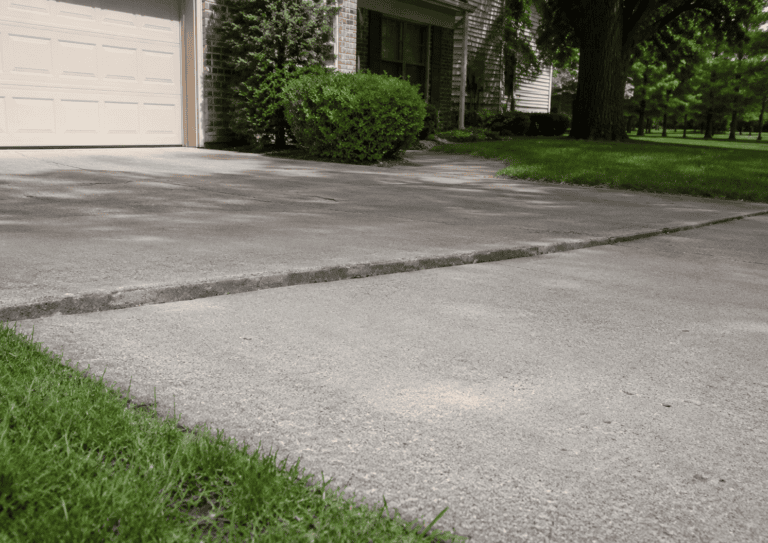
If the soil or subbase is soft, loose, wet, poorly compacted, or uneven, part of the slab can sink. When one side moves down and the other stays in place, the slab bends and cracks.
Settlement cracks are usually more serious than shrinkage cracks. They may be wide, diagonal, uneven, or displaced, meaning one side of the crack is higher than the other.
Common causes include:
- poorly compacted fill
- soft clay or weak soil
- water washing out soil
- leaking drains or pipes
- tree roots or decayed roots
- poor drainage around the slab
If a crack has vertical displacement, do not just fill the top. The real problem is often below the slab. If the ground is still moving, the repair will crack again.
Where exposed soil adjacent to a slab is vulnerable to erosion or water washout, concrete cloth is sometimes used as a fast protective lining for drainage channels and exposed slopes before they undermine the subbase.
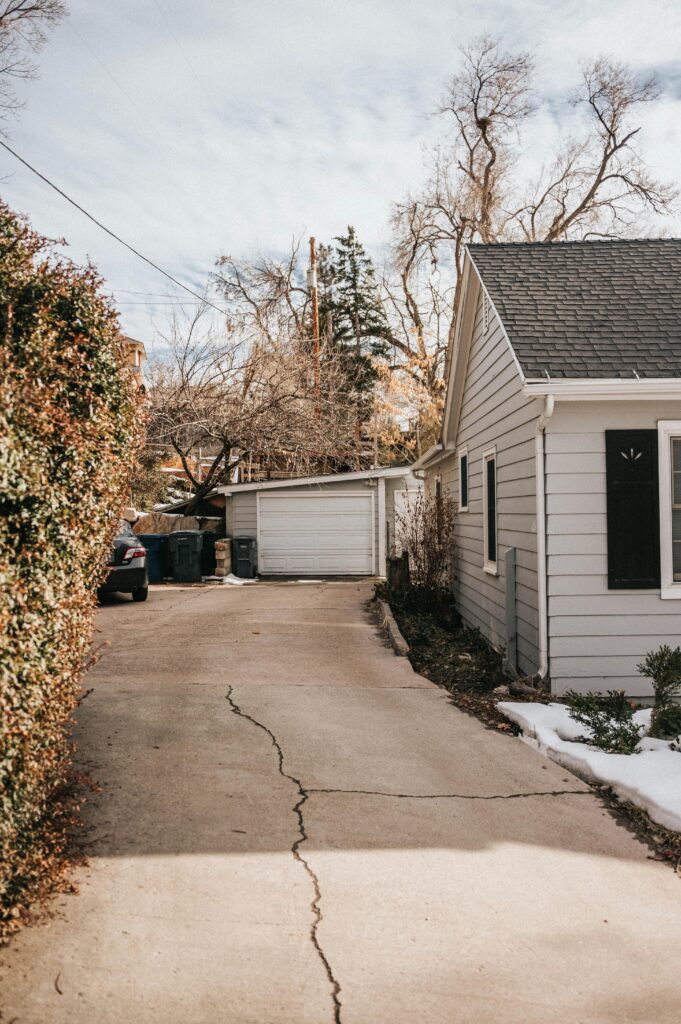
If you are worried about cracks in your slab foundation see our slab foundation repair guide.
4. Overloading
Concrete slabs are designed for specific loads.
A patio is not a driveway. A domestic driveway is not an industrial yard. If a heavy delivery truck, skip lorry, loaded trailer, or construction vehicle drives over a thin residential slab, cracking can occur.
Overload cracks may appear as wheel-path cracks, transverse cracks, or star-shaped cracks under concentrated loads.
A slab can look tough and still be completely unprepared for a truck that weighs more than the family car plus everyone’s bad decisions.
5. Reinforcement Corrosion
Reinforced concrete contains steel bars or mesh. The steel helps resist tension, but it must be protected by good concrete cover.
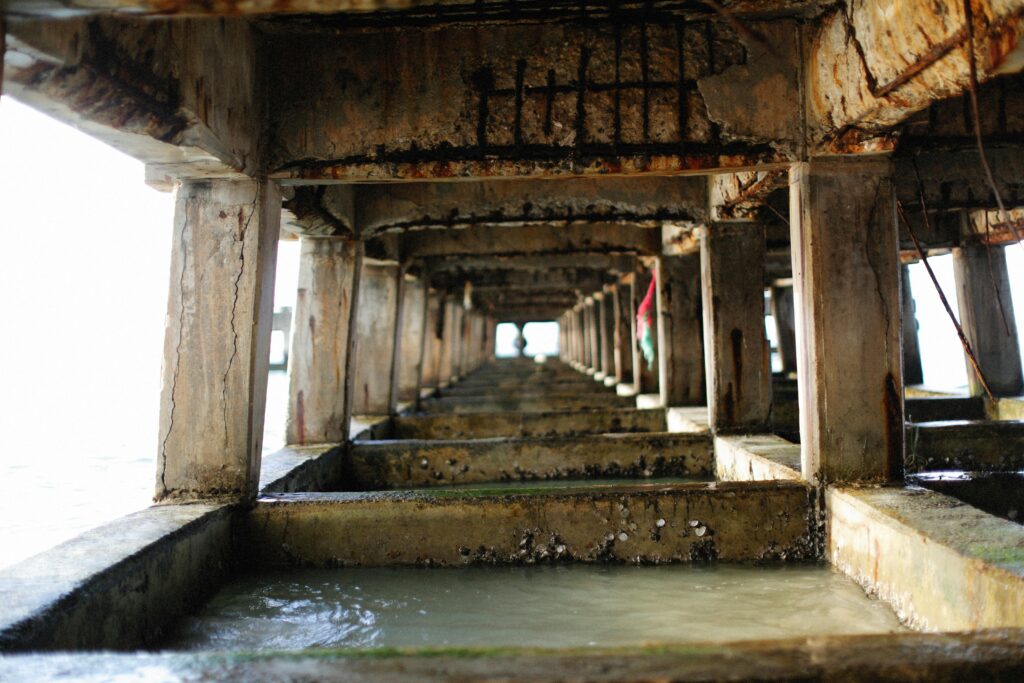
When moisture, oxygen, chlorides, or carbonation reach the steel, corrosion can begin. Rust occupies more volume than the original steel, creating pressure inside the concrete. This causes cracking, concrete spalling, and sometimes exposed reinforcement.
Warning signs include:
- rust stains
- cracks following rebar lines
- hollow-sounding concrete
- broken or flaking concrete
- exposed steel
6. Freeze-Thaw Damage
Freeze-thaw damage is another answer to what causes concrete to crack, especially in cold regions where water can enter the concrete surface. In cold climates, water can enter tiny pores and cracks in concrete. When the water freezes, it expands. Repeated freezing and thawing damages the surface.
Freeze-thaw damage often appears as scaling, flaking, concrete popouts, or shallow cracking
Good air-entrained concrete, proper curing, sealing, and drainage help reduce this problem.
7. Tree Roots and Soil Movement
Tree roots can crack concrete directly by lifting slabs. They can also dry out clay soil, causing the ground to shrink and the slab to lose support.
This is why cracks near large trees should not be judged only from the surface. Sometimes the concrete is not the main problem. The soil is.
Before You Spend Money: What Kind of Crack Is It?
Use Table 1 as a quick guide before buying filler or calling a contractor.
Table 1: Common concrete crack types and what they usually mean
| Crack Type | What It Looks Like | Usually Serious? | What to Do |
|---|---|---|---|
| Plastic shrinkage | Shallow, random surface cracks | Usually no | Monitor or seal |
| Drying shrinkage | Straight or slightly wandering crack | Usually no in slabs | Seal and check joints |
| Thermal crack | Cracks across long slabs | Usually no | Seal and check movement joints |
| Settlement crack | Wide, diagonal, uneven, displaced | Often yes | Get professional advice |
| Overload crack | Wheel-path or star-shaped cracks | Sometimes | Check load and slab thickness |
| Corrosion crack | Rust stains, spalling, cracks along steel | Potentially yes | Professional repair |
| Freeze-thaw damage | Scaling, flaking, surface breakdown | Durability issue | Repair surface and improve drainage |
As a rough guide, very fine cracks with no movement are often cosmetic. Cracks that are wide, growing, displaced, leaking, rust-stained, or located in structural elements need more attention.
The Concrete Society also notes that cracks can result from different mechanisms, including overloading and other forms of distress. Their short guide on cracks in concrete is a useful additional reference when trying to understand whether a crack is mainly cosmetic or potentially more serious.
For a more technical background, the American Concrete Institute explains that cracking in concrete is commonly linked to restraint, drying shrinkage, thermal effects, corrosion and durability exposure in its ACI guidance on controlling cracking in concrete structures.
How to Reduce Concrete Cracking
Understanding what causes concrete to crack is useful, but preventing it starts with better detailing, placement, curing, and ground preparation.
You cannot stop every crack, but you can reduce random cracking by doing the basics well:
- compact the subgrade properly
- use the correct slab thickness
- avoid adding too much water
- place control joints correctly
- use expansion joints where movement is expected
- cure the concrete properly
- protect fresh concrete from heat, wind, and freezing
- improve drainage around the slab
- use reinforcement or fibers where appropriate
One example is glass fiber reinforced concrete (GFRC), where short alkali-resistant glass fibers bridge small cracks and improve flexural performance.
Before placing fresh concrete, it is important to perform concrete slump test to ensure proper workability. Poor workability can also cause cracking.
When to Call a Professional
Some causes of cracking in concrete are harmless, while others need proper investigation. Small hairline cracks in patios, paths, and non-structural slabs can often be sealed and monitored.
Call a professional or structural engineer if:
- the crack is wide or growing
- one side is higher than the other
- the crack is in a wall, beam, column, retaining wall, foundation wall, or suspended slab
- rust stains or exposed steel are visible
- water is entering through the crack
- several cracks appear suddenly
- the crack pattern suggests settlement
A crack in a garden path and a crack in a retaining wall are not the same story. One may need sealant. The other may need engineering judgement.
FAQs
What causes concrete to crack?
Concrete cracks when shrinkage, temperature movement, settlement, overloading, poor curing, freeze-thaw damage, tree roots, or reinforcement corrosion create stresses greater than the concrete can resist.
What are the main causes of cracking in concrete?
The main causes of cracking in concrete include plastic shrinkage, drying shrinkage, thermal movement, weak subgrade support, settlement, overloading, corrosion of reinforcement, freeze-thaw action, and soil movement.
What are the main sources of cracking in concrete?
The main sources of cracking in concrete are moisture loss, temperature change, poor jointing, poor curing, weak ground support, excessive loading, reinforcement corrosion, and environmental exposure.
Is it normal for concrete to crack?
Yes. Some cracking is normal because concrete shrinks as it dries and moves with temperature changes. Small hairline cracks in slabs and patios are common.
When should I worry about a concrete crack?
Worry if the crack is wide, growing, uneven, leaking, rust-stained, or located in a structural element such as a wall, beam, column, foundation, or retaining wall.