Concrete Slump Test: Procedure and Result
The concrete slump test checks the workability of fresh concrete before placement. A slump cone is filled with concrete in three layers, each layer is rodded 25 times, the cone is lifted vertically, and the drop in concrete height is measured as the slump. The result helps site engineers decide whether the concrete is workable, too stiff, too wet, or inconsistent.
Purpose of Concrete Slump Test
The main purpose of the slump test of concrete is to check whether the delivered concrete has the required workability for the job.
The slump test is covered in standards such as ASTM C143/C143M and BS EN 12350-2, which describe the test method for fresh concrete consistency. ASTM C143 is also part of ACI’s field testing technician certification program.
It helps check:
- consistency between concrete batches
- whether the mix is too stiff or too wet
- whether concrete can be placed around reinforcement
- whether the mix is suitable for pumping or manual placement
- whether water has been added too much on site
Adding extra water may increase slump, but it can also increase shrinkage and cracking. See our guide on what causes concrete to crack for more detail.
Slump Test Apparatus
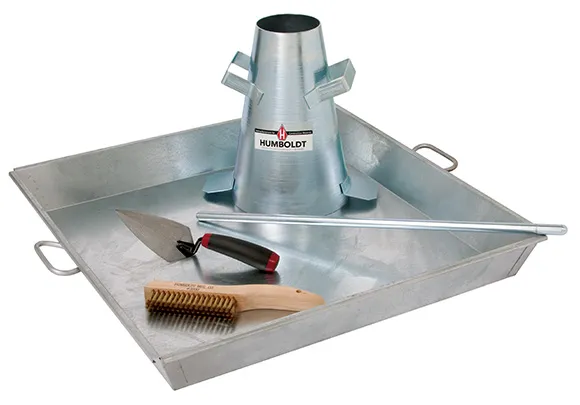
The standard slump test apparatus includes:
| Apparatus | Use |
|---|---|
| Slump cone | Holds fresh concrete in a standard cone shape |
| Tamping rod | Compacts each concrete layer |
| Base plate | Provides a flat, firm, non-absorbent surface |
| Measuring scale | Measures the slump value |
| Scoop or trowel | Places concrete into the cone |
The cone should be clean and damp before testing. The base plate should also be level, firm, damp, and non-absorbent.
Concrete Slump Test Procedure
Follow this step-by-step concrete slump test procedure:
- Place the slump cone on a flat, level, damp, non-absorbent base.
- Stand firmly on the foot pieces or hold the cone so it does not move.
- Fill the cone with fresh concrete in three equal layers.
- Rod each layer 25 times using the tamping rod.
- For the second and third layers, let the rod slightly penetrate the layer below.
- After filling the top layer, strike off the surface level with the top of the cone.
- Remove loose concrete from around the base of the cone.
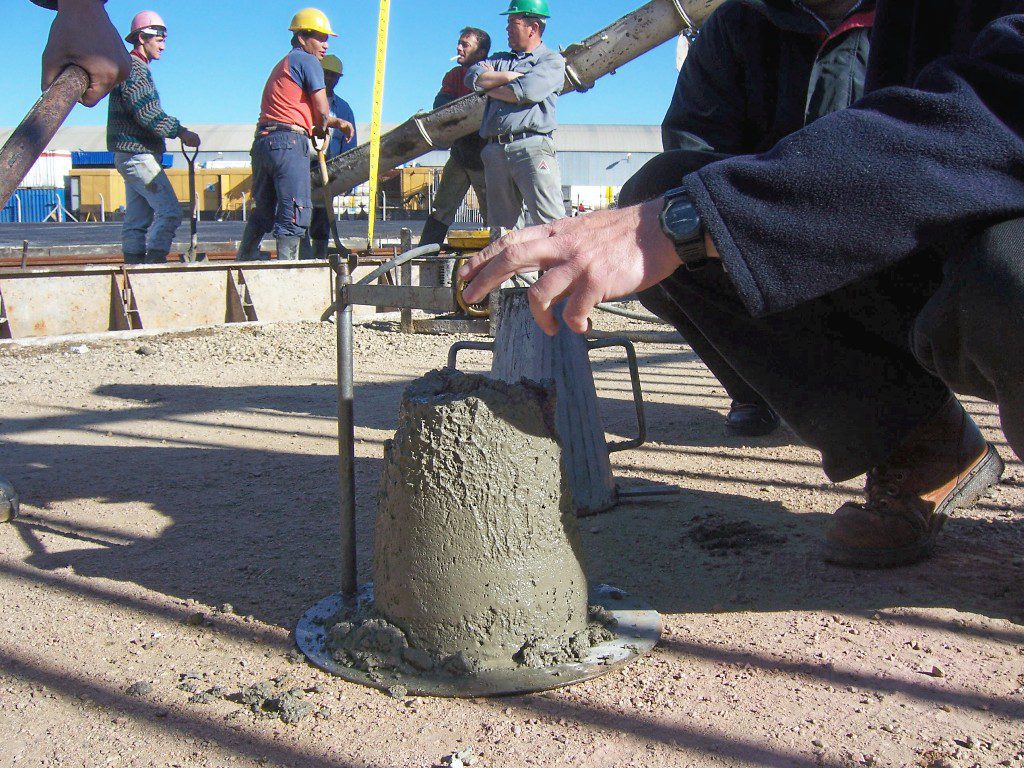
- Lift the cone vertically in a smooth motion without twisting.
- Place the cone beside the slumped concrete.
- Measure the vertical difference between the cone height and the highest displaced point of the concrete.
- Record the slump value in mm or inches.
The cone should be lifted straight upward. If the cone is lifted sideways or twisted, the result may be wrong. ASTM-based guidance commonly notes that the cone should be lifted vertically within about 5 ± 2 seconds, and the test should be completed promptly after filling.
Before ordering concrete, use our concrete calculator to estimate the volume needed for slabs, footings, columns, or small pours.
How to Measure Slump
After removing the cone, the concrete will settle. The slump value is the vertical drop from the original cone height to the displaced top of the concrete.
Example:
If the original cone height is 300 mm and the concrete settles to 220 mm, the slump is:
300 − 220 = 80 mm
So the reported slump is 80 mm.
For US site work, slump may be recorded in inches instead of millimeters.
Types of Slump in Concrete
There are three common types of slump in concrete.
| Type of Slump | Appearance | Meaning |
|---|---|---|
| True slump | Concrete settles evenly and keeps its general shape | Usually valid |
| Shear slump | One side slips or shears off | Repeat the test |
| Collapse slump | Concrete collapses completely | Mix may be too wet or unsuitable for this test |
A true slump is the preferred result. A shear slump usually means the test should be repeated. A collapse slump often means the concrete is too wet or highly workable for the normal slump test.

Typical Concrete Slump Test Values
The correct slump depends on the project specification. A footing, pavement, column, slab, and pumped concrete mix may all require different slump ranges.
General practical ranges are:
| Type of Work | Typical Slump Range |
|---|---|
| Very stiff concrete / road pavement | 0–25 mm / 0–1 in |
| Footings and mass concrete | 25–75 mm / 1–3 in |
| Normal reinforced concrete | 75–125 mm / 3–5 in |
| Heavily reinforced concrete | 100–150 mm / 4–6 in |
| Pumped concrete | Often higher, depending on mix design |
These are only guide ranges. The project specification should always control.
Prestressed concrete requires high-strength mixes with tight quality control — slump requirements vary by application.
Planning a concrete slab pour? Use our concrete slab price calculator to estimate volumes and costs before ordering.
Does Slump Test Measure Strength?
No. The concrete slump test does not measure compressive strength.
Slump measures fresh concrete workability. Strength is checked later by testing hardened concrete specimens, such as cylinders or cubes. A high slump does not automatically mean high strength. In fact, if high slump is caused by excess water, the concrete strength may reduce.
ACI lists slump testing together with other fresh concrete field tests such as temperature, density, air content, and making strength specimens.
Foam concrete behaves differently from normal concrete, so its flow and stability should be judged with the correct test method rather than treating it like a standard slump-test mix
Common Mistakes in Slump Cone Test
Avoid these mistakes during the slump cone test:
- testing on an uneven surface
- using a dry or dirty cone
- not holding the cone firmly
- filling the cone in unequal layers
- not rodding each layer 25 times
- lifting the cone sideways
- twisting the cone while lifting
- measuring from the wrong point
- using a non-representative concrete sample
- adding water before testing without approval
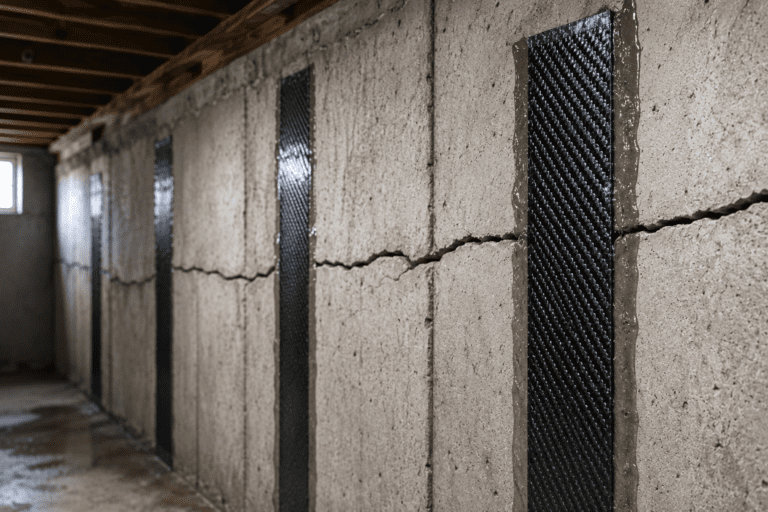
Poor workability control, excess water, and weak finishing practice can all contribute to future slab problems. Our concrete slab foundation repair guide explains what serious slab distress can look like later.
When Should Slump Testing Be Done?
Slump testing is usually done when fresh concrete arrives on site and before placement begins. It may also be repeated if:
- the concrete looks wetter or drier than expected
- delivery time is long
- water or admixture is added
- different trucks show different consistency
- the concrete is being used in critical structural work
For large pours, regular testing helps check consistency between batches.
What to Do If the Slump Is Too Low or Too High
If the slump is too low, the concrete may be stiff and difficult to place. Do not automatically add water. First, check the project specification, delivery ticket, time since batching, temperature, and whether admixture adjustment is allowed.
If the slump is too high, the concrete may be too wet. It may segregate, bleed, or fail to meet the specified mix requirements. In this case, the concrete should be reviewed before placement.
A slump result outside the specified range should not be ignored.
Final Thoughts
The concrete slump test is simple, quick, and very useful on site. It tells you whether fresh concrete has the right consistency before it is placed.
The key steps are simple: use clean damp apparatus, fill the cone in three layers, rod each layer 25 times, lift the cone vertically, and measure the drop accurately.
A slump test does not prove strength, durability, or good curing. It only checks fresh concrete workability. But if done correctly, it can prevent many placing, compaction, and finishing problems before concrete enters the formwork.
Workability also affects how easily concrete can be consolidated around reinforcement. See our guide to internal vibration of concrete for proper insertion, spacing, and consolidation technique.
FAQs
What is a concrete slump test?
A concrete slump test is a field test used to check the workability and consistency of fresh concrete before it hardens.
How many layers are used in the slump test?
The cone is filled in three equal layers.
How many times is each layer rodded?
Each layer is rodded 25 times using a tamping rod.
What are the three types of slump?
The three main types are true slump, shear slump, and collapse slump.
What is a good slump value for concrete?
It depends on the project. Normal reinforced concrete often uses about 75–125 mm, but the project specification should always be followed.
Does slump test show concrete strength?
No. Slump test checks workability. Concrete strength is checked later using cube or cylinder compressive strength tests.