
Septic Tank Installation Cost Calculator
In my experience septic tank installation cost usually ranges from $6,000 to $15,000 for a standard conventional system. Use the calculator below to estimate tank, drain field, excavation, permits, replacement work, and add-ons.
Inputs
Home and tank details
System type and market
Site and drain field conditions
Permits and add-ons
Your septic installation estimate
- Tank size and tank material
- System type and drain field design
- Perc test, permit and inspection allowance
- Excavation, bedding, backfill and final grading
- Old tank removal or abandonment if replacing
- Pump, alarm, risers and distribution box if needed
The following image depicts the main factor affection the septic system installation cost.
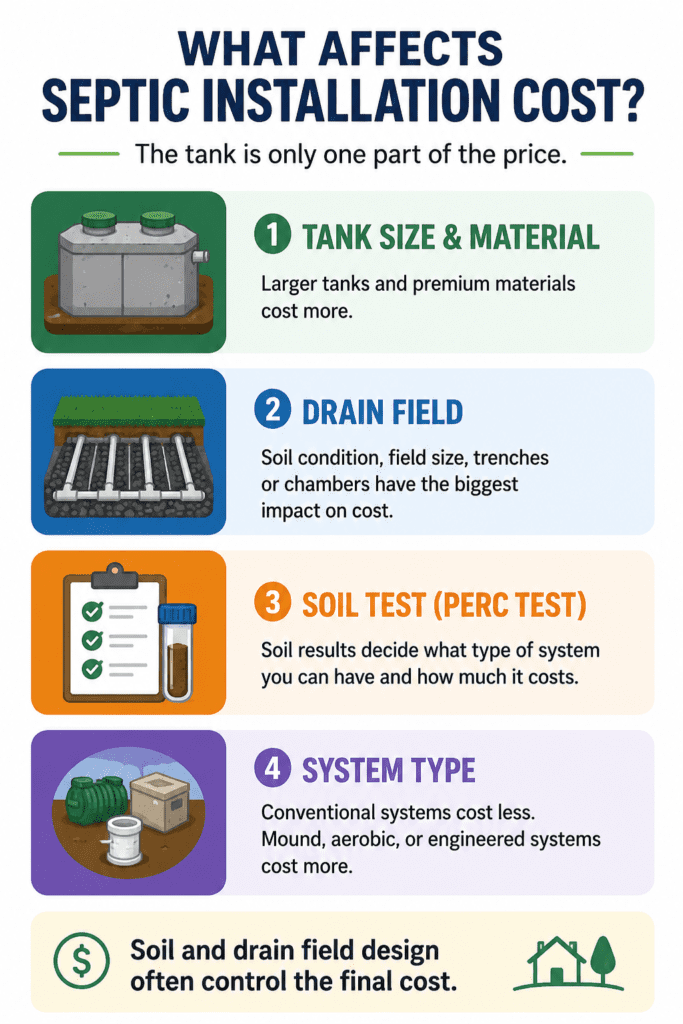
Average Septic Tank Installation Cost in 2026
Most homeowners pay for a full septic system, not only the buried tank. A complete installation usually includes the tank, excavation, inlet and outlet pipes, distribution box, drain field or leach field, labor, permits, inspection, and final grading.
In my observation, for a standard conventional septic system in US, plan around $6,000 to $15,000. Simple systems on good soil may cost less. Mound systems, aerobic treatment units, engineered systems, failed drain fields, poor soil, high groundwater, or difficult excavation cost more.
| Project Type | Typical Cost Range | Best For |
|---|---|---|
| Tank-only replacement | $3,000 to $12,000 | Existing drain field still works |
| Conventional septic system | $6,000 to $15,000 | Good soil, simple yard, gravity flow |
| Chamber septic system | $7,000 to $18,000 | Chamber trenches instead of gravel beds |
| Aerobic septic system | $10,000 to $25,000+ | Poor soil, small lots, higher treatment needs |
| Mound septic system | $15,000 to $35,000+ | High groundwater, shallow soil, shallow bedrock |
| Engineered septic system | $20,000 to $50,000+ | Difficult sites with custom design |
A low septic quote is risky when it excludes the drain field, soil test, permit, old tank removal, pump, risers, or final grading. I always advice to compare the full scope, not only the headline price.
Septic Tank Replacement Cost
Septic tank replacement cost depends on what failed.
If only the tank needs replacement and the drain field still works, the project often costs about $3,000 to $12,000. This usually includes excavation, old tank removal or abandonment, new tank placement, pipe reconnection, backfill, inspection, and basic yard repair.
Full septic system replacement costs more because it may include a new tank, new drain field, new pipework, permits, testing, and site restoration.
| Replacement Type | Cost Position | What It Means |
|---|---|---|
| Tank-only replacement | Lower | The drain field still works |
| Drain field replacement | Medium to high | The leach field failed |
| Full system replacement | High | Tank, field, pipework, permits, grading |
| Engineered replacement | Highest | Site needs a mound, pump, ATU, or custom design |
Tank-only replacement is cheaper only when the drain field is usable. If the leach field has failed, the contractor may need to replace or redesign a much larger part of the system.
Septic Cost by System Type
System type is one of the biggest cost drivers. A conventional gravity septic system is usually the cheapest option, but it only works when the soil drains properly and the site layout supports gravity flow.
| System Type | Typical Cost Range | Why Cost Changes |
|---|---|---|
| Conventional gravity system | $6,000 to $15,000 | Soil, slope, trench length, excavation depth |
| Chamber system | $7,000 to $18,000 | Chamber layout, field size, trenching |
| Aerobic treatment unit | $10,000 to $25,000+ | Pumps, power, alarms, inspections |
| Mound system | $15,000 to $35,000+ | Sand fill, pump system, grading |
| Engineered system | $20,000 to $50,000+ | Custom design, poor soil, strict permits |
EPA notes that septic design varies by household size, soil type, site slope, lot size, nearby water bodies, weather, and local regulations. That is why two similar homes may receive very different septic installation quotes.
Tank Size, Material, and Add-ons
Tank size is usually based on bedroom count and local design flow rules. Bedrooms matter because they estimate possible occupancy and daily wastewater flow. A room counted as a bedroom for permitting may affect septic sizing even if the current owner uses it as an office or guest room.
Before estimating installation cost, use our septic tank size calculator to check likely tank capacity based on bedrooms, household size, and daily wastewater flow.
The table below gives septic tank price ranges for different tank sizes.
| Tank Size | Common Use | Tank Cost Range |
|---|---|---|
| 750 gallons | Small homes, cabins, ADUs | $700 to $1,900 |
| 1,000 gallons | 2 to 3 bedroom homes | $900 to $2,300 |
| 1,250 gallons | 3 to 4 bedroom homes | $1,100 to $2,800 |
| 1,500 gallons | 4 to 5 bedroom homes | $1,500 to $3,600 |
| 2,000 gallons | Large homes or higher flow | $2,100 to $5,200 |
A 1,000-gallon septic tank is common for many smaller homes, but the tank price is not the full installed cost. Excavation, labor, permits, pipe connections, and drain field work usually make up most of the final price.
| Tank Material | Cost Position | Notes |
|---|---|---|
| Concrete | Medium | Durable, common, heavy, less likely to float |
| Plastic / polyethylene | Lower to medium | Lightweight, easier to transport, may need anchoring |
| Fiberglass | Medium to high | Lightweight, corrosion-resistant, often more expensive |
| Aerobic treatment unit | High | Mechanical treatment system, not only a tank material |
Septic tank risers add cost, but they make pumping and inspection easier. If you are installing a new tank, check whether septic tank risers should be added now, because adding risers later can mean extra digging.
If the existing tank is still serviceable and only needs routine maintenance, use our septic tank pumping cost calculator to estimate the pump-out instead.
Drain Field, Soil Test, and Quote Factors
The drain field, also called a leach field, disperses treated wastewater into the soil. It often becomes the most expensive part of the system when the soil drains poorly or the existing field has failed.
For a separate field estimate, use our septic tank drain field calculator to check how leach field size, soil, trench layout, and replacement scope affect cost.
A soil test or perc test helps determine whether the site can absorb effluent safely. Good soil may support a conventional system. Clay soil, shallow bedrock, high groundwater, or failed perc results may require a mound system, aerobic treatment unit, pump tank, or engineered design.
| Quote Item | Why It Matters |
|---|---|
| Tank size and material | Confirms capacity and durability |
| System type | Main cost driver |
| Drain field design | Often the largest cost item |
| Soil test and permits | Required in many areas |
| Excavation and backfill | Major labor and equipment cost |
| Old system removal | Important for replacement work |
| Risers, pump, alarm, d-box | Affects maintenance and operation |
| Final grading | Restores drainage around the site |
A low quote that excludes permits, soil testing, drain field work, old tank removal, or yard repair can become more expensive later.
Common cost triggers include failed perc tests, clay soil, high groundwater, shallow bedrock, steep lots, poor access, failed drain fields, mound systems, aerobic units, pump tanks, engineered design, rock excavation, and old tank abandonment.
How the Septic Tank Installation Cost Calculator Works
The calculator estimates a low, typical, and high planning range using bedrooms, tank size, tank material, project type, system type, region, soil condition, slope, access, drain field condition, permit allowance, risers, pump, alarm, distribution box, and yard repair.
The result is a planning estimate, not a contractor bid. Local code, health department review, field inspection, and soil testing control the final design.
FAQs
How much does septic tank installation cost?
Septic tank installation cost usually ranges from about $6,000 to $15,000 for a standard conventional system. Tank-only replacement costs less, while mound, aerobic, engineered, failed drain field, or difficult-site systems cost more.
How much does septic tank replacement cost?
Septic tank replacement cost often ranges from about $3,000 to $12,000 when only the tank is replaced and the drain field still works. Full septic system replacement costs more because it may include a new drain field, permits, excavation, and site restoration.
What is the average cost to install a septic tank and drain field?
A complete septic tank and drain field installation often costs about $6,000 to $15,000 for a standard conventional system. The final price depends on tank size, soil, drain field design, permits, excavation, and system type.
What is the cheapest septic system to install?
A conventional gravity septic system is usually the cheapest septic system to install when the site has good soil, enough yard space, and suitable slope.
What is the most expensive part of a septic system?
The drain field is often the most expensive part when soil conditions are poor or the existing field has failed. Engineered design, imported material, pumps, mound construction, and excavation can raise the cost quickly.
Do I need a soil test before installing a septic system?
Many areas require a perc test or soil evaluation before septic approval. The test helps determine whether the soil can absorb effluent safely and whether the site needs a conventional, mound, aerobic, or engineered system.
Cost References and Sources
-
Angi, How Much Does a Septic System Cost?
Used for national septic installation cost ranges, labor, materials, and leach field context. -
HomeGuide, How Much Does a Septic Tank System Cost?
Used for conventional, alternative, tank size, and system cost ranges. -
NerdWallet, Septic Tank Replacement Cost
Used for septic tank replacement and tank material cost context.