Septic Tank Pumping Cost Calculator
Septic tank pumping typically costs about $300 to $600 for a routine residential job. Larger tanks, buried lids, difficult access, overdue solids, and emergency service can increase the price.
Use the calculator below to estimate your cost based on tank size, state, access, service condition, and optional work.
Tank & Location
Tank and access details
Service conditions
Estimated septic pumping cost
| Cost factor | Effect | Selected condition |
|---|
Speak with a local septic service professional about your tank size, access, service history, and pumping needs.
A straightforward 1,000-gallon pump-out with an exposed lid and easy truck access typically falls near the calculator’s $275 to $550 national base range. Difficult access or extra services can push the total above $1,000.
How Much Does Septic Tank Pumping Cost?
Most residential septic pump-outs cost a few hundred dollars.
Current U.S. cost data puts the national average in the low $400s, but the number alone is not very useful. The tank and site conditions determine what you actually pay.
| Pumping situation | Planning cost |
|---|---|
| Small, easy-access tank | About $200–$425 |
| Routine 1,000-gallon tank | $275–$550 |
| 1,250–1,500 gallon tank | $325–$850 |
| 2,000-gallon tank | $650–$1,100 |
| More than 2,000 gallons | $750–$1,750 |
| Difficult or emergency service | Can exceed $1,000 |
I would not estimate septic pumping from one national cost-per-gallon number.
Contractors may have minimum service charges. Travel, disposal, excavation, and labor also do not increase evenly with tank capacity.
Our calculator therefore starts with a tank-size range and adjusts it for the actual job.
Septic Tank Pumping Cost by Tank Size
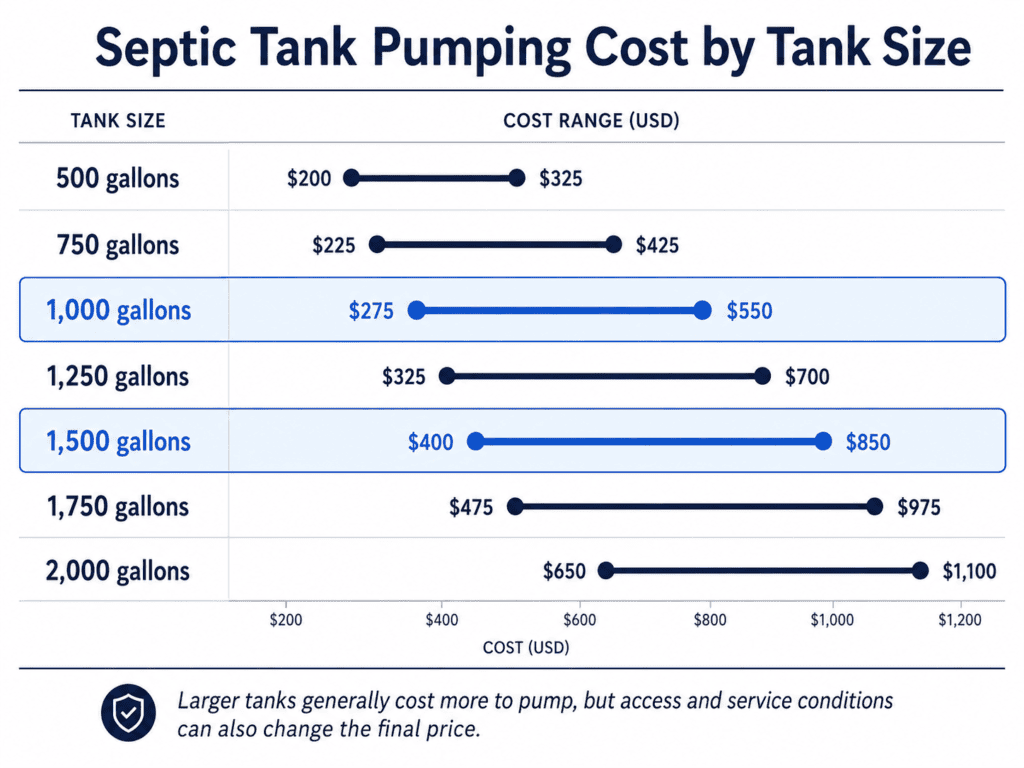
Tank capacity is one of the clearest cost factors.
The calculator uses these national base ranges before state, access, service condition, and urgency adjustments.
| Septic tank size | Base pumping range |
|---|---|
| 500 gallons | $200–$325 |
| 750 gallons | $225–$425 |
| 1,000 gallons | $275–$550 |
| 1,250 gallons | $325–$700 |
| 1,500 gallons | $400–$850 |
| 1,750 gallons | $475–$975 |
| 2,000 gallons | $650–$1,100 |
| More than 2,000 gallons | $750–$1,750 |
Published tank-size prices vary significantly between national cost guides. That is one reason I prefer a range instead of telling a homeowner that every 1,000-gallon tank costs the same amount to pump.
If you do not know your tank capacity, use our septic tank size calculator first.
What Affects Septic Tank Pumping Cost?
Two homes can have identical septic tanks and still receive very different pumping quotes.
These are the factors I would check first.
Tank Size
A larger tank can contain more material and generally costs more to service.
Tank capacity sets the calculator’s starting range. The other factors then move the estimate up or down.
State and Local Prices
Labor, travel, disposal costs, and local competition vary across the country.
The calculator uses U.S. Bureau of Economic Analysis (BEA) regional price data to make a modest state adjustment.
I cap that adjustment at 10% above or below the national baseline.
The cap is intentional. Regional Price Parities measure broad differences in local prices. They are not a septic pumping price index.
Your actual city or county can vary more than the statewide adjustment suggests.
Buried Tank Lids
An exposed lid or ground-level riser makes the tank much easier to reach.
The calculator uses these access allowances:
| Lid access | Added planning cost |
|---|---|
| Exposed / ground-level riser | $0 |
| Buried less than 12 in. | $50–$100 |
| Buried 12–24 in. | $75–$175 |
| More than 24 in. / difficult access | $125–$250 |
If your lid has to be excavated every time the tank is serviced, a septic tank riser can make future pumping and inspection easier.
Pump-Truck Access
The truck does not always need to sit directly beside the tank. However, a long or difficult hose run can increase labor.
The calculator adds:
- Easy access: $0
- Moderate or longer hose run: $25–$75
- Difficult, steep, or remote access: $75–$200
Fences, steep yards, soft ground, heavy landscaping, and long setbacks can complicate the job.
Service History and Heavy Solids
A septic tank does not need pumping simply because it looks “full.”
A functioning tank normally contains wastewater near its operating level. What matters is how much sludge and scum has accumulated.
The calculator adds:
- Routine maintenance: $0
- More than 5 years or unknown history: $50–$150
- Known heavy solids or overdue service: $100–$300
EPA recommends using actual sludge and scum levels to help determine when pumping is required.
Emergency Service
Planned weekday service is normally cheaper than an emergency call.
The calculator applies:
- Scheduled weekday: 1.00×
- Same-day urgent: 1.25×
- Weekend or after-hours: 1.50×
- Emergency or holiday: 1.75×
If sewage is already backing up into the house, the final bill can also include diagnosis or repair work beyond pumping.
Additional Septic Service Costs
A pumping appointment may include work beyond the pump-out itself.
Our calculator keeps those services separate.
| Additional service | Calculator range |
|---|---|
| Locate septic tank | $100–$300 |
| Jet clean tank | $200–$300 |
| Clean effluent filter | $100–$200 |
| Routine septic inspection | $150–$450 |
| Camera inspection | $125–$500 |
If you select extra services, the calculator reports an Estimated Total Service Cost rather than making the pumping price itself appear artificially high.
Always check what a contractor includes in the base quote.
Worked Example: 1,000-Gallon Septic Tank
Consider a homeowner in Texas with:
- 1,000-gallon tank
- Exposed access lid
- Easy truck access
- Routine maintenance
- Weekday appointment
- No additional services
The national base range is $275 to $550.
After the calculator’s Texas adjustment, the estimate is approximately:
$270 to $530
The midpoint planning estimate is about $400.
Now bury the lid 12 to 24 inches, add a longer hose run, and assume the tank has not been serviced for more than five years.
The estimate rises because the contractor has more access work and a higher likelihood of difficult solids removal.
That difference is why an adjustable calculator is more useful than one national average.
What Gets Pumped Out of a Septic Tank?
A conventional septic tank separates wastewater before liquid effluent reaches the drain field. The diagram below shows this.
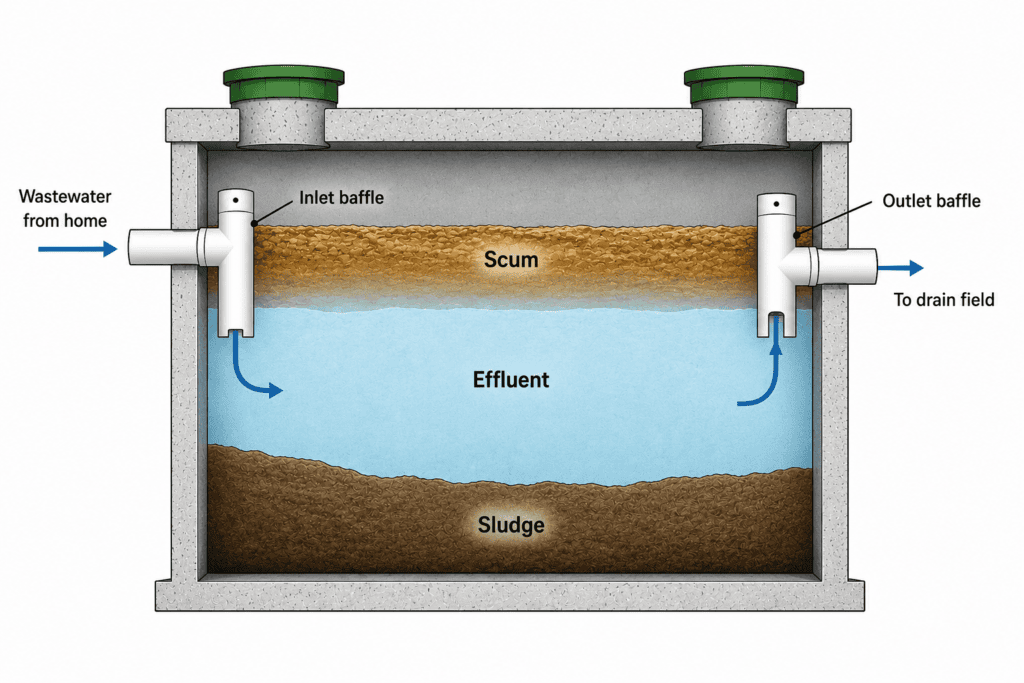
Heavy solids settle to the bottom and form sludge.
Fats, oils, grease, and other floating material collect near the top as scum.
The liquid between these layers is effluent.
Baffles or T-shaped fittings help prevent sludge and scum from leaving the tank with the effluent.
When sludge and scum accumulate beyond acceptable levels, they reduce the tank’s effective treatment volume and increase the risk of solids moving toward the drain field.
EPA recommends periodic inspection of these layers as part of septic maintenance.
How Does Septic Tank Pumping Work?
A residential septic pump-out is a straightforward process when the tank is accessible.
The technician is doing more than simply removing some liquid.
1. Locate and Open the Tank
The technician first finds the septic tank and opens the required access lids.
If the lids are buried, soil may need to be removed before pumping can begin.
A ground-level riser makes this step much easier.
2. Check the Tank Condition
Before pumping, the service provider may check the liquid level and inspect the sludge and scum layers.
EPA recommends examining these layers during septic service.
The technician may also look for signs of leaks, damaged components, or abnormal liquid levels.
3. Insert the Vacuum Hose
A large hose connected to the vacuum truck is placed through the tank access opening.
The truck provides the suction needed to transfer the tank contents into its holding tank.
4. Pump Out the Tank
The vacuum system removes wastewater, scum, and accumulated sludge.
Thick solids may need to be broken up or mixed with the remaining liquid so they can be removed effectively.
The goal is not just to lower the liquid level. A proper pump-out removes the accumulated solids that make pumping necessary in the first place.
5. Inspect Accessible Components
Once the tank is pumped down, the technician can often see components that were difficult to inspect beforehand.
These may include:
- Inlet baffle
- Outlet baffle or tee
- Effluent filter
- Tank walls
- Access openings
- Compartments
A pumping visit can therefore reveal problems that are not obvious while the tank is operating normally.
6. Close the Tank and Dispose of the Septage
After servicing, the access lids are secured.
The removed wastewater and solids, known collectively as septage, are transported for approved treatment or disposal.
I would keep the service record after every pump-out. Note the date, contractor, confirmed tank size, sludge or scum observations, and any repairs the technician recommends.
Septic Tank Pumping vs Septic Tank Cleaning
Homeowners often use pumping, cleaning, emptying, and pumping out to describe the same service.
A contractor may distinguish between them.
Septic Tank Pumping
Pumping removes the pumpable wastewater, sludge, and scum from the tank.
Septic Tank Cleaning
Cleaning may involve extra work after the initial pump-out to loosen or remove compacted material.
Our calculator therefore treats jet cleaning as a separate $200 to $300 service.
If one contractor quotes $350 and another quotes $600, first confirm that both companies are pricing the same work.
How Often Should You Pump a Septic Tank?
EPA says household septic tanks are generally pumped every three to five years.
It also recommends septic system inspections about every one to three years.
The correct pumping interval depends on:
- Tank capacity
- Number of occupants
- Household water use
- Amount of solids entering the tank
- Garbage disposal use
- Actual sludge and scum accumulation
A large tank serving two people may behave very differently from a smaller tank serving a large family.
I would use the previous service record and actual tank condition instead of automatically choosing the same interval every time.
EPA provides more specific guidance based on sludge and scum measurements. Pumping may be appropriate when those layers begin approaching the outlet or take up a significant share of the tank’s liquid depth.
Signs Your Septic System Needs Attention
Possible warning signs include:
- Several slow drains at once
- Gurgling plumbing
- Sewage odors
- Wastewater backing up into fixtures
- Wet or soggy ground near the tank
- Standing wastewater near the drain field
- Unusually green or spongy grass over the disposal area
Do not assume every one of these symptoms means the tank simply needs pumping.
A clogged pipe, failed pump, damaged outlet, or failing drain field can cause similar problems.
If symptoms remain after the tank is pumped, look beyond the tank itself. Flowchart below should help decide if septic tank needs pumping or further inspection.
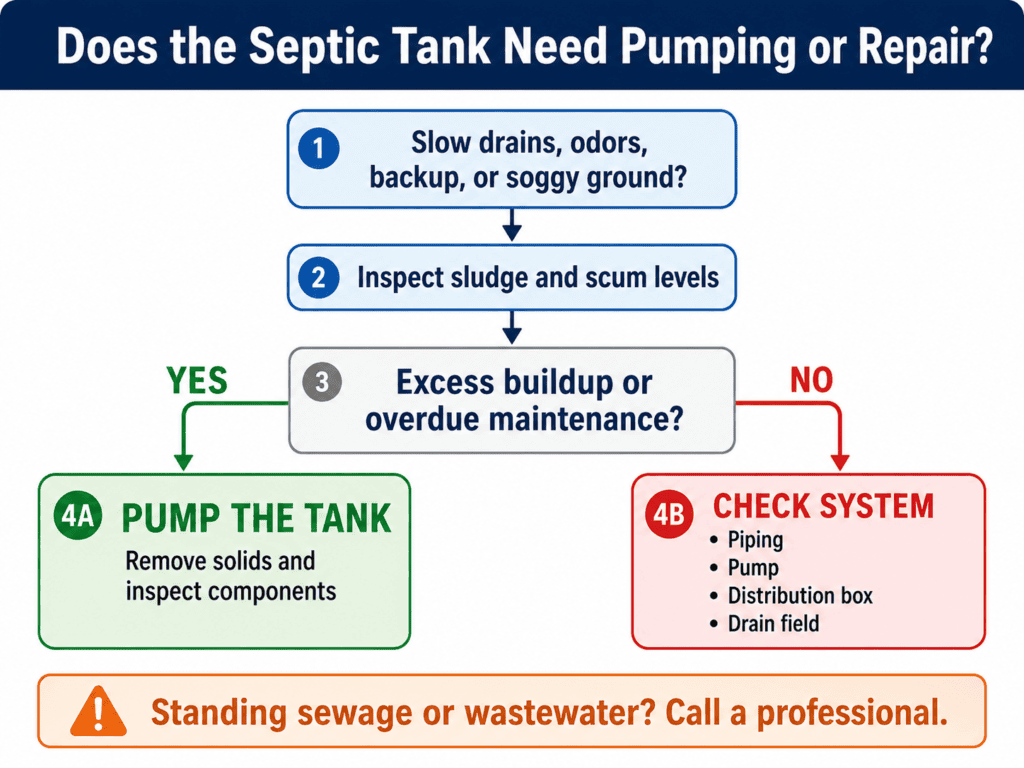
If your tank is due for pumping or you are seeing slow drains, odors, or backups, speak with a local septic service professional and describe what is happening.
Our septic drain field size calculator explains how wastewater flow, soil loading, and required drain-field area are related.
When Pumping Is Not Enough
Pumping is maintenance. It does not repair a failed septic system.
A pump-out will not fix:
- Cracked septic tank
- Broken inlet or outlet piping
- Damaged baffles
- Failed effluent or lift pump
- Damaged distribution box
- Saturated or failed drain field
- Collapsed or deteriorated tank
This is also why septic pump replacement cost is different from septic tank pumping cost.
One is a mechanical repair. The other is routine removal of septage.
If the system needs major replacement, use our septic tank installation cost calculator to estimate the larger project.
How to Save on Septic Tank Pumping Cost
You do not need a complicated strategy to control pumping costs.
Keep the Tank Location on Record
A contractor may charge extra if the tank has to be located before service.
Keep a permit drawing, site sketch, or previous pumping record showing the location.
Keep the Access Lid Reachable
Do not permanently cover routine access points with patios, sheds, or heavy landscaping.
If excavation is required every few years, consider installing a proper riser.
Pump Before an Emergency
Routine weekday pumping is normally cheaper than urgent weekend or holiday service.
Waiting for sewage to back up can also turn a maintenance appointment into a troubleshooting call.
Compare the Full Quote
Ask whether the price includes:
- Travel
- Tank locating
- Excavation
- Waste disposal
- All required tank compartments
- Effluent filter cleaning
- Basic inspection
- Replacing excavated soil
The lowest advertised pumping price is not always the lowest final invoice.
Questions to Ask a Septic Pumping Company
Before scheduling service, ask:
- What does the pumping price include?
- Is pricing based on tank size or a flat service charge?
- Is septage disposal included?
- Is there a travel charge?
- Does tank locating cost extra?
- What is the charge for excavating a buried lid?
- Are all required compartments pumped?
- Is effluent filter cleaning included?
- Does the visit include a basic inspection?
- Is there a long-hose surcharge?
- What is the after-hours rate?
- Will I receive a service record?
These questions make contractor quotes much easier to compare.
FAQs
What is the average cost to pump a septic tank?
Routine residential septic pumping commonly costs around $300 to $600, although published ranges can extend higher. Current national averages are generally in the low $400s.
How much does it cost to pump a 1,000-gallon septic tank?
Our calculator uses $275 to $550 as the national base range for routine pumping of a 1,000-gallon tank before state and site adjustments.
How much does it cost to pump a 1,500-gallon septic tank?
The calculator uses a national base range of $400 to $850 before adjusting for location, access, urgency, and additional work.
How much does it cost to empty a septic tank?
Homeowners usually mean septic pumping when they refer to emptying a tank. A routine residential pump-out generally costs several hundred dollars.
Does a buried septic tank cost more to pump?
It can.
The calculator adds $50 to $100 for shallow buried access, $75 to $175 for lids buried 12 to 24 inches, and $125 to $250 for deeper or difficult access.
Does the septic tank need to be completely full before pumping?
No.
A functioning septic tank normally contains liquid. Pumping is based mainly on sludge and scum accumulation, tank size, household use, and maintenance history.
Is septic tank cleaning the same as pumping?
Not always.
Pumping removes the tank contents. Cleaning may involve additional work to remove compacted deposits. Our calculator treats jet cleaning as a separate $200 to $300 service.
How often should a septic tank be pumped?
EPA says residential septic tanks are typically pumped every three to five years.
The correct interval depends on tank size, wastewater use, household size, and solids accumulation.
Can I pump my own septic tank?
Septic pumping is not a normal homeowner maintenance task.
The job requires vacuum equipment and proper handling and disposal of septage. Homeowners should keep the system accessible and use an appropriate septic service provider for pumping.