Septic Tank Riser: What It Is and When You Need One
A septic tank riser is a vertical shaft that brings a buried tank access point up to ground level. It eliminates digging before every pump-out. Most homes use a plastic riser kit. The one thing that matters most: the seal. A leaking riser lets stormwater into the tank and can overload the entire drain field.
Most homeowners find out their tank lid is buried the hard way — when the pump truck shows up and the technician charges extra to dig. One riser installation fixes that permanently, usually for less than two pump-out excavation fees.
What Does a Septic Tank Riser Do?
A septic tank riser creates a vertical access shaft between the buried septic tank opening and the ground surface. Instead of digging down to the tank lid every time the system needs maintenance, the service technician can open the riser lid directly.
This is useful because septic tanks need periodic inspection and pumping. To estimate what that service may cost based on tank size, location, and access conditions, use our septic tank pumping cost calculator.
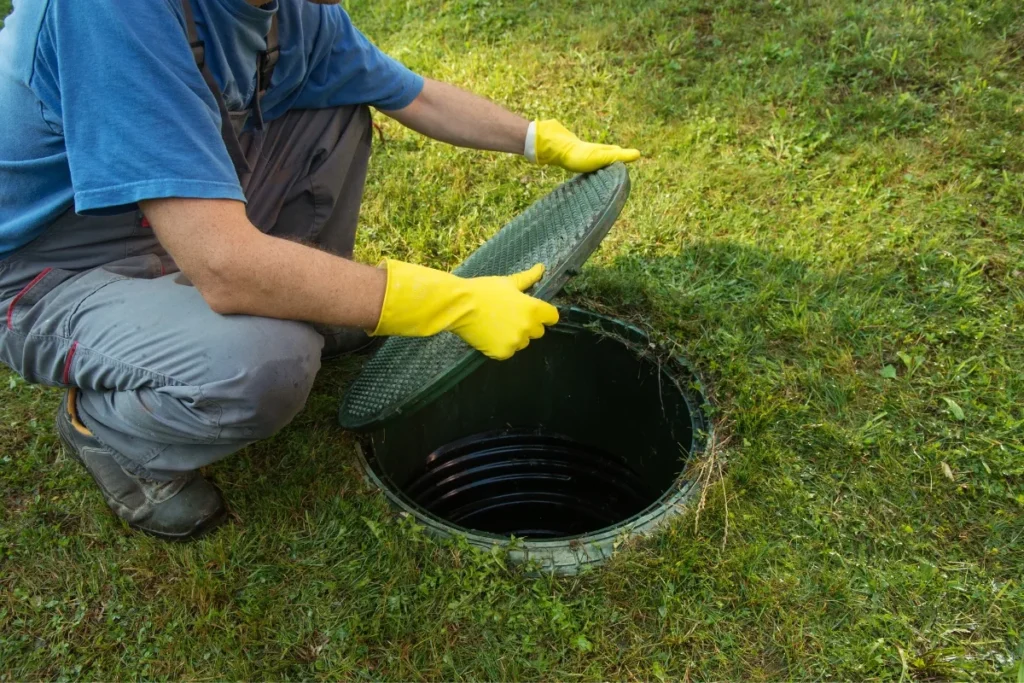
For general maintenance frequency, the EPA septic system maintenance guidance explains that septic tanks should be inspected every 1–3 years and typically pumped every 3–5 years, depending on tank size, household size, water use, and solids accumulation.. Figure 1 shows a typical ground-level riser access point being opened.
Septic Tank Riser Kit vs Buying Parts Separately
A septic tank riser kit is usually the simplest option. It normally includes the riser sections, adapter ring, lid, screws or fasteners, and sealing components.
| Part | Purpose |
|---|---|
| Adapter ring | Connects the riser to the septic tank opening |
| Riser section | Raises the access point toward ground level |
| Riser lid | Covers the opening safely |
| Seal or gasket | Helps prevent water and soil entry |
| Fasteners | Hold the system securely together |
A kit reduces the chance of mismatched parts. That matters because the riser diameter, lid, adapter ring, and tank opening need to work together. A badly fitted riser can leak, shift, or become unsafe.
For most homeowners, a complete riser kit is better than trying to combine random parts.
Main Types of Septic Tank Risers
Plastic Septic Tank Risers
Plastic risers are common for residential systems. They are lightweight, easy to install, corrosion-resistant, and usually available as complete kits.
For a normal lawn or garden installation, a plastic septic tank riser kit is often the most practical choice.
Fibreglass Septic Tank Risers
Fibreglass risers are also lightweight and durable. They are less common than plastic but can work well when properly sealed.
They may be useful where a strong but manageable riser system is needed.
Concrete Septic Tank Risers
A concrete septic tank riser is heavy, strong, and durable. It may be suitable when matching an existing concrete tank or when a more robust access system is needed.
The downside is handling. Concrete risers are harder to lift, position, and adjust. They also need careful sealing at the joint between the tank and riser. If that joint leaks, rainwater or groundwater can enter the tank and overload the septic system.
Septic Tank Riser Lid and Cover
The septic tank riser lid is not just a cap. It is a safety and durability component.
A good septic tank riser cover should:
- Fit securely
- Resist weather exposure
- Keep soil and surface water out
- Be difficult for children to open
- Be strong enough for its location
- Stay accessible for future maintenance
For lawns, a standard secure plastic lid may be enough. For driveways or areas where vehicles may pass, you need a properly rated cover. Do not place a normal plastic riser lid where a car, truck, or delivery vehicle can drive over it.
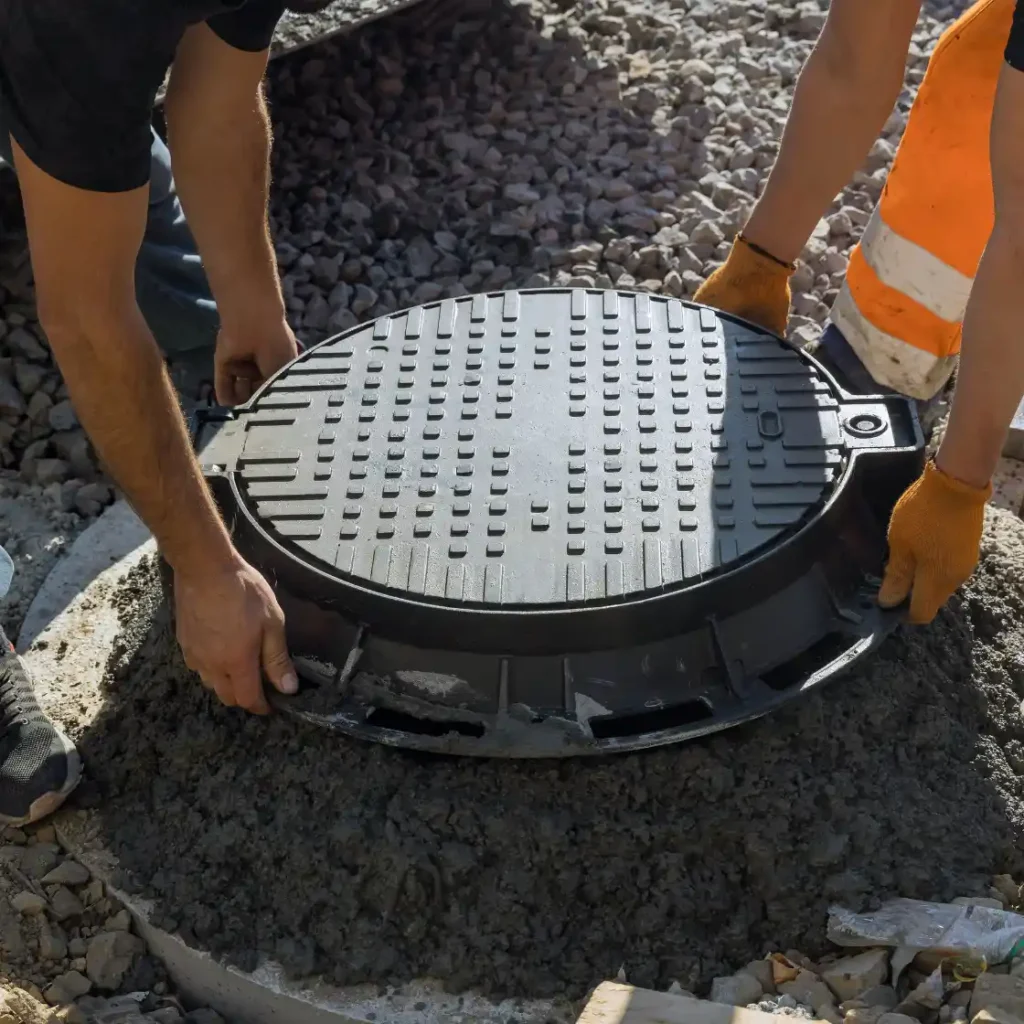
The NC State Extension septic system owner’s guide recommends securing septic risers with a lock or heavy lid to prevent children from opening them, and warns that no one should ever enter a septic tank because of poisonous gases and disease risks.. Figure 2 shows a riser cover being positioned during installation.
When Is a Septic Tank Riser Worth Installing?
A riser is worth considering if:
- The septic tank lid is buried
- The lid is hard to locate
- The tank needs regular pumping
- You want to avoid future digging
- The access point is under grass or landscaping
- You are upgrading an older septic system
If your tank lid is already at ground level and easy to open safely, you may not need one. But if every pumping visit starts with a shovel, a riser is usually worth it. Before upgrading access, you may also want to check whether your tank capacity suits your household using our septic tank size calculator.
How High Should a Septic Tank Riser Be?
The riser height depends on how deep the tank opening is below ground.
| Tank Lid Depth | Riser Need |
|---|---|
| 2–4 inches | Often optional |
| 6–12 inches | Useful |
| 12–24 inches | Strongly recommended |
| More than 24 inches | Professional installation recommended |
The lid should usually finish at ground level or slightly above grade. In areas where water collects, slightly above grade is better because it reduces the risk of surface water entering the riser.
In cold climates, extend the riser 2 inches above grade and use a foam gasket under the lid. This stops frost from sealing the lid shut and protects the joint from freeze-thaw movement
Basic Septic Tank Riser Installation Process
The exact installation depends on the tank and riser type, but the process usually follows the same sequence.
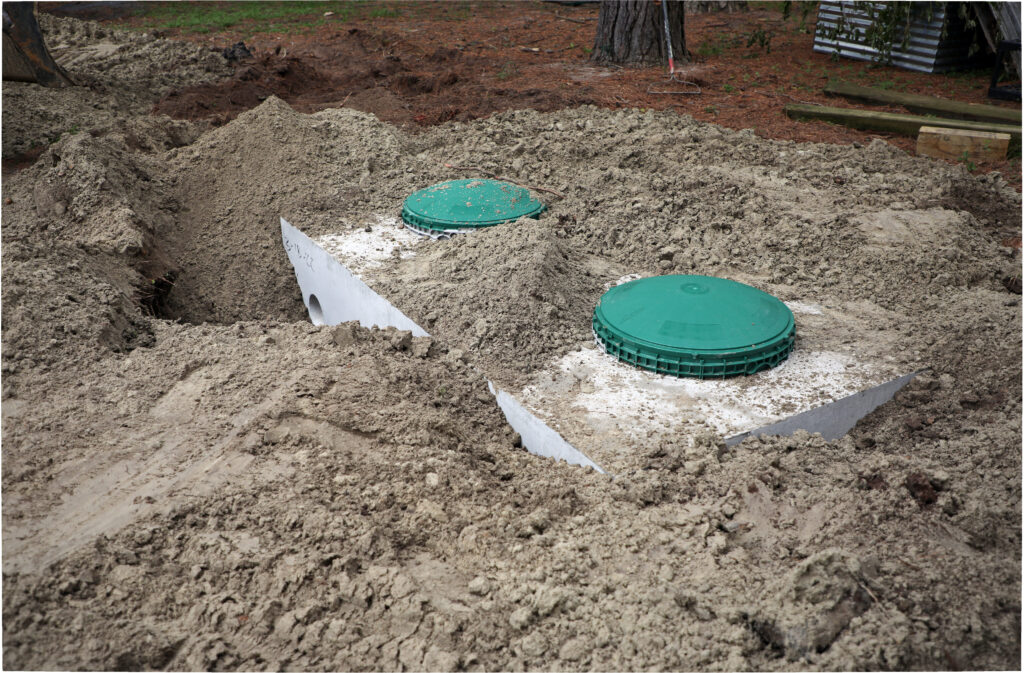
First, the septic tank lid is located and exposed. The area around the access opening is cleaned. An adapter ring is then fixed and sealed to the tank opening. Riser sections are added until the lid reaches the correct height. Finally, the riser cover is secured.
The seal is the critical part. A riser that is not watertight can allow rainwater, insects, roots, soil, or debris into the tank. Extra water is especially harmful because septic systems are designed for household wastewater, not stormwater.
If water is collecting around the tank area, check surface drainage and pipe fall using our drainage pipe slope calculator before finalizing the riser area.
Can You Install a Septic Tank Riser Yourself?
Some homeowners can install a riser themselves, especially if the tank lid is shallow and the tank opening is in good condition.
DIY may be reasonable if:
- The lid is easy to expose
- The tank location is known
- The access opening is not damaged
- You are using a proper septic tank riser kit
- You can seal the riser correctly
Hire a professional if:
- The lid is deep
- The tank is old or cracked
- The opening is damaged
- The riser is concrete or very heavy
- The lid is near a driveway
- You are unsure about sealing or safety
Never enter a septic tank. Septic tanks can contain dangerous gases, and confined spaces can be deadly.
Septic Tank Riser Cost
The cost of a septic tank riser depends on the material, diameter, height, lid type, and labour.
| Cost Factor | Why It Matters |
|---|---|
| Riser diameter | Larger openings usually cost more |
| Riser height | Deeper tanks need more sections |
| Material | Plastic, fibreglass, and concrete vary in price |
| Cover rating | Traffic-rated covers cost more |
| Excavation | Deep or difficult access increases labour |
| Sealing work | Watertight sealing is essential |
Plastic riser kits are usually the most affordable and easiest to install. Concrete risers can cost more because they are heavier and may require extra labour or lifting equipment.
A riser can reduce future maintenance costs because the tank no longer needs to be dug up for each service visit.
If you are planning a larger septic upgrade, use our septic tank installation cost calculator to estimate tank replacement, drain field work, permits, excavation, and add-ons.Concrete Septic Tank Riser: When It Makes Sense
- A concrete septic tank riser may make sense when the existing tank is concrete, the access area needs a heavy-duty component, or the installer prefers a concrete system.
- For most standard residential lawns, plastic is usually easier. It is lighter, adjustable, and often simpler to seal with modern adapter systems.
- Choose concrete when the site conditions justify it. Otherwise, a good plastic septic tank riser kit is usually the more practical option.
Common Mistakes to Avoid
The biggest mistake is poor sealing. A riser should keep unwanted water and debris out of the septic tank. If it leaks, it can create more problems than it solves.
Other common mistakes include:
- Using the wrong riser diameter
- Leaving the lid unsecured
- Installing a non-traffic-rated lid in a driveway
- Hiding the cover under soil or mulch
- Mixing parts that do not fit properly
- Ignoring local septic rules
- Installing the lid where surface water collects
A riser should make maintenance easier, not create a hidden weak point in the system.
Septic Tank Riser, Lid Riser, Cover, and Kit: What Is the Difference?
These terms are often used together, but they do not always mean the same part.
| Term | Meaning |
|---|---|
| Septic tank riser | The vertical extension above the tank opening |
| Septic tank riser kit | A complete set of riser parts |
| Septic tank lid riser | Another name people use for a tank riser |
| Riser lid | The removable cover at the top |
| Riser cover | The protective top cover or lid |
In simple terms, the riser raises the access point, and the lid or cover closes it.
FAQs
What is a septic tank riser?
A vertical shaft installed above the tank access opening that brings the lid to ground level — eliminating digging before every inspection or pump-out.
How much does a septic tank riser cost?
Materials for a plastic kit run $244 to $300. Professional installation typically totals $300 to $600 depending on depth and site conditions.
Do I need risers on both sides of the tank?
Ideally yes — inlet and outlet. Many homeowners install one on the main pumping port first and add the second later.
Can I install a septic tank riser myself?
Yes, for shallow tanks with undamaged openings, using a complete kit. Hire a professional for deep tanks, old or cracked openings, or driveway installations.
What size riser do I need?
Measure your tank opening carefully. Most residential systems use a 20 to 24 inch diameter riser — 24 inches is preferred for easier pump-out hose access.
Is a permit required?
Most counties don’t require a permit for riser installation only. Some require a licensed pumper to seal the adapter ring. Check with your local health department first.
Final Thoughts
A septic tank riser is a simple upgrade with a clear purpose: easier access. It saves digging, makes inspections faster, and helps keep routine maintenance from becoming a messy job.
For most homes, a plastic septic tank riser kit is the easiest choice. A concrete septic tank riser can work well in heavier-duty situations, but it needs careful handling and sealing.
The key is to choose the right diameter, bring the lid to a sensible height, seal every joint properly, and use a cover that suits the location. Once installed correctly, a riser is one of those upgrades you barely notice — until the next pumping visit, when you are very glad it is there.