Expansion Joint Sealant for Concrete Projects: 5 Products Compared
Expansion joint sealant has a simple job. It keeps water and debris out of the joint while staying flexible as the concrete moves.
Choosing one gets less simple. A self-leveling sealant works well in a flat driveway joint but can run on a slope. A non-sag polyurethane stays put on vertical surfaces. Movement rating, joint depth, traffic, and surface condition also affect which product makes sense.
I compared five commonly available concrete joint sealants using their published technical data. The comparison focuses on movement capability, ASTM classification, joint orientation, traffic use, and installation limits.
Quick Comparison
| Product | Best Fit | Type | Movement Capability |
|---|---|---|---|
| Sikaflex 1c SL | Flat driveways, patios, sidewalks | Self-leveling polyurethane | ±25% |
| Sikaflex 1A | Sloped and vertical joints | Non-sag polyurethane | ±35% |
| Tremco Vulkem 45SSL | Slightly sloped traffic joints | Semi-self-leveling polyurethane | ±35% |
| Loctite PL Concrete Non-Sag | General concrete and masonry joints | Non-sag polyurethane | ±25% |
| DAP Premium Polyurethane | Higher-movement joints | Non-sag polyurethane | ±50% |
1. Sikaflex 1c SL: For Flat Driveways and Slabs
Check Sikaflex 1c SL on Amazon
Sikaflex 1c SL is the easiest product on this list to recommend for a typical flat concrete joint.
It is a one-component, self-leveling polyurethane made for horizontal joints. Once placed, it flows enough to form a smooth surface without the hand tooling required by a non-sag sealant.
Sika classifies it under ASTM C920 as Type S, Grade P, Class 25. Its movement capability is ±25%.
It also carries a Use T classification for traffic areas. That makes it suitable for applications such as driveway, sidewalk, patio, and garage-floor joints when installed within the manufacturer’s limits.
Sika also permits application to green or damp concrete under specific conditions. That can be useful on newer work, but it does not mean the product should be installed over standing water.
Where it fits
- Flat driveway joints
- Sidewalks
- Patios
- Garage slabs
- Other level horizontal concrete joints
Watch for
The self-leveling consistency becomes a disadvantage on slope. If one end of the joint is noticeably lower, the sealant can move before it cures.
Bottom line: A strong choice for a conventional horizontal concrete expansion joint.
See the sika technical specifications.
2. Sikaflex 1A: For Slopes and Vertical Joints
Sikaflex 1A is the better Sika option when gravity works against you.
It has a non-sag consistency, so it stays in the joint instead of flowing toward the low side. That makes it useful on sloped concrete, walls, curbs, steps, and other joints where a pourable sealant is difficult to control.
Sika lists the product as ASTM C920 Class 35 with ±35% movement capability.
That gives it more rated movement than Sikaflex 1c SL while keeping the non-sag consistency needed for vertical work.
Where it fits
- Sloped driveway joints
- Vertical concrete joints
- Foundation walls
- Retaining-wall joints
- Curbs and steps
- Concrete-to-masonry joints
Watch for
Non-sag sealants need more finishing. You normally have to tool the bead to get a clean surface.
Bottom line: Use it when the joint is too steep or too vertical for a self-leveling product.
See the sika technical specifications.
3. Tremco Vulkem 45SSL: For Slightly Sloped Traffic Joints
Check Tremco Vulkem 45SSL on Amazon
Vulkem 45SSL fills a useful space between self-leveling and non-sag sealants.
Tremco describes it as a semi-self-leveling polyurethane for horizontal concrete surfaces. Unlike many pourable sealants, the manufacturer allows it on slopes up to 6%.
Not sure how steep the surface is? Use our driveway slope calculator to check the grade before choosing a self-leveling or semi-self-leveling sealant.
It meets ASTM C920 Type S, Grade P, Class 35, Use T requirements and has ±35% movement capability.
That combination makes it useful where a driveway has some pitch but still falls within the manufacturer’s slope limit.
Where it fits
- Sloped driveways up to the stated limit
- Parking areas
- Sidewalks
- Plazas
- Horizontal traffic joints
Watch for
Do not read “semi-self-leveling” as “works on any slope.” Tremco states a 6% maximum slope. A steeper surface calls for a non-sag product.
Bottom line: One of the more useful choices for a horizontal joint that is not perfectly level.
See the Tremco product technical specifications.
4. Loctite PL Concrete Non-Sag: General-Purpose Option
Check Loctite PL Concrete Non-Sag on Amazon
Loctite PL Concrete Non-Sag is a straightforward polyurethane for concrete and masonry work.
It can be used on horizontal and vertical surfaces, and Henkel publishes a movement capability of ±25%.
For a normal residential repair, that may be all the movement capacity you need. There is little reason to pay for a higher class simply because the number is larger.
Henkel’s technical guidance also addresses joint geometry and backing material. That matters on deep expansion joints because the sealant should not simply fill the entire gap from bottom to top.
Where it fits
- Concrete joints
- Masonry joints
- Patio repairs
- Foundation joints
- Vertical applications
- Smaller residential projects
Watch for
Follow the required joint dimensions. Extra sealant depth does not improve performance.
Bottom line: A practical non-sag polyurethane when ±25% movement is enough.
See the Loctite technical data sheet.
5. DAP Premium Polyurethane: Higher-Movement Option
Check DAP Polyurethane Sealant on Amazon
DAP’s polyurethane product stands out for movement capacity.
DAP currently lists it as ASTM C920 Class 50. That corresponds to ±50% movement from the installed joint width, or 100% total movement range.
It is also a non-sag product and can be used where foot or vehicle traffic is expected after proper curing.
A Class 50 rating does not automatically make it better than a Class 25 or Class 35 sealant. It simply gives the joint more movement capacity.
Where it fits
- Higher-movement joints
- Concrete-to-different-material transitions
- Vertical joints
- Traffic areas
- Joints where additional movement capacity is justified
Watch for
Do not choose it on movement rating alone. The substrate, joint geometry, application direction, and traffic exposure still matter.
Bottom line: The highest published movement class in this comparison.
See the DAP product specifications.
Expansion Joint Sealant vs Joint Filler vs Backer Rod
These terms get mixed together, especially on retail product pages. The diagram below and definitions will help you understand the difference.
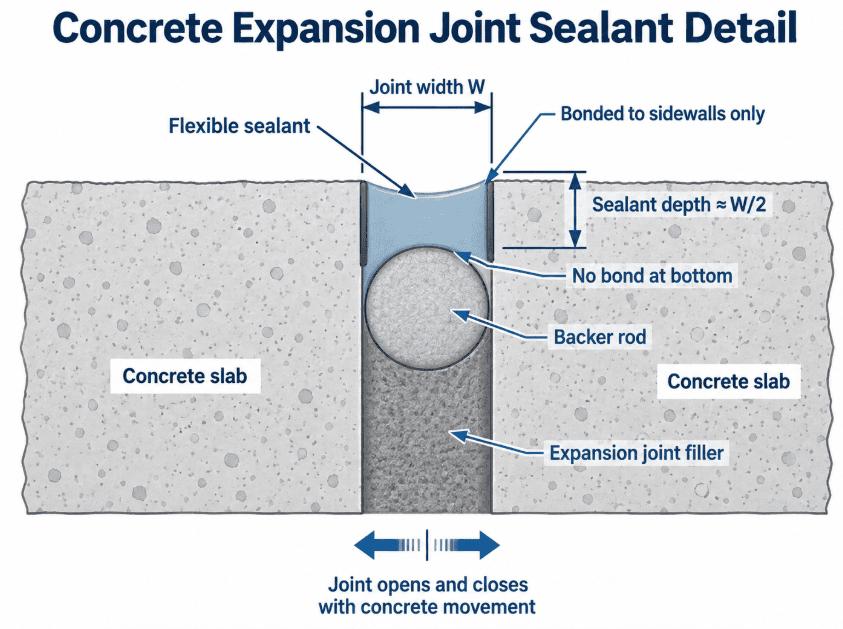
They are not the same material.
Expansion joint filler occupies the separation between concrete sections. Common fillers include foam, fiberboard, cork, and other compressible materials.
Backer rod sits below the sealant. It controls the depth and shape of the sealant bead and helps keep the sealant from bonding to the bottom of the joint.
Expansion joint sealant forms the flexible exposed surface. It bonds to the joint faces and stretches or compresses as the joint moves.
You may also find press-in EPDM or rubber strips sold for concrete joints. These are better described as preformed joint inserts or fillers rather than liquid joint sealants.
It is important to understand the difference between these to get correct product for the job.
What Does the Movement Rating Mean?
Concrete slabs move as temperature and moisture conditions change.
A joint sealant has to tolerate that movement without losing adhesion or tearing internally.
A Class 25 sealant accommodates movement of approximately ±25% of the installed joint width.
A Class 35 product accommodates ±35%.
A Class 50 product accommodates ±50%.
ASTM C920 provides the classification system commonly shown on elastomeric sealant data sheets. ASTM C719 covers cyclic movement testing used to evaluate sealant adhesion and cohesion.
A higher movement class gives you more movement capacity. It does not fix poor installation.
A Class 50 bead installed over dusty concrete with the wrong joint profile can still fail sooner than a correctly installed Class 25 sealant.
Why Backer Rod Matters
Backer rod is not just there to save sealant.
Its main job is to establish the proper sealant depth and help create the right bead shape.
It also helps prevent three-sided adhesion.
A movement sealant should normally bond to the two opposing joint faces. If it also bonds firmly to the bottom, the third bond can restrict the way the bead deforms as the joint opens and closes.
Backer rod or bond-breaker tape separates the sealant from the bottom surface.
Many joint sealants use a width-to-depth relationship around 2:1 for part of their permitted joint range. Check the technical data sheet for the specific product and joint width.
Self-Leveling vs Non-Sag Expansion Joint Sealant
This is one of the easiest product choices to get wrong.
Self-leveling sealant
A self-leveling product flows after placement.
That works well in flat horizontal joints because the sealant settles into a smooth surface with little tooling.
It works poorly when the joint has too much slope.
Non-sag sealant
A non-sag product holds its shape after it leaves the cartridge.
Use it on walls, steep slopes, steps, and other joints where a flowing sealant would move out of position.
Semi-self-leveling sealant
Products such as Vulkem 45SSL fall between the two.
They can tolerate some slope, but only within the limits stated by the manufacturer.
Does a Driveway Sealant Need to Be Traffic-Rated?
Check the product data before using a joint sealant where tires, carts, or regular foot traffic will cross the bead.
ASTM C920 uses the designation Use T for sealants intended for traffic areas.
Sikaflex 1c SL and Vulkem 45SSL, for example, carry traffic-use classifications.
Traffic suitability matters because a driveway joint sees more than temperature movement. The exposed sealant can also face tire contact, abrasion, dirt, water, and repeated loading.
How to Seal a Concrete Expansion Joint
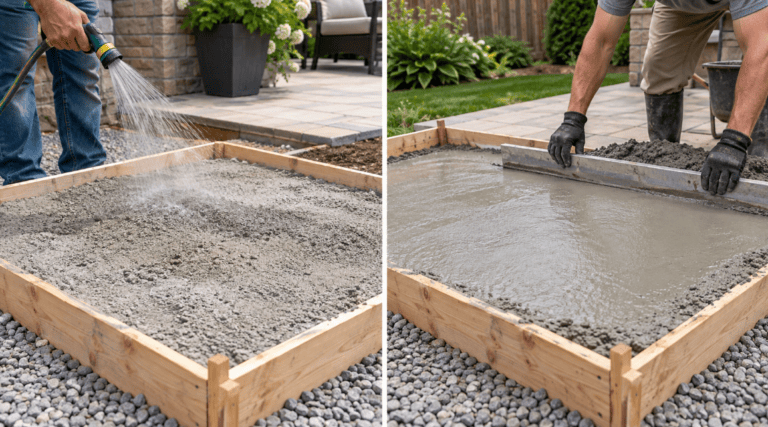
Start by removing old failed sealant, loose material, dirt, weeds, and debris.
The sidewalls need to be sound enough for the new sealant to bond.
Measure the joint rather than guessing its size. If the gap is deeper than the required sealant bead, install the correct backing material.
Do not fill a deep joint completely with polyurethane.
Clean the bonding surfaces again before applying sealant. Pay attention to moisture requirements because they vary by product.
Apply the material continuously through the joint. Tool a non-sag product when required. Let a self-leveling product settle instead of repeatedly working the surface.
Keep traffic off the repair until the manufacturer allows it. Cure time changes with temperature, humidity, sealant depth, and product chemistry.
See a Sika self-leveling sealant applied to concrete floor expansion joints.
Common Expansion Joint Sealant Mistakes
Using self-leveling sealant on a steep driveway
It can run downhill before curing and leave the upper end of the joint too thin.
Filling the whole joint with sealant
A deep joint does not need several inches of polyurethane. Use backing material to establish the proper bead depth.
Bonding the sealant on three sides
Three-sided adhesion restricts the movement of the bead and can increase stress as the joint cycles.
Sealing over dirty concrete
Dust, old sealant, weak concrete, oil, and other contaminants can reduce adhesion.
Ignoring movement rating
Ordinary caulk or rigid crack filler is not automatically suitable for an active concrete expansion joint.
Confusing a control joint with an expansion joint
Homeowners often call every visible concrete gap an expansion joint.
A control or contraction joint creates a planned location for shrinkage cracking. An expansion or isolation joint separates concrete elements so they can move relative to one another.
If you are not sure which one you have, see our movement joint in concrete guide before choosing the sealant.
What Happens When Expansion Joint Sealant Fails?
The joint does not suddenly stop allowing movement because the surface seal has failed.
The immediate problem is exposure.
Water, sand, soil, and other debris can enter the opening. Incompressible material can build up inside the joint and interfere with closure.
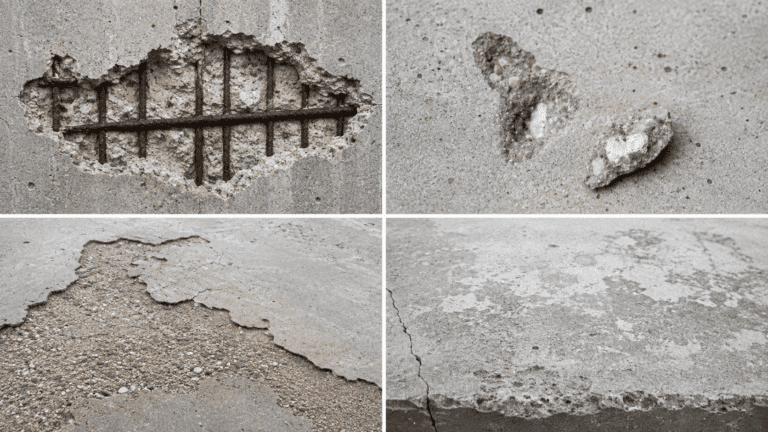
Water exposure can also contribute to deterioration around vulnerable joint edges and underlying materials.
In a freeze-thaw climate, repeated moisture exposure becomes more important because saturated concrete is more vulnerable to freezing damage.
If the concrete edges are already flaking or breaking away, see our concrete spalling guide before simply covering the damage with sealant.
FAQs
What is the best expansion joint sealant for a concrete driveway?
For a flat horizontal driveway joint, a self-leveling, traffic-rated polyurethane such as Sikaflex 1c SL is a practical option.
Use a non-sag or specifically slope-rated product when the driveway has noticeable pitch.
Is polyurethane good for concrete expansion joints?
Yes. Polyurethane sealants are commonly used because they remain flexible, bond well to properly prepared concrete, and are available in self-leveling and non-sag formulations.
The specific product still needs the correct movement rating and application classification.
Is silicone or polyurethane better for expansion joints?
Both chemistries can work when the product is designed for concrete movement joints.
Do not choose by chemistry alone. Compare movement capability, traffic rating, joint orientation, substrate requirements, and manufacturer instructions.
Do I need backer rod in an expansion joint?
Use backer rod when it is needed to establish the proper sealant depth and prevent bonding at the bottom of the joint.
The required sealant depth comes from the product data sheet, not from the total depth of the gap.
Can I use self-leveling sealant on a sloped driveway?
Only when the manufacturer permits it.
Most self-leveling sealants need a nearly level surface. Tremco Vulkem 45SSL is specifically rated for horizontal surfaces with slopes up to 6%.
Steeper joints generally need a non-sag product.
Can I seal a control joint?
Yes. Control or contraction joints are often sealed when water, debris, sanitation, or service conditions make sealing useful.
The fact that a joint is a control joint does not mean flexible sealant can never be used.
Does Class 50 mean the sealant is better than Class 25?
No.
Class 50 means the product can accommodate more movement. A properly selected Class 25 sealant may be completely adequate for a residential joint.
Installation quality and correct joint geometry matter just as much.
How long does expansion joint sealant last?
There is no dependable single lifespan for every installation.
Sunlight, temperature cycles, traffic, water exposure, joint movement, surface preparation, and bead geometry all affect service life.
Inspect the joint periodically. Replace the sealant when it pulls away from the concrete, tears through the bead, or no longer protects the joint from water and debris.
How These Products Were Compared
This comparison uses published manufacturer specifications, including movement capability, ASTM classification, traffic use, slope limits, joint orientation, and installation requirements.
Amazon ratings did not determine the rankings.
Civil Engineering Daily did not conduct controlled laboratory or long-term field testing of all five products. The recommendations reflect the published technical properties and the conditions each sealant is designed to handle.