Tar and Chip Driveway Cost Calculator
Tar and chip driveway surfacing typically costs about $2 to $5 per square foot in the U.S. A single chip seal commonly costs $2 to $3 per square foot, while a double chip seal runs about $3 to $5 per square foot. Resurfacing a sound existing driveway may cost about $1 to $3 per square foot.
Use the tar and chip cost calculator below to estimate cost of your project.
View detailed cost breakdown
Your result will appear here.
View current planning rate guide
Preset rates apply to driveway area. Preparation, decorative aggregate, mobilization, drainage, and other fixed work are added only when you enter them. No hidden ZIP-code or percentage modifiers are used.
Speak with a local driveway professional about your driveway size, surface condition, and installation options.
Cost data reviewed: August 2026
Tar and Chip Driveway Cost per Square Foot
For preliminary budgeting, I would use $2 to $5 per square foot as a reasonable planning range for the chip-seal surface itself.
The important distinction is surface cost versus complete driveway cost.
A contractor can chip seal a sound, properly graded existing driveway for much less than it costs to build a new driveway from bare soil. A new project may also need excavation, aggregate base, compaction, grading, drainage, and access work.
Current residential cost data supports the following planning ranges.
| Project type | Typical planning cost |
|---|---|
| Resurface a sound existing surface | $1–$3/sq ft |
| Single chip seal | $2–$3/sq ft |
| Double chip seal | $3–$5/sq ft |
| Major base work or new base construction | Add separately |
These are planning ranges, not contractor bid prices.
Local stone availability, asphalt binder prices, hauling distance, job size, equipment access, contractor workload, and site preparation can move the actual quote outside these ranges.
That is why the calculator keeps chip-seal surface cost and base/site work separate rather than hiding everything inside one square-foot rate.
Tar and Chip Driveway Cost by Size
For a rectangular driveway:
Driveway area = Length × Width
Once you know the square footage, you can apply the appropriate treatment range.
The estimates below cover the chip-seal surface only. They do not include major excavation, new aggregate base, drainage construction, or unusual fixed costs.
| Driveway size | Area | Single chip seal | Double chip seal |
|---|---|---|---|
| 10 × 20 ft | 200 sq ft | $400–$600 | $600–$1,000 |
| 12 × 24 ft | 288 sq ft | $576–$864 | $864–$1,440 |
| 20 × 20 ft | 400 sq ft | $800–$1,200 | $1,200–$2,000 |
| 24 × 24 ft | 576 sq ft | $1,152–$1,728 | $1,728–$2,880 |
| 20 × 30 ft | 600 sq ft | $1,200–$1,800 | $1,800–$3,000 |
| 20 × 40 ft | 800 sq ft | $1,600–$2,400 | $2,400–$4,000 |
| Large driveway | 1,000 sq ft | $2,000–$3,000 | $3,000–$5,000 |
| Long driveway | 1,500 sq ft | $3,000–$4,500 | $4,500–$7,500 |
Small projects can have a surprisingly high effective cost per square foot.
The contractor still has to mobilize a distributor truck, aggregate equipment, rollers, crew, and support vehicles. Those fixed costs are spread over fewer square feet on a small driveway.
Single vs Double Chip Seal Cost
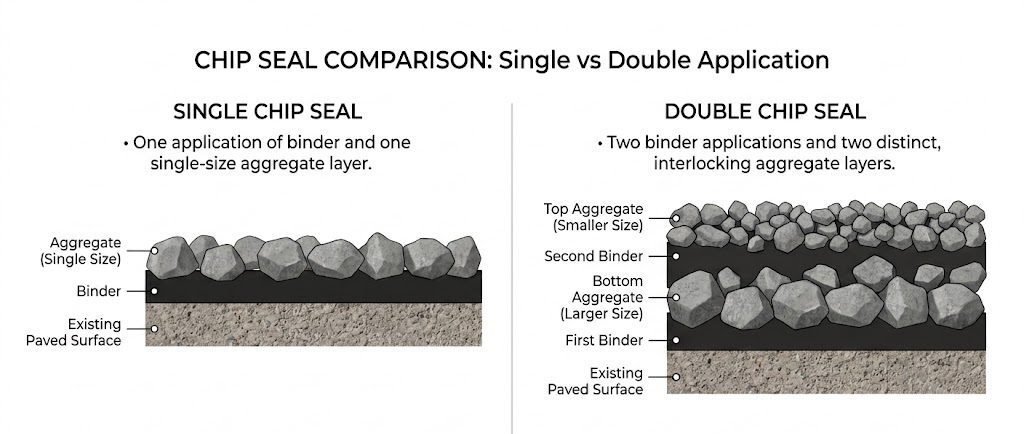
A single chip seal uses one application of bituminous binder followed by aggregate chips and rolling.
A double chip seal uses two chip-seal applications. Caltrans specifically identifies two-layer asphalt-emulsion or polymer-modified emulsion systems as double chip seals.
| Treatment | Planning cost | Typical use |
|---|---|---|
| Single chip seal | $2–$3/sq ft | Sound surfaces and lighter surface-treatment needs |
| Double chip seal | $3–$5/sq ft | Where a two-layer treatment is specified for greater coverage and durability |
I would not choose between the two based on price alone.
The existing pavement or base, traffic, aggregate, binder system, drainage, climate, and expected use all matter.
A double treatment also does not eliminate the need for a stable supporting surface.
Worked Example: 600 Sq Ft Tar and Chip Driveway
Consider a driveway measuring:
20 ft × 30 ft = 600 sq ft
Assume the owner chooses a single chip seal.
At $2 to $3 per square foot, the surface treatment costs:
600 × $2 = $1,200
to:
600 × $3 = $1,800
Now assume the contractor also expects:
Site preparation/base work:
$0.50/sq ft
Mobilization and other fixed costs:
$250
Preparation cost is:
600 × $0.50 = $300
The complete planning estimate becomes:
$1,200–$1,800 + $300 + $250
Estimated project cost: $1,750–$2,350
That equals an effective total cost of about:
$2.92–$3.92 per square foot
This example shows why I do not treat the headline chip-seal rate as the complete driveway price.
New Driveway vs Resurfacing
A new driveway and a resurfacing job should not use the same cost assumption.
Resurfacing a Sound Existing Driveway
Chip seal is primarily a surface treatment.
FHWA describes it as asphalt, generally emulsified, applied to the pavement and immediately covered with aggregate and rolled. Its main functions include sealing the surface and improving friction.
When the existing driveway remains stable, resurfacing can therefore be relatively economical.
Minor cracks or isolated defects may still need treatment before the chip seal is placed.
Building a New Tar and Chip Driveway
Starting from bare soil is different.
The project may first need subgrade preparation, excavation, grading, compacted aggregate base, drainage work, and proper transitions at the road or garage.
Those operations can cost as much as, or more than, the surface treatment.
Do not look at a $2–$5 per square foot chip-seal rate and assume that is the price of building an entire driveway over undeveloped ground.
Resurfacing a Failed Driveway
This is where I would be most careful.
Chip seal is the wearing surface, not the foundation of the driveway. If the base is soft, saturated, badly rutted, or settling, repair that condition before paying for a new surface.
FHWA specifically notes that chip seal is not a structural pavement layer, even though it can provide a durable wearing surface. Caltrans also instructs inspectors to identify and correct failed areas before chip-seal placement.
A new stone surface can improve appearance and protection. It cannot stabilize a failing base underneath it.
What Changes Tar and Chip Driveway Cost?
Square footage controls material quantity, but site conditions determine how difficult the work will be.
Base condition is one of the first things I would check. Potholes, settlement, soft areas, rutting, and weak gravel can require repairs before surfacing.
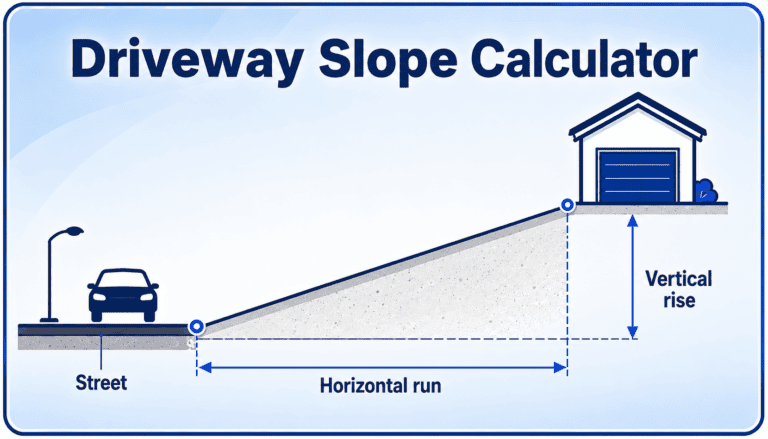
Grading and drainage also matter. Water needs to leave the driveway rather than collect in depressions or enter the supporting base. If you need to determine an existing driveway grade, use the Driveway Slope Calculator.
Aggregate type affects both appearance and cost. Local stone is normally easier to source than a specific decorative color or specialty aggregate that must travel a long distance.
Mobilization and access can make a small or remote driveway more expensive. Narrow gates, steep approaches, landscaping, limited turning space, and long hauling distances reduce production efficiency.
Project size affects the unit rate as well. A larger driveway needs more material, but fixed contractor costs are spread over more square footage.
Local contractor availability is another real factor. Chip seal is not offered by every residential paving contractor, so some locations have much more competition than others.
Current U.S. consumer cost data also identifies site condition, preparation, materials, labor, project size, and location as major pricing factors.
When Tar and Chip Works Well—and When It Does Not
Tar and chip can be a very practical surface when the project matches the treatment.
It works especially well on long residential and rural driveways, sound existing asphalt or bituminous surfaces, and properly prepared aggregate bases. The textured stone surface also provides good friction and a more natural appearance than conventional black asphalt.
FHWA notes that chip seals are commonly used as wearing surfaces on lower-volume roads.
I would be more cautious where the driveway has deep rutting, major settlement, widespread base failure, persistent drainage problems, or soft supporting material.
Loose or excess chips are another consideration. FHWA identifies chip loss as a potential limitation, and Caltrans requires removal of loose screenings during construction.
If you need a very smooth surface or expect demanding vehicle loads, compare chip seal with a properly designed asphalt or concrete pavement rather than choosing only from initial price.
How to Check a Tar and Chip Contractor Quote
A total bid does not tell me enough.
I want to know how much of that price belongs to the chip-seal surface and how much belongs to preparation, base repair, drainage, and fixed contractor costs.
Assume a contractor quotes:
$3,000
for a:
600 sq ft driveway
The written quote separately identifies:
Base/site preparation:
$500
Mobilization and fixed work:
$250
The surface portion is therefore:
$3,000 − $500 − $250 = $2,250
Now divide by the driveway area:
$2,250 ÷ 600 = $3.75/sq ft
That gives you a much more useful number to compare with the selected chip-seal planning range.
This is why the calculator includes a Check a Quote mode.
A quote near the high end is not automatically expensive. It may include double chip seal, base repairs, premium stone, difficult access, a small-job minimum, or high local material costs.
I would ask the contractor to clearly identify the treatment type, number of applications, aggregate, binder, surface repairs, base work, drainage, rolling, cleanup, and fixed charges before comparing competing bids.
What Is a Tar and Chip Driveway?
“Tar and chip” is the common homeowner term.
You may also hear chip seal, oil and stone, or oil and chip.
Modern chip-seal systems commonly use asphalt emulsions or other bituminous binders rather than literal traditional tar.
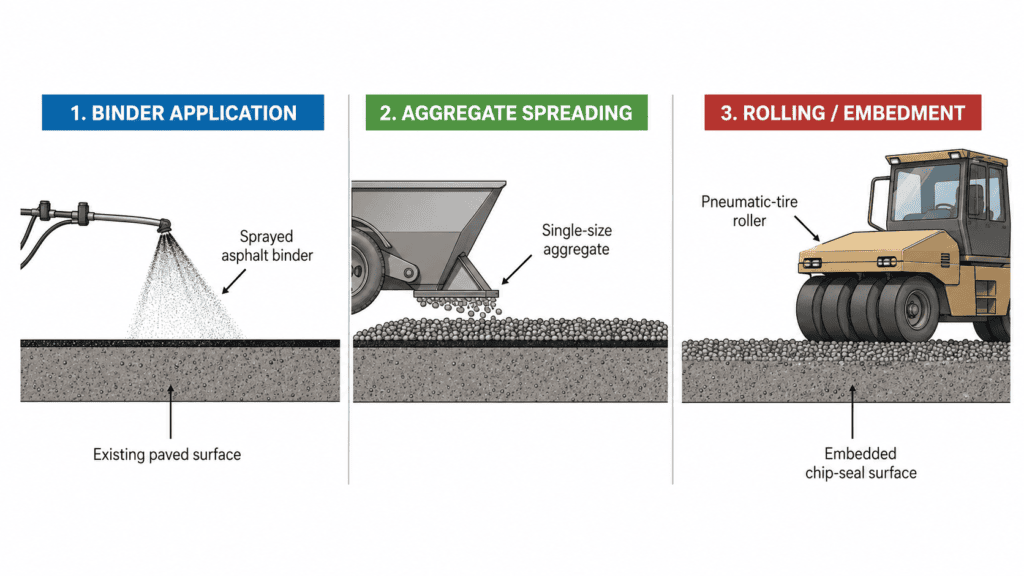
Caltrans defines chip seal as the application of bituminous material followed by aggregate screenings and rolling. The agency recognizes several binder systems, including conventional and polymer-modified asphalt emulsions.
The basic construction sequence is simple to understand:
Binder → aggregate chips → rolling
But good execution requires controlled material application, suitable weather, proper aggregate distribution, rolling, and removal of loose aggregate.
Caltrans notes that successful chip-seal construction is highly dependent on weather conditions and requires control of binder application, aggregate spreading, rolling, and sweeping.
For that reason, tar-and-chip installation is normally contractor work rather than a typical homeowner DIY project.
Can You Chip Seal Over Asphalt or Gravel?
A sound existing asphalt driveway can be a good candidate for chip seal.
The key question is whether the supporting pavement remains stable.
Failed areas should be repaired before the treatment is placed. Caltrans specifically calls for examination of the existing surface and corrective action where failed areas are present.
Chip seal can also be used over an appropriately prepared aggregate or unpaved surface in some applications. FHWA notes that although chip seals are typically placed over asphalt or bituminous surfaces, they have also been used on unpaved roads.
That does not mean loose gravel over weak soil is automatically ready.
A gravel driveway may first need reshaping, additional aggregate, grading, drainage correction, and compaction.
Tar and Chip vs Asphalt, Gravel, and Concrete
Tar and chip usually costs less initially than a new hot-mix asphalt or concrete driveway, but these systems are not interchangeable.
| Factor | Tar and chip | Asphalt | Gravel | Concrete |
|---|---|---|---|---|
| Surface | Textured aggregate | Smooth asphalt | Loose aggregate | Rigid concrete |
| Typical initial cost | Low to moderate | Moderate | Lowest | Higher |
| Structural pavement layer | No | Yes | Base/surface system | Yes |
| Loose stone possible | Yes | No | Yes | No |
| Appearance | Natural stone | Uniform dark finish | Rustic | Plain or decorative |
| Good fit | Long/rural driveways, suitable base | Broad residential use | Low-cost rural use | Long-term rigid driveway |
CED’s current Asphalt Driveway Cost Calculator uses roughly $7–$13 per square foot as a planning range for a straightforward new hot-mix asphalt driveway and about $3–$7 per square foot for a suitable overlay.
For concrete, use the Concrete Driveway Cost Calculator to compare the same project size with a concrete pavement system. CED’s current national planning benchmark for a basic concrete driveway spans roughly $7–$18 per square foot, depending on project scope and location.
Do not compare only the top-surface price.
Compare base construction, drainage, expected traffic, maintenance, appearance, local contractor quality, and the pavement system you are actually receiving.
How Long Does a Tar and Chip Driveway Last?
A common residential planning estimate is around 7 to 10 years, although actual performance can vary widely. HomeGuide currently uses a 7–10 year range, while Angi gives about 10 years as an average.
I would not treat either number as a guaranteed service life.
Performance depends on the condition below the treatment, drainage, traffic, binder, aggregate quality, embedment, construction weather, rolling, sweeping, and future maintenance.
A well-executed chip seal over a stable surface is very different from the same treatment placed over a wet or failing base.
Tar and Chip vs Asphalt Sealcoating
Chip seal and asphalt driveway sealcoating are not the same treatment.
A chip seal places a bituminous binder followed by coarse aggregate chips that are rolled into the binder.
Typical asphalt sealcoating places a much thinner protective coating over an existing asphalt surface.
Caltrans treats chip seals as one category within the broader family of seal-coat treatments and separately identifies fog seals, slurry seals, micro-surfacing, and other systems.
Do not use a standard asphalt sealcoating price when estimating a chip-seal driveway.
How This Tar and Chip Driveway Cost Calculator Works
The calculator begins with the driveway area.
For a rectangular driveway:
Area = Length × Width
It then applies the selected surface-treatment range:
Resurfacing: $1–$3/sq ft
Single chip seal: $2–$3/sq ft
Double chip seal: $3–$5/sq ft
You can also enter your own local installed rate.
The calculator keeps site preparation/base work, premium aggregate, mobilization, access, drainage, and other fixed work separate.
It does not apply hidden ZIP-code multipliers or unsupported automatic percentage markups.
If you already have a contractor proposal, Check a Quote removes separately identified preparation and fixed charges and calculates the effective chip-seal surface rate. That gives you a more useful comparison than looking at total bid price alone.
The default treatment ranges are based on current U.S. residential cost data, while the technical treatment descriptions and suitability guidance are checked against FHWA and Caltrans pavement guidance.
Use the result as a planning and quote-comparison estimate. A contractor who has inspected the actual driveway can account for local materials, base condition, drainage, access, and construction requirements that a national calculator cannot see.
FAQs
How much does a tar and chip driveway cost per square foot?
Tar and chip driveway surfacing commonly costs about $2 to $5 per square foot. A single chip seal is typically around $2 to $3 per square foot, while double chip seal is about $3 to $5 per square foot. Major base or site work costs extra.
How much does a 1,000 sq ft tar and chip driveway cost?
For 1,000 square feet, a single chip seal at $2–$3 per square foot gives a surface estimate of about $2,000–$3,000.
A double chip seal at $3–$5 per square foot gives about $3,000–$5,000.
Add preparation, new base construction, premium aggregate, drainage, or contractor mobilization when required.
Is tar and chip cheaper than asphalt?
Usually, yes, when comparing only the initial surface cost over a suitable base.
The comparison becomes less simple if either project needs excavation, new aggregate base, drainage, removal, or substantial site preparation.
Can chip seal fix a bad driveway?
No.
Chip seal can renew and protect a suitable surface, but FHWA does not classify it as a structural pavement layer. Deep settlement, unstable base material, major rutting, or drainage-related failures should be corrected first.
Can you put tar and chip over an asphalt driveway?
Yes, when the existing asphalt pavement and its supporting base remain suitable.
Repair failed areas and significant defects before placing the new treatment.
Can you put chip seal over gravel?
It can be placed over a properly prepared aggregate or unpaved surface in some applications, but the base must be stable, shaped, drained, and compacted. FHWA notes that chip seals have been used on unpaved roads as well as asphalt surfaces.
Is double chip seal worth the extra cost?
It can be when the project calls for a two-layer treatment with greater coverage and durability.
The correct treatment should reflect the existing pavement or base, traffic, binder, aggregate, and local conditions rather than cost alone.
Does a tar and chip driveway need normal asphalt sealcoating?
Not in the same way as a conventional asphalt driveway.
Chip seal is already a binder-and-aggregate surface treatment. Future maintenance may involve another compatible preservation treatment rather than simply applying a conventional black driveway sealer.

Similar Posts
Crawl Space Encapsulation Price Calculator
Use this crawl space encapsulation price calculator to estimate how much it may cost to seal and moisture-proof your crawl space
Soffit Calculator: Estimate Square Feet, Vents & Cost
Use this soffit calculator to estimate soffit square feet, panel quantity, vented soffit area, fascia length, waste, and installation cost.
Free Concrete Slab Price Calculator
Use this free concrete slab price calculator to estimate slab cost by size, thickness, concrete volume, labor, reinforcement, and finish type.
Home Replacement Cost Calculator: Estimate Rebuild Cost
Use the home replacement cost calculator below to estimate what it could cost to rebuild your house at current U.S. labor and…
Driveway Slope Calculator: Grade, Rise & Run
Calculate driveway grade, angle, slope ratio, elevation change, or the horizontal run required for a driveway.
Estimate Your Bathroom Renovation Cost
Estimate your bathroom remodel cost with this free calculator. Compare budget, midrange, high-end and luxury renovation costs by bathroom size, layout, fixtures, tile and US location.