Paver Base Calculator: Gravel, Sand & Patio Base
Use this paver base calculator to estimate gravel base, bedding sand, cubic yards, cubic meters, tons, and bags for a patio, walkway, driveway, or garden path.
Enter the paved area, base depth, sand depth, and waste factor. The calculator will show the estimated material quantity before you order gravel or sand.
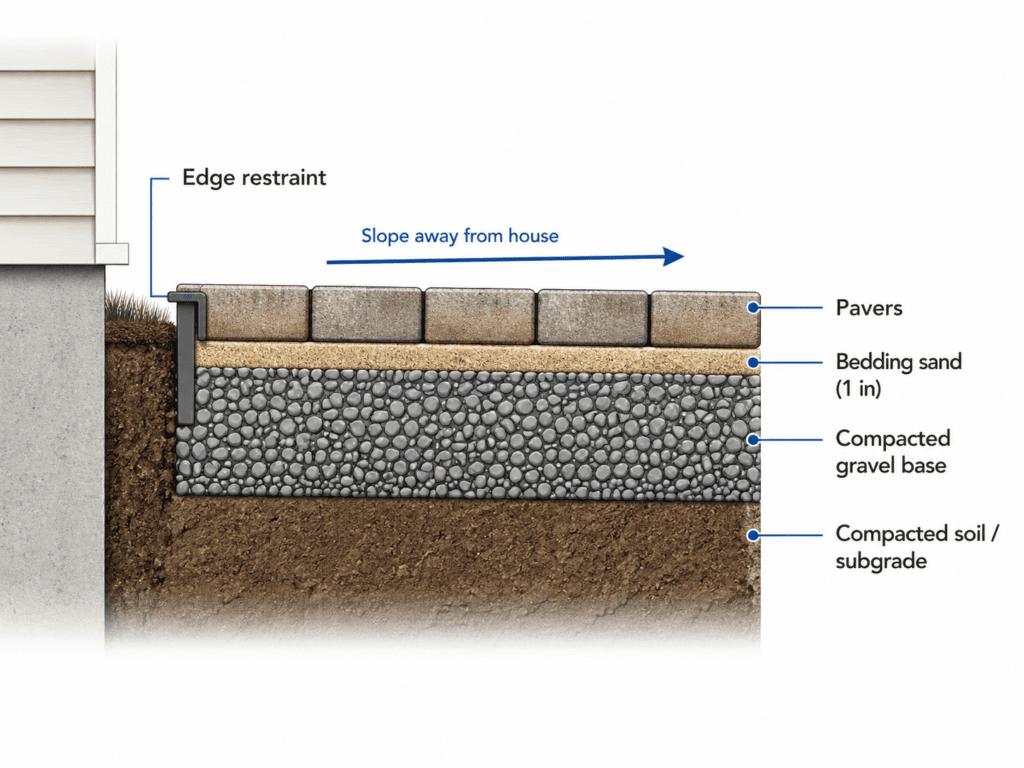
Quick guide: Most patios and walkways use 4 to 6 inches of compacted gravel base and about 1 inch of bedding sand. Driveways usually need a thicker base.
Inputs
Enter project details
Your paver base estimate
| Item | Estimated Quantity | What it means |
|---|
- Final compacted base depth for your soil and traffic loading
- Drainage slope and water outlet path
- Geotextile requirement over weak or clay soil
- Edge restraint and compaction method
- Supplier density for gravel and bedding sand
- Whether bulk delivery is better than bagged material
This calculator estimates material quantity only. Base depth still depends on soil, drainage, compaction, frost risk, and expected loading.
How to Use Paver Base Calculator
- Enter the length and width of the paved area.
- Choose the unit.
- Enter the compacted gravel base depth.
- Enter the bedding sand depth.
- Add a waste factor if needed.
- Click calculate to estimate gravel base and bedding sand quantities.
Common Paver Base Depths
| Project type | Gravel base depth | Bedding sand |
|---|---|---|
| Garden path | 3 to 4 in | 1 in |
| Patio | 4 to 6 in | 1 in |
| Walkway | 4 to 6 in | 1 in |
| Driveway | 6 to 12 in | 1 in |
| Weak soil or freeze-thaw area | thicker base may be needed | 1 in |
Quick Quantity Table
Gravel base only, before waste:
| Paver area | 4 in base | 6 in base |
|---|---|---|
| 100 sq ft | 1.23 yd³ | 1.85 yd³ |
| 200 sq ft | 2.47 yd³ | 3.70 yd³ |
| 300 sq ft | 3.70 yd³ | 5.56 yd³ |
| 400 sq ft | 4.94 yd³ | 7.41 yd³ |
| 500 sq ft | 6.17 yd³ | 9.26 yd³ |
For bedding sand, a 1 inch layer over 100 sq ft is about 0.31 yd³ before waste.
Gravel Base vs Bedding Sand
The gravel base is the load-supporting layer below the pavers. It spreads load, improves drainage, and helps reduce settlement.
Bedding sand is only a thin levelling layer directly below the pavers. Do not use thick sand as a replacement for compacted base.
Do You Need Paver Base Over Concrete?
Usually, no. If pavers are installed over an existing concrete slab, the concrete acts as the base. You may need a drainage mat, thin bedding layer, mortar, or adhesive depending on the method.
If you are installing pavers over a slab, read our patio pavers on concrete guide first. Use this calculator mainly when you are building a new paver base over soil.
Common Mistakes
Avoid these mistakes:
- using sand instead of compacted base;
- placing pavers over soft or muddy soil;
- skipping compaction;
- making bedding sand too thick;
- forgetting edge restraint;
- sloping the surface towards the house;
- ignoring drainage.
For technical guidance, see: CMHA paver installation guidance
Final Engineering Advice
Use the paver base calculator to estimate material quantity before ordering gravel or sand. For good performance, also check compaction, drainage, slope, and edge restraint. A thicker base will not fix weak soil or trapped water.
FAQ
How much paver base do I need?
You need enough compacted gravel base to cover the paved area at the required depth. The calculator estimates this from length, width, base depth, and waste factor.
How deep should paver base be?
Patios and walkways commonly use 4 to 6 inches of compacted gravel base. Driveways usually need 6 to 12 inches or more.
How much sand do I need under pavers?
Most paver installations use about 1 inch of bedding sand.
Can I use sand instead of paver base?
No. Sand alone is not a proper structural base for most patios, walkways, or driveways.
Do pavers need edge restraint?
Yes. Edge restraint helps stop pavers from spreading, shifting, and opening at the joints.