Soffit Calculator: Estimate Square Feet, Vents & Cost
Use this soffit calculator to estimate soffit square footage, full stock panels, installed cut pieces, vented and solid panels, cartons, J- or F-channel, fascia length, attic ventilation, waste, and rough project cost.
Add each eave section separately, especially when soffit depths differ. For the most accurate result, enter the actual panel coverage, stock length, carton quantity, and net free ventilation area from the manufacturer’s product sheet.
Soffit Calculator
Estimate soffit square footage, full stock panels, cut pieces, cartons, J/F-channel, fascia, intake ventilation and rough project cost.
Inputs
Enter each eave section
Different soffit depths can produce different cut yields, so calculate each roof edge separately.
Your soffit material estimate
Material list
- Full stock panels13 full panels
- Full cartons2 cartons
- Installed cut pieces140 pieces
- Vented stock panels7 stock panels
- Solid stock panels6 stock panels
- Channel length308 ft
- Channel pieces26 pieces
- Fascia length154 ft
- Fascia stock pieces13 pieces
Ventilation check
- Required total NFA576 sq in
- Target soffit intake288 sq in
- Minimum vented pieces45 cut pieces
- Provided soffit intake288 sq in
Cost breakdown
- Stock panels$234
- Trim/channel$234
- Optional fascia$0
- Labor$700
- Removal$210
- Total estimate$1,378
Section-by-section cut-yield check
| Section | Eave length | Soffit depth | Area | Cut pieces | Pieces per stock panel |
|---|
Important: Product coverage, locked width, carton quantity, panel length, and NFA vary by manufacturer. Check the product data sheet before ordering.
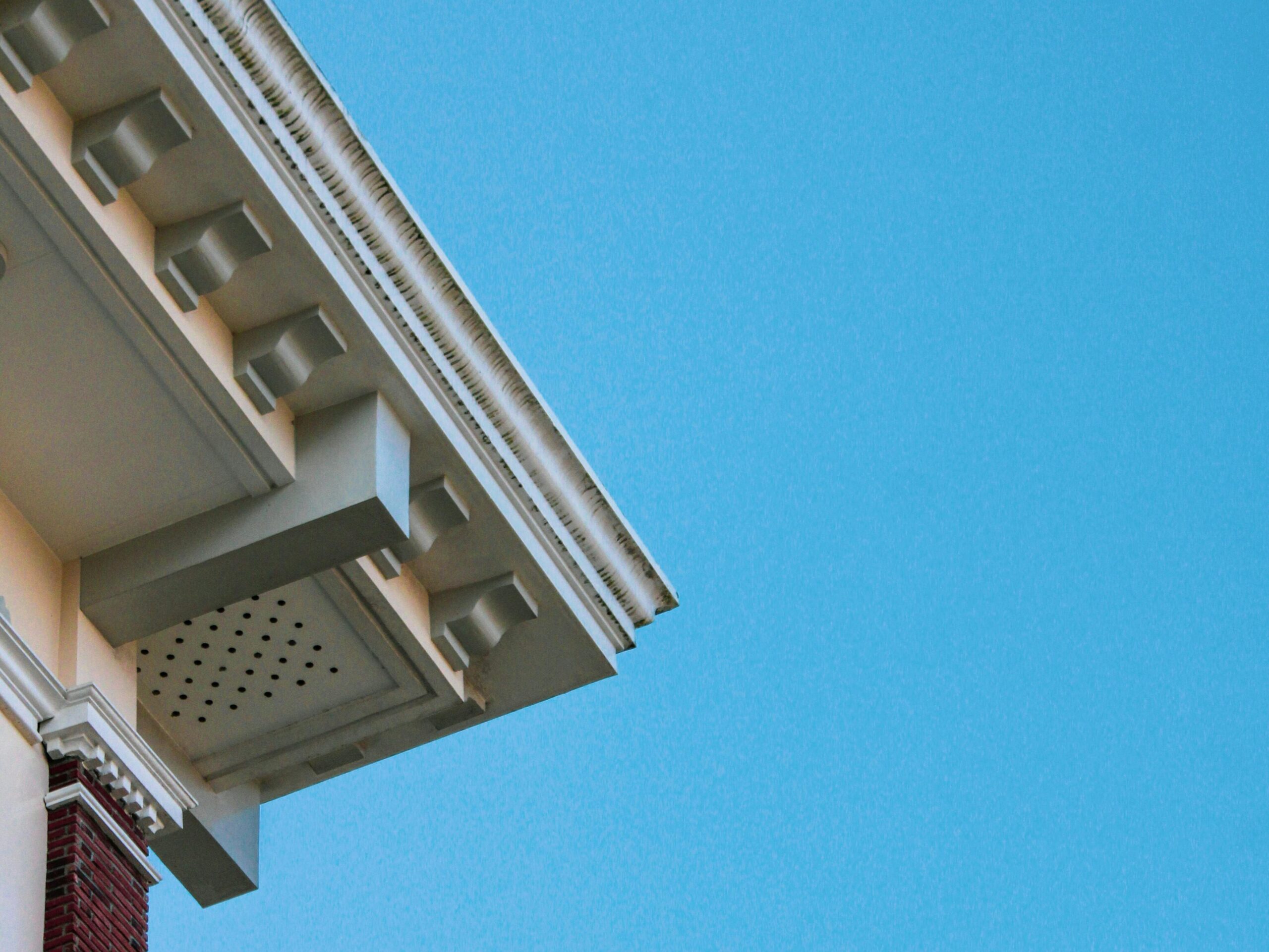
Vented soffit panels help air enter the attic while closing the underside of the roof overhang.How This Soffit Calculator Works
This calculator estimates soffit area, cut pieces, full stock panels, cartons, trim, fascia, ventilation, and rough project cost from the measurements you enter.
Sections with different soffit depths are calculated separately because depth affects how many pieces can be cut from each full stock panel.
1. Soffit Area and Waste
The measured soffit area is calculated from the eave length and soffit depth:
Soffit area = eave length × soffit depth
The calculator converts soffit depth from inches to feet before calculating square footage. It then adds the selected waste allowance:
Order area = measured area × (1 + waste percentage)
A simple roofline may need about 5% waste. Projects with corners, returns, varying depths, or difficult cuts may need 10% to 15%.
2. Installed Pieces and Cut Length
Soffit panels are commonly cut to span from the exterior wall to the fascia. The number of installed pieces depends on the product’s actual coverage width:
Installed pieces = eave length ÷ actual panel coverage width
The cut length is based on the measured soffit depth:
Cut length = soffit depth − cut deduction
Use the manufacturer’s published locked coverage and required clearance rather than relying only on the nominal panel size.
3. Full Stock Panels and Cartons
The calculator determines how many cut pieces can be obtained from each stock panel:
Pieces per stock panel = usable stock-panel length ÷ cut length
The result is rounded down to a whole piece. The required number of cut pieces is then increased by the selected waste allowance and converted into full stock panels:
Full stock panels = order pieces ÷ pieces per stock panel
The result is rounded up.
Cartons are calculated from the number of full panels and the entered panels-per-carton value. Vented and solid products are treated separately because they may be packaged and sold under different product numbers.
Two projects with the same soffit square footage can require different numbers of stock panels. Deeper soffits produce fewer cut pieces from each full panel.
4. Vented and Solid Panels
When attic ventilation inputs are provided, the calculator estimates the minimum number of vented pieces needed to meet the selected soffit-intake target.
The remaining pieces are assigned as solid soffit. The calculator then converts the vented and solid cut-piece quantities into full stock panels and cartons.
A selected percentage of vented soffit does not automatically guarantee adequate airflow. The calculation depends on the manufacturer’s published net free ventilation area.
5. Channel and Fascia
J-channel or F-channel length is calculated from the total eave length and the selected number of channel runs:
Channel length = eave length × channel runs
The waste allowance and any extra transition or corner length are then added. The total is divided by the selected stock-piece length and rounded up.
Fascia quantity is estimated from the total roof-edge length plus waste. The calculator also converts this length into full fascia pieces when a stock length is entered.
Actual trim requirements may change at corners, hips, transitions, gable ends, and unusual roof details.
6. Ventilation and Cost
Required attic ventilation is estimated from attic floor area and the selected ventilation ratio:
Required total NFA = attic floor area ÷ ventilation ratio
The calculator then applies the selected soffit-intake share:
Required soffit intake = total required NFA × intake share
NFA means net free ventilation area. Enter the manufacturer’s published value rather than estimating airflow from the visible perforations.
The calculator can use NFA reported per linear foot, per square foot, or per full stock panel. It compares the required intake with the ventilation provided and warns when the selected product may be insufficient.
The rough cost estimate combines:
- Full stock panels
- Channel pieces
- Optional fascia
- Labor
- Removal
- Project complexity
Use the result as a planning estimate. Product dimensions, packaging, roof height, access, hidden damage, local labor rates, and contractor minimum charges can change the final cost.
Worked Example: How Much Soffit Do I Need?
Consider a house with four roof edges:
| Input | Value |
|---|---|
| Front eave | 40 ft |
| Back eave | 40 ft |
| Left eave | 30 ft |
| Right eave | 30 ft |
| Soffit depth | 12 in |
| Waste allowance | 10% |
| Stock-panel length | 12 ft |
| Actual panel coverage | 12 in |
| Channel runs | 2 |
| Channel stock length | 12 ft |
| Attic floor area | 1,200 sq ft |
| Ventilation ratio | 1/300 |
| Target soffit intake | 50% |
Step 1: Calculate the Total Eave Length
Add the four roof edges:
40 + 40 + 30 + 30 = 140 ft
The project has 140 linear feet of eave receiving soffit.
Step 2: Calculate the Measured Soffit Area
A 12-inch soffit is 1 foot deep:
140 ft × 1 ft = 140 sq ft
The measured soffit area is 140 square feet.
Step 3: Add Waste
With a 10% waste allowance:
140 × 1.10 = 154 sq ft
The estimated order area is 154 square feet.
This figure is useful for comparing product coverage, but the full-panel quantity also depends on cut yield.
Step 4: Calculate Installed Cut Pieces
The selected panel covers 12 inches, or 1 linear foot, along the eave:
140 ft ÷ 1 ft = 140 installed pieces
After adding 10% waste:
140 × 1.10 = 154 cut pieces
Step 5: Calculate Full Stock Panels
A 12-foot stock panel can produce twelve 12-inch cut pieces:
12 ft ÷ 1 ft = 12 pieces per stock panel
The number of stock panels is:
154 ÷ 12 = 12.83
Round up to 13 full stock panels.
Step 6: Calculate J- or F-Channel
Two channel runs are selected:
140 ft × 2 = 280 linear ft
Add 10% waste:
280 × 1.10 = 308 linear ft
For 12-foot channel pieces:
308 ÷ 12 = 25.67
Round up to 26 pieces of J- or F-channel.
Step 7: Check Attic Ventilation
For a 1,200-square-foot attic using the selected 1/300 ratio:
1,200 ÷ 300 = 4 sq ft NFA
Convert the result to square inches:
4 × 144 = 576 sq in NFA
With 50% assigned to soffit intake:
576 × 0.50 = 288 sq in
The soffit system must provide at least 288 square inches of intake NFA under the selected assumptions.
The required vented-panel quantity then depends on the NFA published for the selected product.
How to Measure for Soffit
A soffit covers the underside of the roof overhang between the exterior wall and the fascia.
You need two basic measurements for each roof section:
- The length of the eave
- The depth of the soffit from the wall to the fascia
Measure Each Eave Separately
Measure only roof edges that will receive soffit. Do not automatically use the entire house perimeter because some gable or rake edges may have different details.
Record the front, back, sides, porches, garage extensions, dormers, and roof returns separately.
Measure the Soffit Depth
Measure from the exterior wall to the inside edge of the fascia or the finished outer limit of the soffit panel.
For a sloped soffit, measure the actual installed width along the soffit plane rather than the horizontal projection.
Separate Different Depths
Do not average sections with different soffit depths.
For example, enter a 12-inch front eave and an 18-inch porch overhang as separate sections. The deeper section produces fewer cut pieces from each stock panel.
Check the Channel Detail
Confirm whether the installation requires:
- One receiving-channel run
- Channels at both the wall and fascia
- H-channel at a transition
- Additional trim at corners or changes in direction
The correct detail depends on the wall, fascia, roof geometry, and selected soffit product.
Measure the actual roof edge instead of relying only on the building dimensions. Porches, returns, bump-outs, and garage roofs can add a significant amount of soffit.
For related roof-framing measurements, use our rafter spacing calculator and rafter length calculator.
Vented Soffit Calculator: How Many Soffit Vents Do I Need?
Many vented attic assemblies use soffit vents to bring outdoor air into the lower part of the attic. This intake air works with ridge vents, roof vents, or other high-level exhaust vents to reduce trapped heat and moisture.
Attic ventilation is based on net free ventilating area, or NFA. The International Residential Code generally requires 1 square foot of NFA for every 150 square feet of vented attic or rafter space. A reduced 1/300 ratio may be permitted when the conditions in the locally adopted code are satisfied. Use these ratios as planning assumptions and confirm the requirements that apply to your home. See IRC Section R806.2 for the code framework.
Use the Manufacturer’s Published NFA
Calculate soffit ventilation using the manufacturer’s published NFA rather than the visible size of the perforations.
Screens, louvers, and panel perforations restrict airflow. The visible opening therefore does not equal the effective ventilation area.
Depending on the product, NFA may be reported:
- Per linear foot
- Per square foot of soffit
- Per full stock panel
The calculator accepts each of these formats.
How the Calculator Checks Soffit Ventilation
The calculator estimates:
- Required total attic NFA
- Target soffit-intake NFA
- Ventilation supplied by the selected product
- Minimum vented cut pieces or stock panels
- Remaining solid pieces or panels
- Whether the planned intake meets the selected target
The percentage of vented soffit alone does not determine whether an attic has enough intake ventilation.
A product with a high published NFA may require fewer vented panels than a product with smaller or more restrictive openings.
| Soffit type | Best use |
|---|---|
| Vented soffit | Intake ventilation for a vented attic or roof assembly |
| Solid soffit | Porches, decorative areas, and roof sections that do not require intake ventilation |
| Mixed soffit | Vented panels where attic intake is needed and solid panels elsewhere |
Balance Intake and Exhaust
Soffit vents form the intake side of the system. The roof also needs an appropriate exhaust path.
Insulation should not block airflow between the soffit and attic. Ventilation baffles may be needed to maintain a clear air passage above the exterior wall.
Warning: Do not replace vented soffit with solid panels unless the complete attic-ventilation design will still provide adequate intake and exhaust. A clean-looking roof edge does not compensate for blocked airflow.
Soffit Materials and Accessories
The main soffit panels are only one part of a complete material order.
J-Channel
J-channel receives and finishes the edge of the soffit panel where suitable backing is available. Depending on the installation detail, it may be used along the wall, fascia, or another supported edge.
F-Channel
F-channel combines a receiving channel with an integrated fastening flange. It is commonly used where the flange can be secured to the wall or framing.
H-Channel and Transition Trim
H-channel or paired channels may be needed where soffit panels:
- Change direction
- Meet at a transition
- Form a hip corner
- Require an intermediate joint
Fascia Cover
Fascia cover protects and finishes the outer roof edge. It is estimated mainly by linear length rather than square footage.
Corner Trim
Inside and outside corners may require extra channel, corner trim, or carefully cut panel ends.
Fasteners
Use fasteners that are compatible with the selected soffit material. Follow the product instructions for spacing and fastening.
Do not drive fasteners so tightly that vinyl or aluminum panels cannot move as intended.
Not every project requires every accessory. Check the wall, fascia, framing, and corner details before ordering.
Soffit and Fascia Cost Calculator: What Affects Price?
Soffit cost depends on more than the total square footage.
Important cost factors include material type, roof height, access, demolition, hidden rot, fascia condition, ventilation changes, and roofline complexity.
For broad planning, HomeGuide lists soffit replacement at approximately $4 to $22 per linear foot, depending partly on soffit width and material. This Old House gives a wider replacement range of approximately $6 to $30 per linear foot. Homewyse lists basic vinyl soffit installation at approximately $5.99 to $9.76 per linear foot in its May 2026 estimate. These sources use different assumptions, so treat the figures as planning references rather than directly comparable quotes.
| Cost factor | Why it matters |
|---|---|
| Soffit material | Vinyl, aluminum, wood, and fiber cement have different material and labor costs |
| Panel profile | Decorative, insulated, or high-ventilation products may cost more |
| Roof height | Higher eaves may require ladders, scaffolding, lifts, and additional safety measures |
| Roofline complexity | Corners, returns, porches, and transitions increase cutting and labor |
| Existing soffit removal | Demolition and disposal add time and cost |
| Hidden damage | Rot, mold, pests, or damaged framing may require repair |
| Fascia condition | Damaged fascia may need replacement before new soffit is installed |
| Ventilation changes | New vents, baffles, or a revised intake layout increase the scope |
| Local labor rates | Contractor prices vary by location and availability |
| Minimum service charge | Small projects may still have a minimum mobilization cost |
The calculator combines the quantities and rates you enter. Use the result as a planning estimate rather than a contractor quote.
Local labor rates, building height, access, panel type, hidden rot, fascia damage, and ventilation changes can materially affect the final price.
When Should You Replace Soffit?
Inspect the soffit when panels become loose, stained, damaged, or unable to provide the intended ventilation.
Common signs that repair or replacement may be needed include:
- Sagging or loose panels
- Missing soffit sections
- Peeling or damaged finishes
- Soft or rotten wood
- Water staining
- Mold near the eaves
- Animal or insect entry
- Cracked or distorted panels
- Blocked ventilation openings
- Damaged or loose fascia
- Water overflowing behind the gutter
Small, isolated damage may be repairable. Widespread rot, repeated moisture exposure, or badly deteriorated panels may justify full replacement.
Check the roof covering, flashing, fascia, gutters, and attic ventilation before installing new soffit. Replacing the visible panel without correcting the underlying cause may allow the damage to return.
If water is overflowing behind the gutter, new soffit alone will not solve the problem. Check gutter slope, fascia condition, roof-edge flashing, downspout capacity, and where the water discharges.
Use the Gutter Installation Cost Calculator if the gutter system also needs replacement or repair.
Soffit vs Fascia
Soffit and fascia are adjacent roof-edge components, but they perform different jobs and are measured differently.
| Component | Location | Main measurement | Main function |
|---|---|---|---|
| Soffit | Underside of the roof overhang | Square feet and panel quantity | Closes the eave and may provide attic intake ventilation |
| Fascia | Outer vertical roof edge | Linear feet | Finishes the roof edge and commonly supports the gutter |
| Gutter | Attached along the roof edge | Linear feet | Collects roof runoff and directs it into downspouts |
The soffit calculator estimates the horizontal or sloped underside area. Fascia and gutter materials are primarily estimated from roof-edge length.
Soffit and fascia are often replaced together because water damage can affect both components. Repair rotten or loose fascia before installing new soffit.
FAQs
How do I calculate how much soffit I need?
Multiply each eave length by its soffit depth in feet to estimate the measured area.
Add a waste allowance, then account for the actual panel coverage, stock-panel length, soffit cut length, and cut yield to determine how many full panels to purchase.
How much soffit do I need for 20 feet?
A 20-foot eave with a 12-inch soffit has a measured area of:
20 ft × 1 ft = 20 sq ft
With 10% waste:
20 × 1.10 = 22 sq ft
The number of full panels depends on the product’s stock length, actual coverage, and the number of cut pieces obtained from each panel.
How many square feet are in one piece of soffit?
Multiply the full stock-panel length by its actual coverage width in feet.
For example, a 12-foot panel with 12 inches of actual coverage contains approximately:
12 ft × 1 ft = 12 sq ft
The usable installed yield may be lower because the stock panel must be cut to the soffit depth.
How many soffit vents do I need?
First calculate the required soffit-intake NFA.
Then divide that requirement by the NFA supplied by the selected vented product. Use the manufacturer’s published NFA rather than the visible perforated area.
The calculator can estimate the minimum number of vented cut pieces or full stock panels.
Do you use F-channel or J-channel for soffit?
Either may be used depending on the wall, fascia, framing, and selected product.
F-channel includes an integrated fastening flange. J-channel can receive the soffit panel where appropriate backing is available.
Follow the installation detail provided by the soffit manufacturer.
Is soffit measured in linear feet or square feet?
Both measurements are used.
Soffit area is normally estimated in square feet. Eave length, fascia, and receiving channels are measured in linear feet.
The material itself may be purchased as individual stock panels, pieces, or cartons.
How much waste should I add for soffit?
A simple roofline may need approximately 5% waste. Many typical projects use 10%.
Projects with several corners, returns, varying depths, or difficult cuts may require 10% to 15%. Cut yield should also be considered because some offcuts may not be reusable.
Should fascia be replaced with the soffit?
Replace or repair the fascia if it is rotten, loose, cracked, or unable to support the intended roof-edge detail.
Sound fascia does not automatically need replacement just because new soffit is being installed.
Final Takeaway
This calculator provides a detailed planning estimate based on your roof measurements, product dimensions, ventilation data, waste allowance, and entered costs.
Before ordering, confirm the manufacturer’s actual coverage, stock length, carton quantity, cut instructions, trim detail, and published NFA. Inspect the fascia, framing, gutters, flashing, and attic airflow path so hidden damage or blocked ventilation can be corrected during the project.