Can You Live in a House During Foundation Repair?
Can you live in a house during foundation repair? Yes, usually. You can often stay if the structure is stable, utilities remain connected, and the main work is outside. Move out temporarily if the repair involves house lifting, major interior excavation, disconnected utilities, unsafe walls, severe settlement, mold, sewage, or poor indoor air quality..
Repairs Where Staying Home Is Usually Realistic
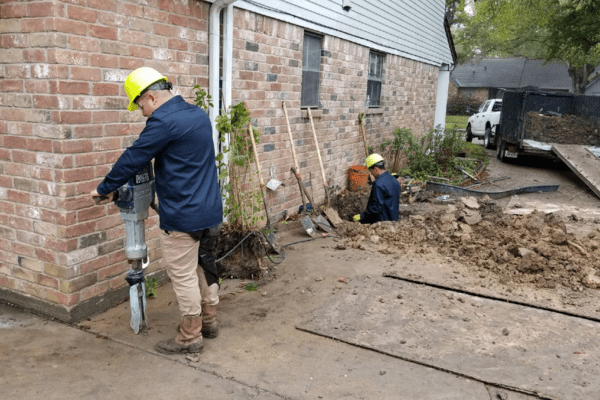
In many common foundation repair projects, homeowners can remain in the house. This is especially true when the work is outside or limited to the perimeter of the home.
You can usually stay during:
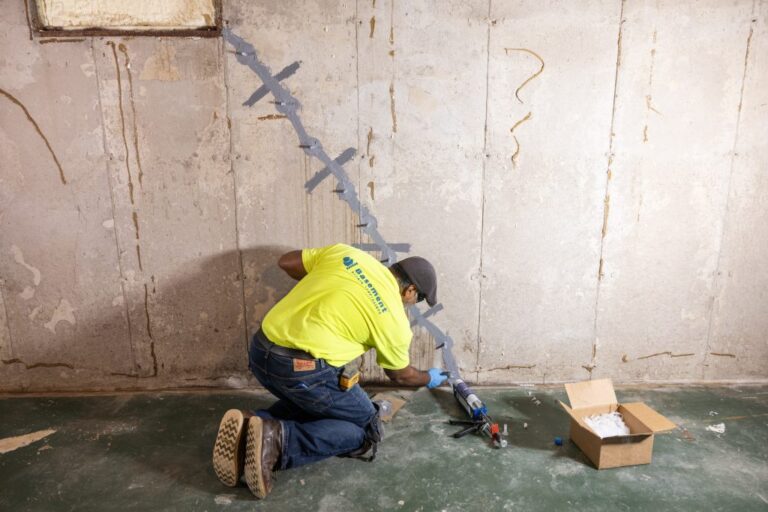
- foundation crack injection
- exterior waterproofing
- drainage correction
- crawl space support work
- minor underpinning
- exterior push pier or helical pier installation
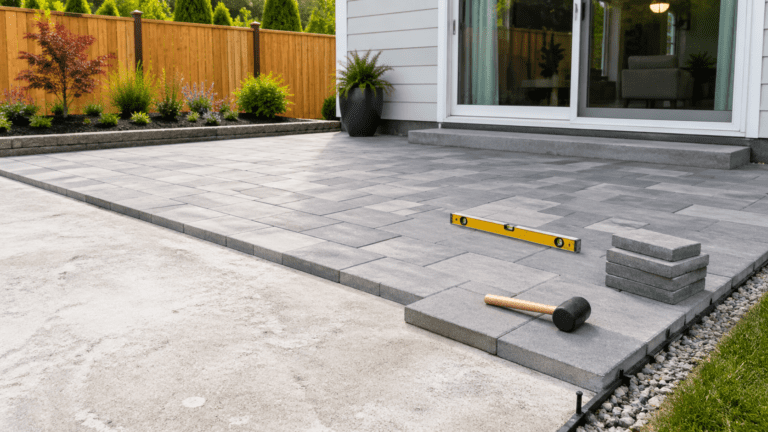
- small slab lifting or foam injection
These repairs can still be noisy. You may hear drilling, digging, cutting, or vibration near the walls. But if your bathroom works, your kitchen works, and the contractor is not cutting open your living room floor, staying is usually manageable.
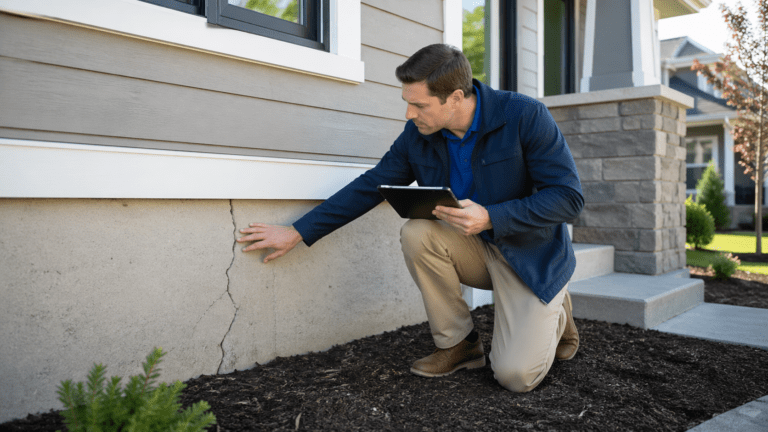
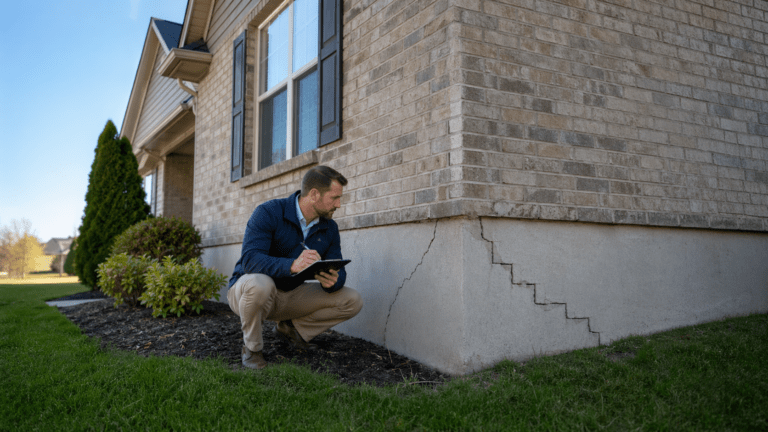
If your repair is mainly for visible wall or foundation cracks, our foundation crack repair guide explains which cracks can be sealed and which ones may need structural attention.
Stay, Leave, or Leave During Work Hours?
For many homeowners, the answer to can you live in a house during foundation repair is not a simple yes or no. Sometimes the best option is to sleep at home but leave during the loudest or dustiest working hours.
| Best option | When it makes sense |
|---|---|
| Stay fully | Exterior work, stable structure, utilities connected, no major interior work |
| Stay but leave during work hours | Loud drilling, pets, babies, elderly residents, or remote work |
| Sleep at home but work elsewhere | The home is safe, but daytime noise is too disruptive |
| Move out temporarily | House lifting, interior excavation, unsafe walls, utilities off, poor air quality |
This is the decision most homeowners actually need. The issue is not only structural safety. It is whether normal life can continue without turning the house into a live construction show.
When You Should Move Out
You should not stay in the house if the repair affects structural safety, utilities, air quality, or access to basic rooms.
| Repair situation | Can you stay? | Why |
|---|---|---|
| Small crack injection | Usually yes | Low disruption |
| Exterior pier repair | Usually yes | Work is mostly outside |
| Crawl space support work | Usually yes | Depends on access and air quality |
| Interior slab cutting | Often no | Dust, noise, and open floor areas |
| House lifting | No | Movement risk and possible utility shutoff |
| Full foundation replacement | No | Too disruptive and unsafe |
| Bowing basement wall | Ask an engineer first | Possible structural risk |
| Severe settlement | No | Safety concern |
| Mould, sewage, or bad indoor air | No | Health risk |
From a structural safety point of view, tiny hairline cracks are not usually the biggest concern. More serious warning signs include sudden settlement, widening cracks, bowing basement walls, sloping floors, doors or windows suddenly jamming, or any part of the structure being temporarily unsupported during repair.
Major settlement repairs sometimes use piers or other deep support systems; our deep foundation types guide explains the main options.
For serious damage, follow FEMA home safety guidance, especially if you see foundation cracks, damaged utilities, gas smells, or other signs that the home may not be safe to occupy.
If the contractor needs to cut or lift part of a floor slab, read our concrete slab foundation repair guide before assuming it is a simple crack repair.
The Liveability Test
Before deciding can you live in a house during foundation repair, check the basics below.
| Question | Why it matters |
|---|---|
| Will water, gas, electricity, heating, or cooling stay on? | No utilities can make staying impractical |
| Will at least one bathroom remain usable? | This is essential |
| Will the kitchen remain usable? | Otherwise daily living becomes difficult |
| Will workers need access inside? | Privacy and movement may be limited |
| Will floors, walls, or slabs be cut? | Dust and safety risks increase |
| Will the house be lifted? | Staying is usually not recommended |
| Will there be open trenches or holes? | Important for children and pets |
| Is there structural instability? | Professional advice may be needed |
Do not only ask the contractor, “Can I stay?”
Ask:
“Which rooms, doors, utilities, and access routes will be affected?”
That question gives you a much clearer answer.
What It Feels Like to Stay During Foundation Repair
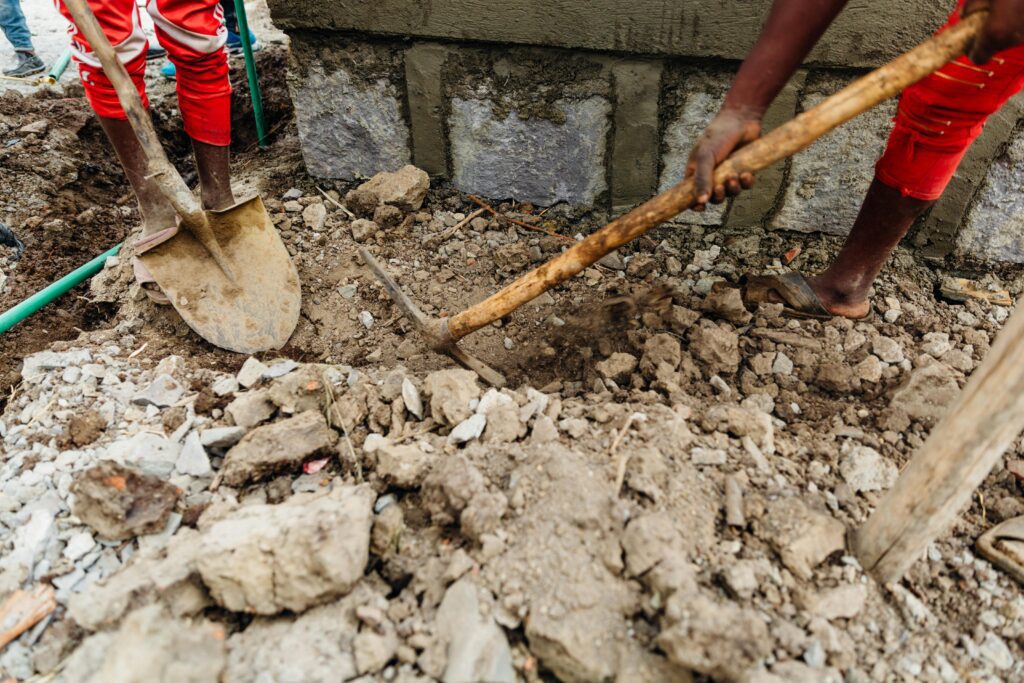
If you stay, expect some disruption.
Common issues include:
- drilling or cutting noise
- vibration during pier work
- workers around the house
- blocked driveways or side paths
- dust near doors, windows, or crawl space access
- temporary loss of access to some rooms
- pets reacting badly to noise
- children needing to stay away from work zones
For exterior repairs, this may be annoying but manageable. For interior work, it can quickly become too much, especially if floors are opened, furniture is moved, or dust enters living spaces.
Children, Pets, Elderly People, and Remote Work
Healthy adults may tolerate a noisy repair. Children, pets, elderly residents, and people with breathing issues may not.
Children should stay away from excavation, tools, open holes, and machinery. Pets may need to be kept in one closed room or taken somewhere else during working hours. Elderly residents may struggle if walkways are blocked, floors are uneven, or heating and cooling are interrupted.
If someone uses oxygen support, medical equipment, mobility aids, or needs a calm indoor environment, temporary relocation may be the safer option.
If you work from home, plan around the loudest days. Foundation repair and deep focus are not close friends. One wants silence. The other brought equipment.
The 5-Minute Contractor Script
For most homeowners asking can you live in a house during foundation repair, the contractor’s schedule matters as much as the repair method.
Before work starts, ask:
“Which rooms will be affected, will any utilities be shut off, will the house be lifted, will floors or walls be cut, and is there any time when the home is unsafe to occupy?”
Then ask for the answer in writing or on the repair schedule.
A vague “you should be fine” is not enough. You need to know what will happen, where it will happen, and when the most disruptive work will take place.
How Long Will the Disruption Last?
Timelines vary depending on the repair type, soil conditions, access, and the level of damage.
| Repair type | Typical disruption |
|---|---|
| Crack injection | Same day to 1–2 days |
| Small exterior repair | 1–3 days |
| Drainage or waterproofing work | Several days |
| Pier installation | Several days to 1–2 weeks |
| Interior foundation work | Several days or more |
| House lifting or full replacement | Usually requires relocation |
The more the work moves inside the house, the harder it becomes to stay comfortably.
Final Verdict
So, can you live in a house during foundation repair? In most normal repair projects, yes — especially if the home is stable, the repair is mostly outside, and utilities remain connected.
Staying is usually reasonable for minor cracks, exterior pier work, crawl space repairs, waterproofing, drainage improvements, and some slab lifting work.
Move out temporarily if the project involves house lifting, full foundation replacement, major interior excavation, disconnected utilities, severe wall movement, unsafe settlement, mould, sewage, or poor indoor air quality.
In simple terms:
If the house is safe, usable, and mostly undisturbed inside, you can probably stay. If the repair affects safety, utilities, floors, or daily access, leave until the heavy work is finished.
FAQs
Can you live in a house during foundation repair if the work is outside?
Yes, you can usually live in a house during foundation repair if the work is outside, the structure is stable, utilities stay connected, and the contractor controls access around the repair area.
Can you sleep in a house during foundation repair?
Yes, if the house is structurally stable, utilities remain connected, and the repair does not create unsafe conditions inside the home.
Is foundation repair noisy?
Yes. Drilling, digging, cutting, and lifting can be loud. Even exterior work can disturb sleep, remote work, children, and pets.
Do you need to move furniture before foundation repair?
For exterior work, usually very little. For interior slab cutting, wall access, or floor work, furniture may need to be moved.
Should I ask a structural engineer before staying?
Yes, if there are large cracks, bowing basement walls, sloping floors, sudden settlement, or any doubt about structural safety.