Foam Concrete vs Normal Concrete: Strength, Weight, Cost and Uses
Foam concrete is a lightweight concrete made by mixing cement slurry with preformed foam. It weighs far less than normal concrete, provides good insulation, and works well for void filling, trench backfill, roof insulation, and lightweight fill applications.
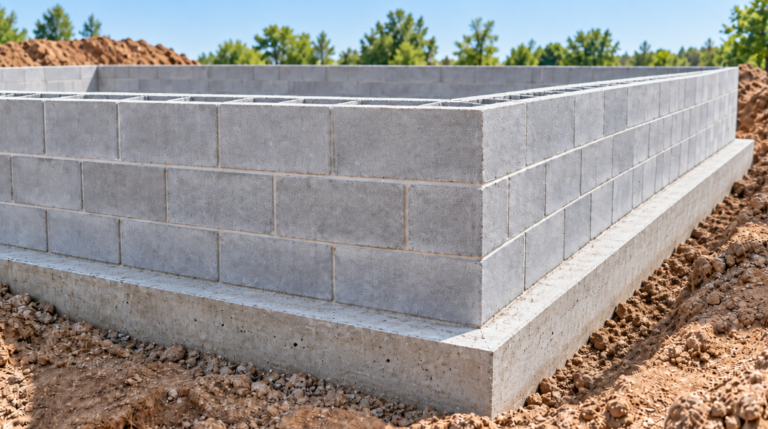
Traditional concrete is strong, dense, and designed to carry structural loads. Foam concrete also known as cellular concrete, light weight concrete is lighter, easier to pump, and often used where reducing weight matters more than achieving high compressive strength.
Foam Concrete vs Normal Concrete at a Glance
| Property | Foam Concrete | Normal Concrete |
|---|---|---|
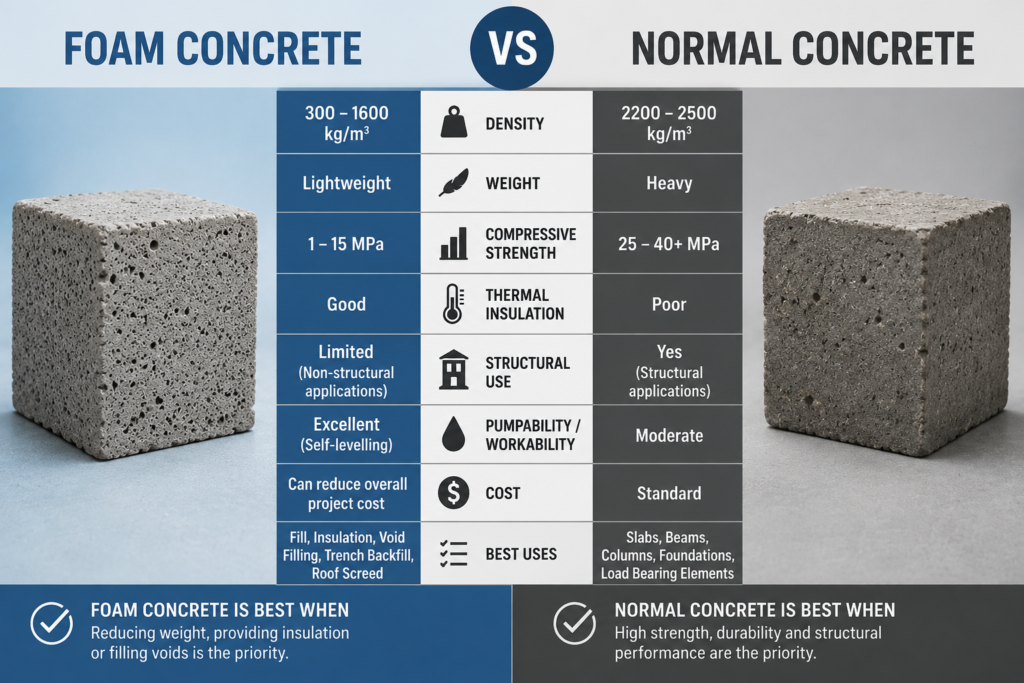
| Density | 300–1600 kg/m³ | 2200–2500 kg/m³ |
| Weight | Lightweight | Heavy |
| Compressive Strength | Lower | Higher |
| Insulation | Good thermal insulation | Poor insulation |
| Pumpability | Excellent | Moderate |
| Structural Use | Limited | Common |
| Cost | Can reduce labour/fill cost | Standard |
| Shrinkage | Higher risk | Lower risk |
| Best Uses | Fill, insulation, voids | Slabs, beams, columns |
What Is Foam Concrete?
It is a type of lightweight concrete produced by adding stable foam into a cement-based slurry. The trapped air bubbles reduce the material’s density and weight.
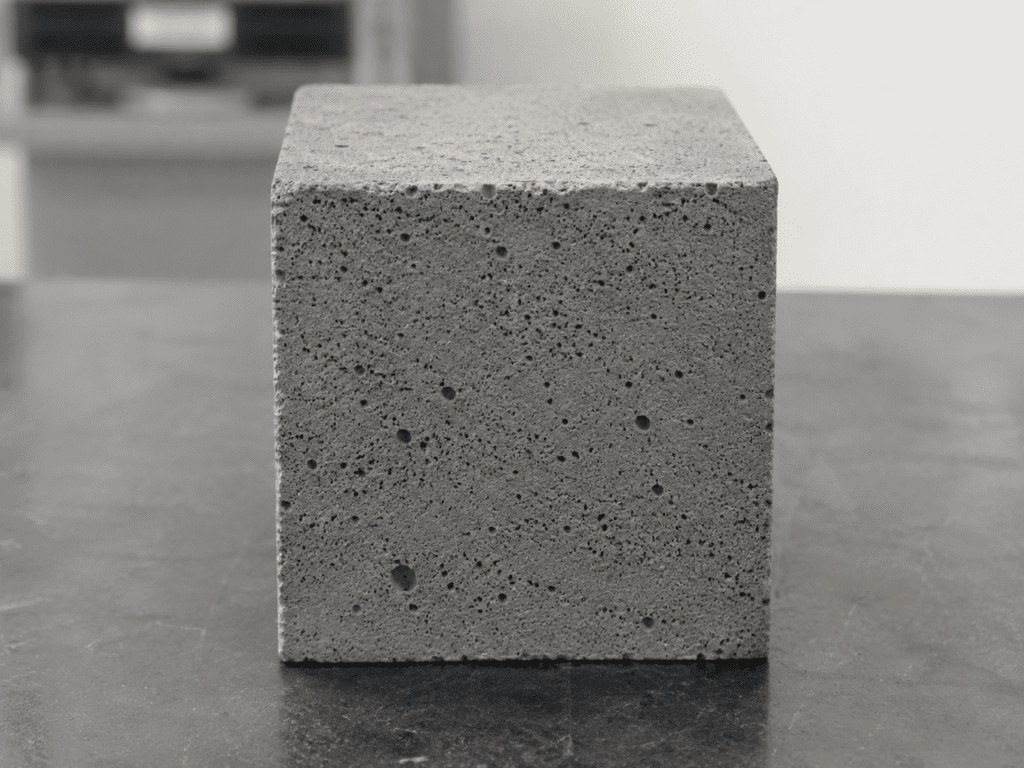
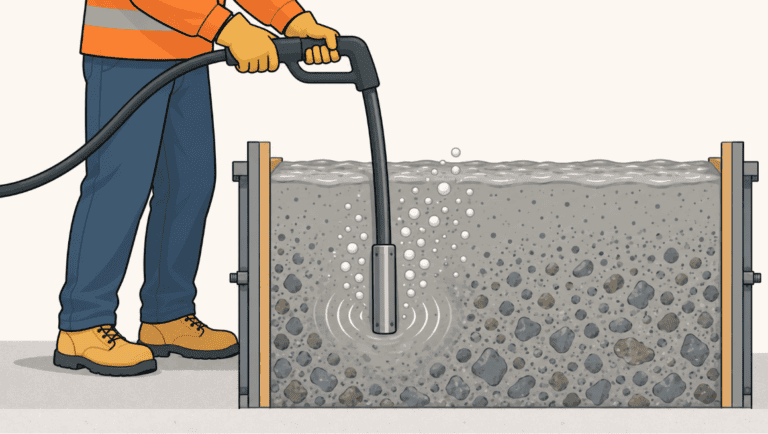
Unlike normal concrete, cellular concrete may not contain coarse aggregate. The final material becomes highly flowable and self-compacting, so standard workability checks such as the concrete slump test may not describe its behavior in the same way.
Common densities range from:
- 300–600 kg/m³ for insulation
- 800–1200 kg/m³ for lightweight fill
- 1200–1600 kg/m³ for higher-strength applications
Where Light Weight Concrete Works Best
Light weight concrete is commonly used for:
- Void filling
- Road sub-base stabilisation
- Trench backfill
- Roof insulation screeds
- Bridge abutment fill
- Pipeline support
- Lightweight embankments
- Filling abandoned tanks or tunnels
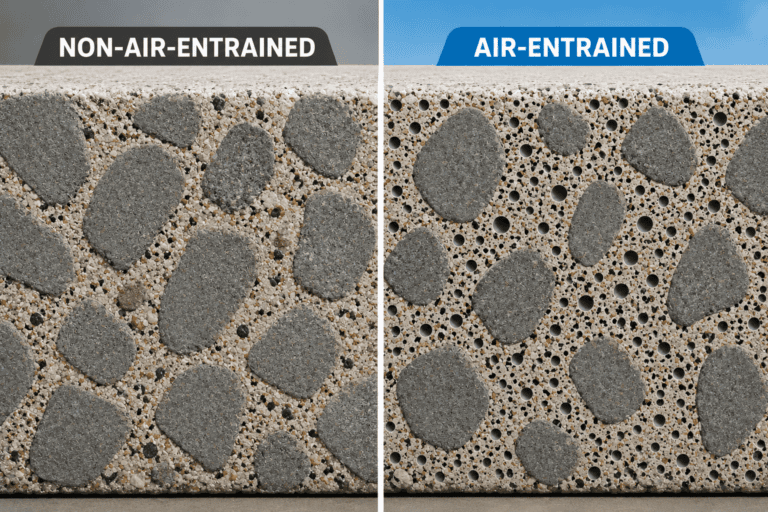
Foam concrete should not be confused with air-entrained concrete. Air entrainment introduces a much smaller volume of microscopic bubbles into normal concrete mainly to improve freeze-thaw durability.
Light weight concrete is excellent where reducing dead load is more important than achieving high structural strength.
Strength Comparison
Normal reinforced concrete commonly reaches compressive strengths of 25–40 MPa or higher.
Cellular concrete typically ranges from:
- 1–5 MPa for low-density insulation mixes
- 5–15 MPa for denser engineering applications
Higher strength is possible, but foam concrete is generally not used for heavily loaded structural members like columns or transfer beams.
Weight Comparison
This is where foam concrete becomes attractive.
Normal concrete is heavy and increases foundation and structural loads. Foamed concrete can reduce self-weight dramatically.
For example:
- Normal concrete ≈ 2400 kg/m³
- Foam concrete ≈ 800 kg/m³
That means foam concrete may weigh nearly one-third as much. For normal concrete volume and bag estimates, use our concrete calculator.
Cost Comparison
Foam concrete may initially appear more expensive because of foaming agents and specialised equipment. However, it can reduce overall project cost by:
- reducing excavation loads
- lowering transport weight
- decreasing labour
- minimising compaction work
- speeding installation
In many fill applications, it becomes cost-effective despite higher material cost.
Main Advantages of Low density Concrete
- Lightweight
- Good thermal insulation
- Self-levelling
- Easy pumping
- Reduced dead load
- Fast placement
- Good void-filling ability
Main Disadvantages
- Lower structural strength
- Higher drying shrinkage
- More sensitive to water content
- Not suitable for all structural applications
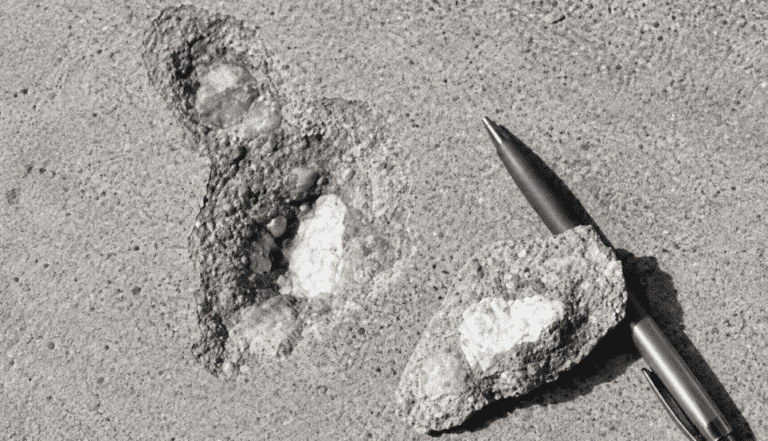
- Surface durability may be lower
Do not use lightweight fill to hide slab movement or foundation problems; read concrete slab foundation repair first.
Foamed concrete should not automatically replace structural concrete. Its suitability depends heavily on load requirements, density, curing, and mix design.
Which One Should You Choose?
Choose cellular concrete when:
- lightweight fill is needed
- insulation matters
- reducing soil pressure is important
- access for compaction equipment is limited
Choose normal concrete when:
- structural strength is critical
- reinforced slabs or beams are required
- high durability under heavy loads is needed
FAQs
Is foam concrete strong enough for houses?
Usually not for primary structural frames. It is more commonly used as lightweight fill or insulation material.
Is foam concrete waterproof?
It is not fully waterproof. Lower-density mixes can absorb significant moisture unless protected.
Can foam concrete crack?
Yes. Shrinkage cracking can occur if curing and mix design are poor.
Is foam concrete cheaper?
Material cost may be higher, but total installed project cost can sometimes be lower.