Exposed Aggregate Concrete: Cost, Pros, Cons, Types, and Maintenance
Exposed aggregate concrete is a decorative finish where the top cement paste is removed to reveal the stone or gravel inside the slab. It is also called washed concrete.It is common for driveways, patios, walkways, pool decks, and stairs.
Why Choose Exposed Aggregate Concrete
Exposed aggregate sits between plain broom finish concrete and stamped concrete.
It looks more finished than basic concrete, but it does not have the molded pattern of stamped concrete. The finish comes from real stone exposed at the surface.
That makes it useful for driveways, patios, walkways, and pool decks where you want texture, color, and curb appeal without installing pavers.
The main risk is workmanship. Exposed aggregate is not a forgiving finish. If the crew washes too early, washes too late, uses too much water, or applies surface retarder unevenly, the final surface looks patchy.
How Exposed Aggregate Concrete Gets Its Look
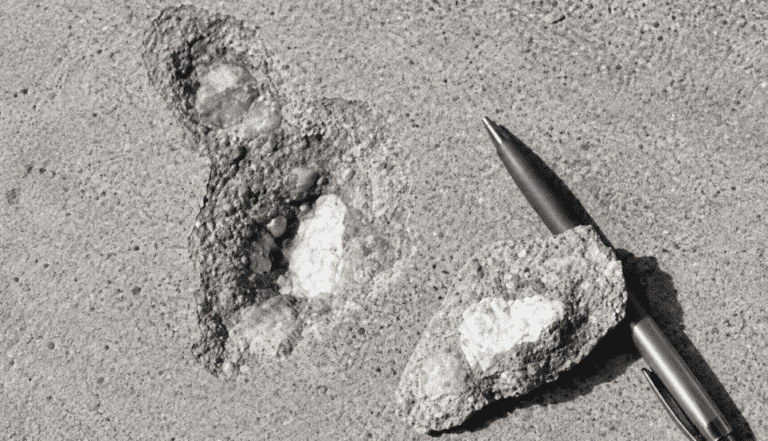
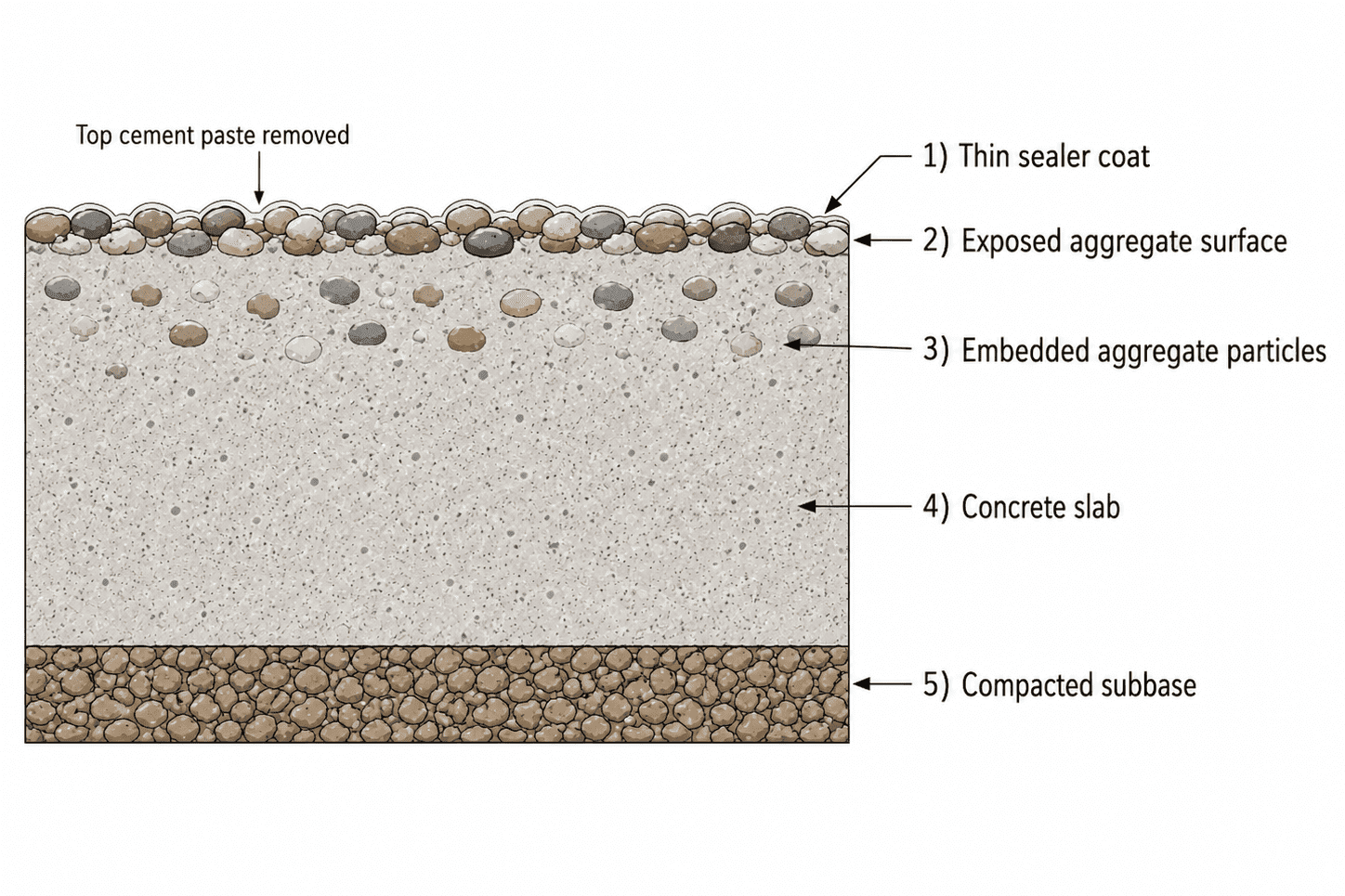
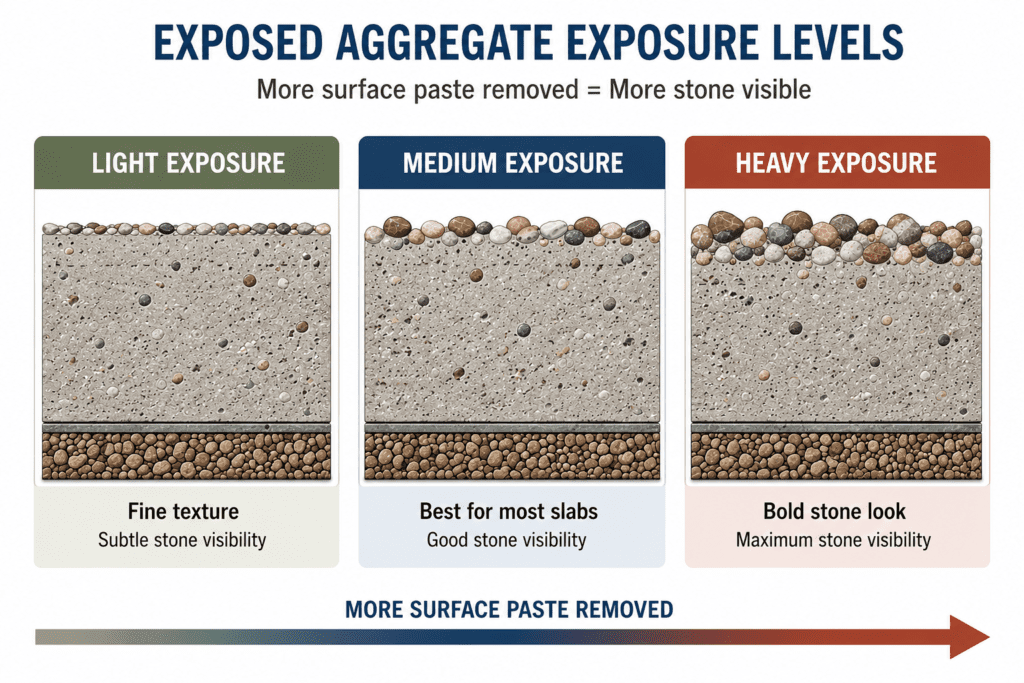
Concrete contains cement paste, sand, water, and aggregate. In exposed aggregate concrete, the upper layer of cement paste is removed before it fully hardens. This exposes the stone near the top of the slab as shown in the Figure below.
The American Cement Association (ACA) describes exposed aggregate as a decorative surface made by removing the outer mortar layer and exposing the aggregate particles.
Washed concrete gets its name from this step. The surface paste is washed away while the concrete below still holds the aggregate in place.
The final look depends on aggregate type, aggregate size, exposure depth, and sealer type.
Only the top part of each aggregate particle should be exposed. The rest must stay locked into the concrete. If too much paste is removed, stones loosen and the surface becomes harder to maintain.
Light, Medium, and Heavy Exposure
| Exposure level | Look | Best use |
|---|---|---|
| Light exposure | Fine texture with less stone visible | Patios, walkways, barefoot areas |
| Medium exposure | Balanced stone visibility and grip | Driveways, sidewalks, pool decks |
| Heavy exposure | Bold stone texture | Accent areas and decorative panels |
For most residential driveways and patios, medium exposure is the safest choice. It gives a visible stone finish without making the surface too rough.
Where Exposed Aggregate Works Best
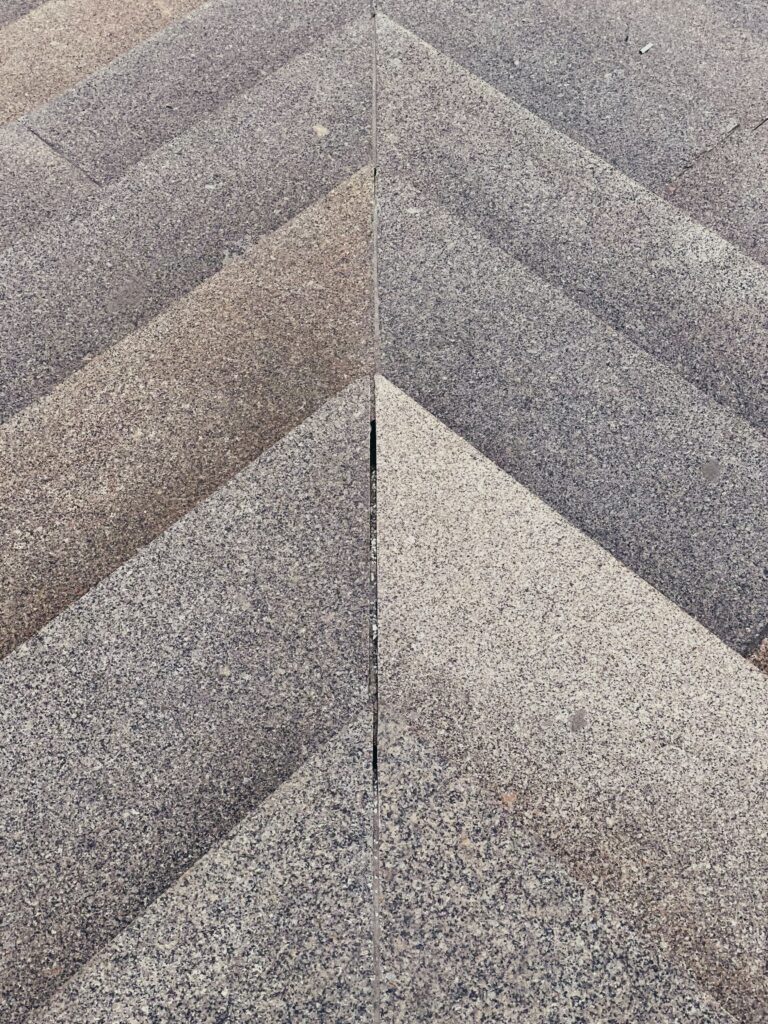
Exposed aggregate is a good fit for:
- driveways
- patios
- front walkways
- sidewalks
- pool decks
- garden paths
- steps and stair treads
- decorative concrete borders
It is not the best choice for every surface. Do not choose exposed aggregate if you want the cheapest finish, a smooth barefoot surface, or a surface that is easy to patch invisibly. Broom finish concrete is better for low-budget utility slabs. Polished concrete is usually better for indoor floors.
For pool decks and barefoot patios, choose smaller rounded aggregate. Sharp crushed stone often feels uncomfortable under bare feet.
Exposed Aggregate Concrete Cost
Most basic exposed aggregate concrete costs about $8 to $12 per square foot. Driveways, pool decks, demolition, borders, color, specialty aggregate, and difficult access increase the final installed cost. Use the cost table below as a reference.
| Project type | Typical installed cost |
|---|---|
| Basic exposed aggregate walkway | $8 to $12 per sq ft |
| Exposed aggregate patio | $8 to $15 per sq ft |
| Exposed aggregate driveway | $10 to $18 per sq ft |
| Pool deck with decorative aggregate | $12 to $20 per sq ft |
| Seeded glass or specialty aggregate | $15 to $30+ per sq ft |
Main cost drivers include project size, slab thickness, site access, demolition, aggregate type, local labor rate, sealer type, borders, saw cuts, color, drainage, and subbase work.
For driveway-specific pricing, use our concrete driveway cost calculator to compare slab thickness, finish type, removal, sealing, drainage, and regional cost.
For patios, walkways, and general slab work, compare the finish cost with our concrete slab cost calculator.
Aggregate Types and Finish Options
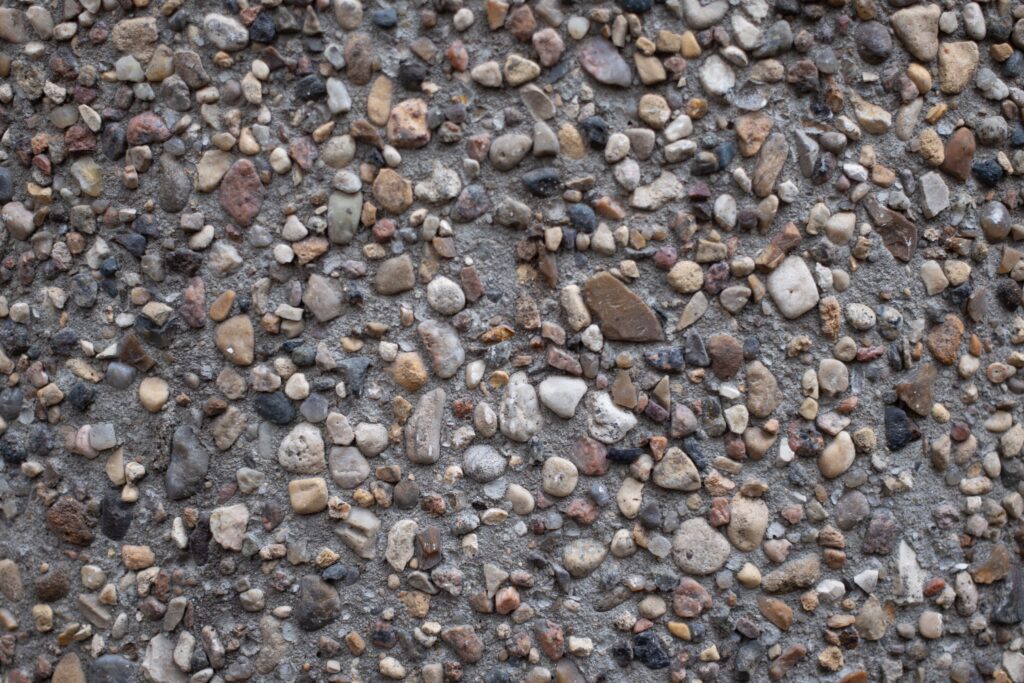
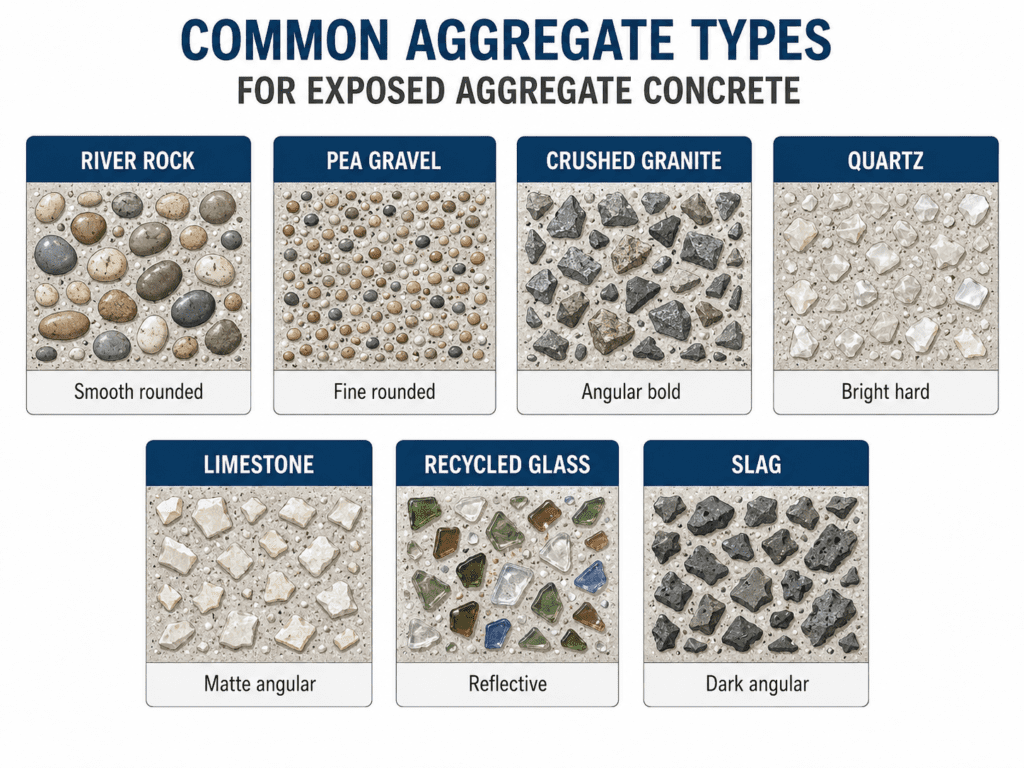
Aggregate controls the final appearance more than any other design choice. Use the table and Figure below as a guide to select aggregate type.
| Aggregate type | Texture | Best use | Cost impact |
|---|---|---|---|
| River rock | Smooth and rounded | Patios, pool decks, walkways | Standard |
| Pea gravel | Fine and rounded | Garden paths, small patios | Low to standard |
| Crushed granite | Angular and bold | Driveways, high-traffic areas | Standard |
| Quartz | Bright and hard | Decorative patios and walkways | Standard to high |
| Limestone | Matte and angular | Sidewalks and patios | Standard |
| Recycled glass | Smooth and reflective | Decorative patios and pool areas | High |
| Slag | Angular | Commercial or recycled-content projects | Low to standard |
| Specialty aggregate | Varies | Accent panels and custom work | High |
Color comes from the natural aggregate, integral color in the concrete mix, or stain after curing. The cleanest designs usually use one strong aggregate choice, simple saw cuts, and a sealer that matches the intended look.
How Exposed Aggregate Concrete Is Installed
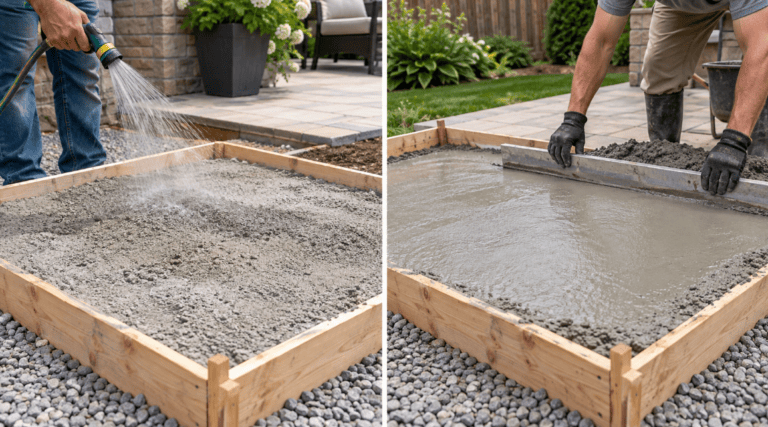
The installation sequence is as
- Prepare the subbase
The base should be compacted and graded. Driveways and patios need slope so water drains away from the house. - Set forms and reinforcement
Reinforcement does not stop cracking, but it helps hold cracks tighter. The slab still needs proper joint layout. - Place the concrete
The mix should not be too wet. Extra water makes placement easier for a short time, but it weakens the paste and increases scaling risk. For fresh concrete quality checks, see our concrete slump test guide. - Bull float and finish
The crew should level the surface without over-floating. Too much floating pushes coarse aggregate down and leaves too much paste at the top. ACI 302.1R emphasizes careful concrete slab construction, including placing, finishing, jointing, and curing practices that affect surface quality. - Apply surface retarder
Most modern exposed aggregate work uses a chemical surface retarder. It slows the set of the top cement paste so the crew can wash it off later. - Wash the surface
The crew removes the softened paste with water, brushing, or pressure washing. The exact timing depends on temperature, humidity, concrete mix, and product instructions. - Cure and protect
The concrete still needs proper curing. Keep heavy traffic off during the early curing period. - Clean or acid wash if needed
An acid wash is not always required. It removes cement film left after washing and brushing and helps brighten the exposed aggregate. - Seal the surface
Sealer helps reduce water absorption, staining, salt damage, and color fading.
Before ordering concrete, use our concrete calculator to estimate cubic yards, slab thickness, and waste allowance.
Four Methods to Expose Aggregate
Surface retarder
This is the most common method for new slabs. The contractor sprays a surface retarder after finishing. Later, the softened paste is washed away.
Best for driveways, patios, sidewalks, pool decks, and larger pours.
Main risk: uneven retarder application.
Brushing and washing
This is the older method. The crew washes and scrubs the surface while the paste is still soft.
Best for small paths, steps, and small DIY areas.
Main risk: timing. Washing too early pulls stones loose. Washing too late leaves paste on the surface.
Seeded aggregate
Decorative aggregate is broadcast onto fresh concrete, pressed in, and then exposed. This lets the contractor use premium aggregate near the surface instead of through the full concrete mix.
Best for custom patios, pool decks, accent strips, and recycled glass finishes.
Main risk: poor embedment. If the stone is not pressed in correctly, it loosens later.
Abrasive blasting
Sandblasting or shotblasting exposes aggregate after the concrete has hardened. The American Cement Association lists chemical surface retarders, sandblasting, water blasting, and acid etching as techniques used to expose aggregate particles. [1]
Best for existing hardened concrete or precast panels.
Main risk: blasting often dulls or fractures the aggregate. It is usually not the best method when stone appearance is the main design goal.
Best Sealer for Exposed Aggregate Concrete
The best sealer depends on climate, traffic, and appearance.
| Sealer type | Appearance | Best for | Typical reseal cycle |
|---|---|---|---|
| Penetrating silane/siloxane | Natural look | Driveways, freeze-thaw areas, deicing salt exposure | 3 to 7 years |
| Water-based acrylic | Light sheen | Patios and walkways | 2 to 3 years |
| Solvent-based acrylic | Wet look, stronger color | Decorative patios and pool surrounds | 2 to 4 years |
| Hybrid system | Satin to wet look | Higher-end decorative work | 3 to 5 years |
Useful Products for Exposed Aggregate Concrete
Choose the product based on the finish you want. Penetrating sealers provide a more natural appearance, while acrylic sealers can deepen the aggregate color and add a low-gloss wet look.
- Eco Advance Concrete & Masonry Siloxane Waterproofer – a penetrating, water-based treatment for homeowners who want water repellency without a glossy wet-look finish.
- Foundation Armor AR350 Wet Look Concrete Sealer – a solvent-based acrylic sealer that enhances exposed aggregate color and leaves a low-gloss wet look.
- Zinsser Skid-Tex Non-Skid Additive – adds texture to compatible topical coatings where extra traction is useful, such as pool decks or sloped walking surfaces. Check compatibility with the specific sealer before use.
Check local VOC rules before ordering solvent-based sealers, since allowable formulations can vary by state.
As an Amazon Associate, Civil Engineering Daily earns from qualifying purchases at no extra cost to you.
For driveways in cold climates, a penetrating silane or siloxane sealer is usually the safer choice.
FHWA notes that penetrating sealers such as silane and siloxane reduce water ingress when properly applied, which helps limit freeze-thaw and deicer-related distress. However, a sealer does not replace air entrained concrete, which protects the concrete internally when absorbed water freezes.
Wet-look sealers improve color, but they also change the surface feel. Test a small area before sealing the full slab.
For a deeper comparison of penetrating, acrylic, water-based, and wet-look sealers, see our sealed concrete guide.
Pros and Cons of Exposed Aggregate Concrete
Pros:
- better appearance than plain concrete
- good surface texture
- works for driveways, patios, pool decks, and walkways
- hides light wear better than smooth concrete
- many aggregate and color options
- long service life when sealed and drained correctly
Cons:
- costs more than broom finish concrete
- hard to patch invisibly
- timing errors are hard to fix
- rough texture can bother bare feet
- needs resealing
- poor installation leaves patchy exposure
Exposed Aggregate vs Stamped Concrete vs Broom Finish vs Pavers
The table below will give a general references to finalize the concrete finish options for different projects.
| Finish | Cost | Surface feel | Maintenance | Best use |
|---|---|---|---|---|
| Broom finish concrete | Low | Simple texture | Low | Utility slabs, sidewalks, basic driveways |
| Exposed aggregate | Medium | Stone texture | Medium | Driveways, patios, pool decks |
| Stamped concrete | Medium to high | Patterned surface | Medium to high | Decorative patios and walkways |
| Concrete pavers | Medium to high | Individual units | Medium | Patios, walkways, flexible designs |
| Polished concrete | Medium | Smooth surface | Low indoors | Interior floors |
Choose exposed aggregate when you want real stone texture without installing pavers. Choose stamped concrete when pattern matters more than texture. Choose broom finish when budget matters most.
If you are comparing exposed aggregate with pavers for an old patio, read our patio pavers on concrete guide before covering an existing slab.
Common Installation Mistakes
Washing too early
The aggregate has not locked into the paste yet. Stones loosen and leave voids.
Washing too late
The paste hardens. The crew has to use more pressure, which creates uneven exposure.
Using too much water
Extra water weakens the cement paste. This increases scaling, pop-outs, and surface wear.
Over-floating the slab
Over-floating pushes aggregate down and brings too much paste to the surface.
Uneven surface retarder
Patchy retarder creates patchy exposure. The retarder needs even coverage across the full surface.
Poor drainage
Water sitting on exposed aggregate increases staining, freeze-thaw damage, and sealer failure.
Wrong sealer
The wrong sealer shortens the service life of the finish or changes the surface feel.
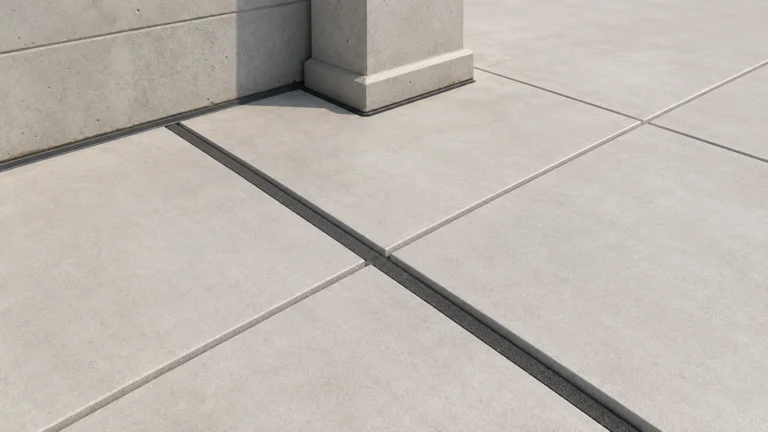
Exposed aggregate still needs proper control joints and isolation joints. See our movement joint in concrete guide before placing a driveway, patio, or walkway.
Maintenance and Resealing
Exposed aggregate is low maintenance, not no maintenance.
Rinse dirt, leaves, and deicing salt residue when needed. Clean the surface once a year with mild detergent or a pH-neutral cleaner. Avoid aggressive pressure washing at close range because it damages old sealer or loosens weak aggregate.
Check the surface after winter in freeze-thaw climates. Look for scaling, stone loss, sealer whitening, or areas where water no longer beads.
Most acrylic or film-forming sealers need attention every 2 to 3 years. Penetrating sealers usually last longer. The simple test is water beading. If water soaks into the surface instead of beading, concrete needs resealing
Is Exposed Aggregate Concrete Slippery?
Exposed aggregate is usually less slippery than smooth concrete because the stone texture gives the surface grip. That is why it is common around pool decks, driveways, and wet walkways.
The sealer changes this. A heavy wet-look sealer creates more risk on slopes and wet areas. For pool decks and driveways, use a sealer system that keeps traction. A slip-resistant additive also helps where needed.
Can Exposed Aggregate Concrete Be Repaired?
Yes, but repairs are usually visible.
The problem is matching the old aggregate. The repair material needs similar stone size, color, exposure depth, and sealer appearance. Even then, weathered concrete rarely matches fresh repair work.
Small pop-outs are patchable. Large failed areas usually look better when cut out and replaced as a panel between joints.
This is why installation quality matters. A bad exposed aggregate finish is harder to hide than a bad broom finish.
FAQ
What is exposed aggregate concrete?
Exposed aggregate concrete is concrete with the top cement paste removed to reveal the stone, gravel, or decorative aggregate inside the slab. It is used for driveways, patios, walkways, pool decks, stairs, and sidewalks.
Is exposed aggregate concrete expensive?
It costs more than basic broom finish concrete but usually less than high-end stamped concrete or custom pavers. Basic exposed aggregate often costs about $8 to $12 per square foot. Driveways, demolition, borders, color, and specialty aggregate raise the price.
How long does exposed aggregate concrete last?
A well-built exposed aggregate slab lasts about 25 to 30 years. The lifespan depends on concrete quality, drainage, curing, joint layout, climate, traffic, and sealer maintenance.
Is exposed aggregate good for driveways?
Yes. It gives a durable textured surface for driveways when the slab has the right thickness, base, drainage, joints, and sealer.
Is exposed aggregate good around pools?
Yes, but use rounded aggregate and avoid thick glossy sealer. The surface should give traction without being too rough for bare feet.
How often should exposed aggregate be sealed?
Most acrylic sealers need attention every 2 to 3 years. Penetrating sealers last longer. Reseal when water no longer beads on the surface.
Is exposed aggregate better than stamped concrete?
It depends on the goal. Exposed aggregate is usually better for natural stone texture and wet-area use. Stamped concrete is better when you want a stone, brick, or tile pattern.
Can I do exposed aggregate concrete myself?
Small areas are possible if you understand the timing. Large patios, driveways, and pool decks are better left to experienced concrete crews. Timing mistakes are hard to repair.
Sources
[1] American Cement Association: Finishing Concrete with Color and Texture
[2] American Concrete Institute: ACI 302.1R Guide to Concrete Floor and Slab Construction
[3] Federal Highway Administration: Materials-Related Distress in Concrete