Sealed Concrete Floors: Types, Cost and How to Choose
Sealed concrete is concrete protected with a surface sealer or penetrating treatment to reduce stains, moisture absorption, dusting, and wear. Sealed concrete usually costs less upfront and installs faster than polished concrete, while polished concrete lasts longer on interior floors.
What Is Sealed Concrete?
Sealed concrete is concrete protected with a sealer selected for the surface and exposure.
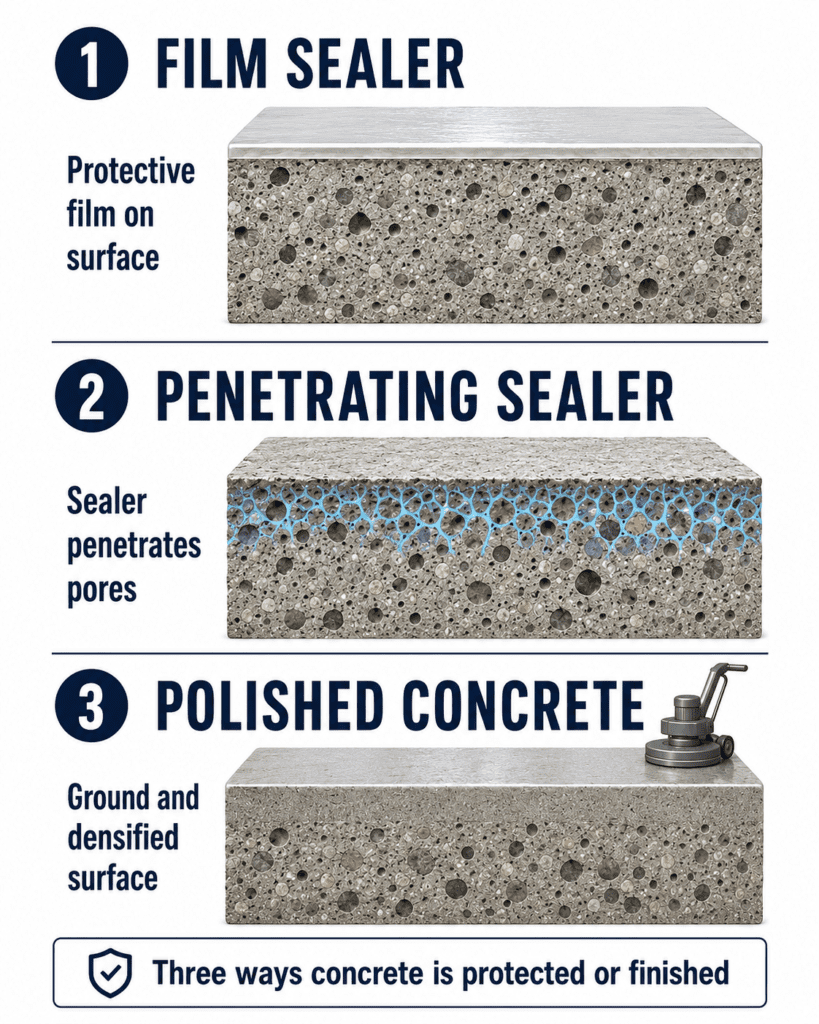
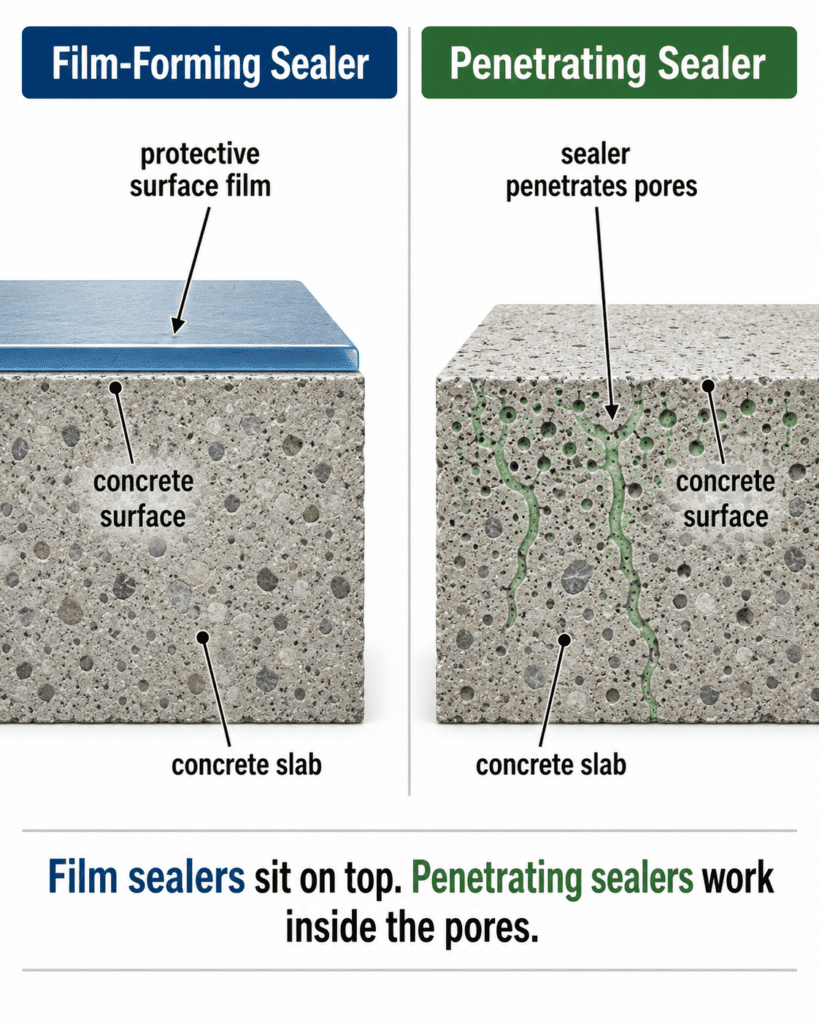
Some sealers form a thin protective film on top of the slab. Acrylic, epoxy, polyurethane, and polyaspartic products usually work this way. Other sealers soak into the concrete and reduce water absorption inside the pores. Silane, siloxane, siliconate, and silicate products fall into this group.
This is why the term sealed concrete can mean different things on different projects. A clear driveway sealer, a penetrating basement sealer, and a garage epoxy coating all protect concrete, but they do not give the same finish, lifespan, cost, or maintenance needs.
A sealer should be applied to sound concrete. It will not level an uneven slab.
If a stable interior floor needs a flatter surface before another floor finish is installed, see our guide to self-leveling concrete.
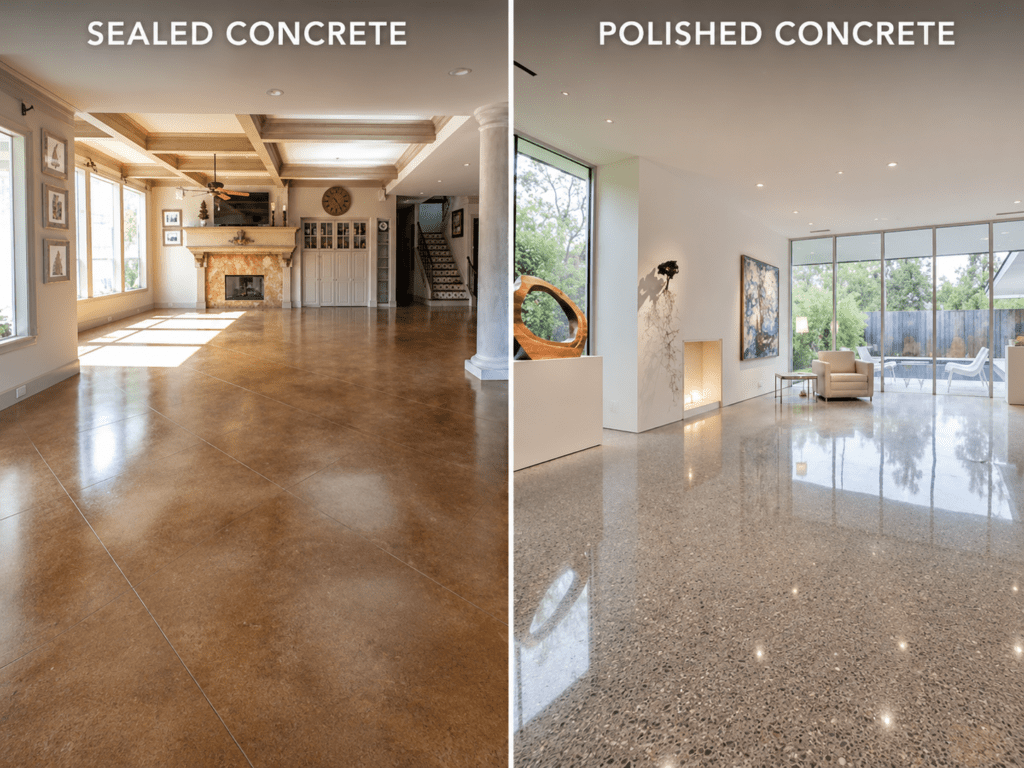
Sealed Concrete vs Polished Concrete
Polished concrete uses diamond grinding to refine the concrete surface itself. The shine comes from the hardened and densified surface.
Sealed concrete uses a protective product after cleaning, grinding, or surface prep. The performance comes mainly from the sealer.
| Factor | Sealed Concrete | Polished Concrete |
|---|---|---|
| Process | Surface prep plus sealer | Multi-stage grinding and densifying |
| Typical cost | $1.50 to $5 per sq ft | $3 to $12 per sq ft |
| Lifespan | 1 to 10 years, based on sealer | 10 to 20+ years with care |
| Finish | Matte, satin, gloss, wet look | Satin to high gloss |
| Maintenance | Reseal when worn | Clean and repolish when dull |
| Best use | Garages, patios, basements, driveways | Interior floors and commercial spaces |
Table 1. Sealed vs polished concrete.
Use sealed concrete when you want practical protection at lower upfront cost.
Use polished concrete when you want a durable interior floor with a refined finish.
For exterior slabs, driveways, patios, and pool decks, sealed concrete is usually the better fit.
Best Sealer by Surface
Choose by surface first. Do not choose only by gloss.
| Surface | Better sealer choice | Finish | Main risk |
| Basement floor | Penetrating sealer or water-based sealer on dry slabs | Natural, matte, satin | Moisture vapor |
| Garage floor | Epoxy with polyurethane or polyaspartic topcoat | Satin, gloss | Hot tire pickup, oil, salt |
| Driveway | Silane-siloxane penetrating sealer | Natural | Freeze-thaw, UV |
| Patio | Acrylic or penetrating sealer | Matte, satin | Slip risk |
| Pool deck | Penetrating or textured sealer | Matte | Wet traction |
| Stamped concrete | Acrylic with anti-slip additive | Satin, wet look | Peeling, slipperiness |
| Interior floor | Water-based polyurethane or polyaspartic | Matte, satin, gloss | Prep quality |
Table 2. Best concrete sealer by surface type.
Types of Concrete Sealer
The sealer type controls cost, lifespan, maintenance, appearance, and failure risk.
| Sealer Type | Lifespan | DIY Cost per sq ft | Best For | Sheen |
| Acrylic | 1 to 3 years | $0.05 to $0.30 | Driveways, patios, stamped concrete | Satin to gloss |
| Penetrating silane-siloxane | 5 to 10 years | $0.15 to $0.40 | Driveways, exterior slabs, basements | Natural |
| Epoxy | 5 to 10 years | $0.30 to $0.75 | Garage floors, workshops | Gloss |
| Polyurethane | 5 to 10 years | $0.40 to $0.80 | Interior floors, topcoats | Matte to gloss |
| Polyaspartic | 10 to 15 years | $0.80 to $2.00 | Garages, high-traffic floors | Gloss |
Table 3. Concrete sealer types.
Acrylic Sealer
Acrylic is the common residential sealer.
It is easy to buy, easy to apply, and cheaper than epoxy or polyaspartic. It works on patios, driveways, stamped concrete, and decorative slabs.
The tradeoff is durability. Acrylic forms a thin film. Sun, tires, weather, and traffic wear it down. Outdoor acrylic often needs resealing every one to two years.
Solvent-based acrylic darkens concrete and gives a wet look. Water-based acrylic has lower odor and a lighter finish.
Penetrating Sealer
Penetrating sealers enter the concrete pores.
They usually leave the surface looking natural. They do not build a glossy film.
Silane-siloxane sealers work well on driveways, patios, sidewalks, pool decks, and exterior slabs. They reduce water absorption and help protect concrete in freeze-thaw climates.
Sealing decorative exterior finishes such as exposed aggregate concrete needs extra care because the stone texture, exposure depth, and sealer sheen all affect the final surface.
Epoxy Sealer
Epoxy is a two-part coating. You mix resin and hardener before application.
It creates a hard film that resists oil, chemicals, and abrasion. It fits garage floors, workshops, and interior concrete floors.
Epoxy needs clean, dry, prepared concrete. Grind or acid etch the surface before application. Test for moisture first.
Epoxy yellows in sunlight. Use it indoors or protect it with a UV-stable topcoat.
Polyurethane Sealer
Polyurethane gives better abrasion resistance than acrylic.
It works as a topcoat over epoxy and as a standalone sealer for some interior floors. Water-based polyurethane has lower odor and fits occupied spaces. Solvent-based polyurethane often gives stronger color depth.
Use it on interior residential floors, commercial floors, and garage topcoats.
Polyaspartic Sealer
Polyaspartic is a high-performance coating for garages and commercial floors.
It cures fast, resists abrasion, and handles UV exposure better than standard epoxy. It also resists hot tire pickup.
The short working time makes it harder to install. Most homeowners should hire a contractor for polyaspartic floors.
Water-Based vs Solvent-Based Concrete Sealer
| Type | Best Use | Appearance | Main Concern |
| Water-based | Interior floors, basements, occupied spaces | Clearer, lighter finish | Less color darkening |
| Solvent-based | Stamped concrete, decorative patios, wet-look finishes | Darker, richer color | Strong odor and higher VOCs |
Table 4. Water-based vs solvent-based concrete sealer.
Use water-based sealers indoors when odor and ventilation matter.
Use solvent-based sealers when you want color enhancement on decorative exterior concrete.
Film-Forming vs Penetrating Sealer
A film-forming sealer builds a layer on top of the slab.
A penetrating sealer works inside the concrete pores.
| Type | What It Does | Best For | Main Risk |
| Film-forming | Builds a visible surface layer | Decorative concrete, garages, interiors | Peeling, slipperiness, moisture trapping |
| Penetrating | Enters concrete pores | Driveways, patios, pool decks | No glossy finish |
Table 5. Film-forming vs penetrating sealer.
Use penetrating sealer for exterior durability and natural appearance.
Use film-forming sealer for sheen, stain resistance, and color enhancement.
Do not apply a film-forming sealer over active moisture.
Solids Percentage
Solids percentage tells you how much material remains after the carrier evaporates or reacts.
A 25% solids acrylic leaves a thinner film than a 50% solids acrylic at the same spread rate.
Higher solids often give better build and longer wear. But more solids do not automatically mean better.
A thick film on damp concrete traps moisture. A thick gloss coat outdoors raises slip risk. Match solids content to the surface.
Sheen Levels for Sealed Concrete
Sheen affects appearance, glare, cleaning, and slip risk.
| Sheen | Appearance | Common Sealer | Best Use |
| Matte or natural | Close to bare concrete | Penetrating sealer | Pool decks, paths, natural-look floors |
| Satin | Slight sheen | Water-based acrylic, polyurethane | Basements, residential floors |
| Wet look | Darker, richer surface | Solvent-based acrylic | Stamped concrete, decorative slabs |
| High gloss | Reflective finish | Epoxy, polyaspartic | Garages, showrooms |
Table 6. Sheen levels for sealed concrete.
Satin is the safest residential choice for many floors.
Use matte for wet exterior areas. Use gloss only where slip resistance and maintenance are handled.
How Much Does It Cost to Seal Concrete?
| Sealer Type | DIY Materials per sq ft | Professional Install per sq ft | Reseal Frequency |
| Acrylic | $0.05 to $0.30 | $0.50 to $1.25 | 1 to 3 years |
| Penetrating | $0.15 to $0.40 | $0.75 to $1.50 | 5 to 10 years |
| Epoxy | $0.30 to $0.75 | $2.00 to $5.00 | 5 to 10 years |
| Polyurethane | $0.40 to $0.80 | $2.00 to $4.00 | 3 to 7 years |
| Polyaspartic | $0.80 to $2.00 | $3.00 to $8.00 | 10 to 15 years |
Table 7. Sealed concrete cost by sealer type.
Surface condition changes the price.
Cracks, oil stains, concrete spalling, old sealer, and moisture problems add prep cost. Small residential jobs also cost more per sq ft than large open floors.
Acrylic costs less upfront. A longer-life system may cost less over ten years if acrylic needs repeated resealing.
For new slabs, estimate the concrete volume first with a concrete calculator before pricing the sealer.
How to Apply Concrete Sealer
Good sealing starts with prep.
Step 1: Inspect the slab
Check for cracks, spalling, oil, moisture, dusting, and old coatings.
For floor slabs, ACI 302.1R highlights the importance of slab condition, moisture, curing, and surface preparation before applying floor finishes or coatings.
Step 2: Clean the surface
Remove oil, grease, dirt, paint, dust, and failed sealer.
A sealer bonds to the surface it touches. If that surface is dirt or old peeling sealer, the new coat fails.
Step 3: Repair damage
Fill cracks and repair spalled areas before sealing.
Use flexible sealant at concrete movement joints. Do not fill movement joints with rigid repair mortar. For joint layout, see our guide on movement joints in concrete.
Step 4: Grind or etch if needed
Epoxy, polyurethane, and polyaspartic need surface profile.
Diamond grinding gives the most consistent bond.
Step 5: Apply thin coats
Follow the coverage rate on the label.
Do not flood the surface. Heavy coats cause bubbles, whitening, tackiness, and peeling.
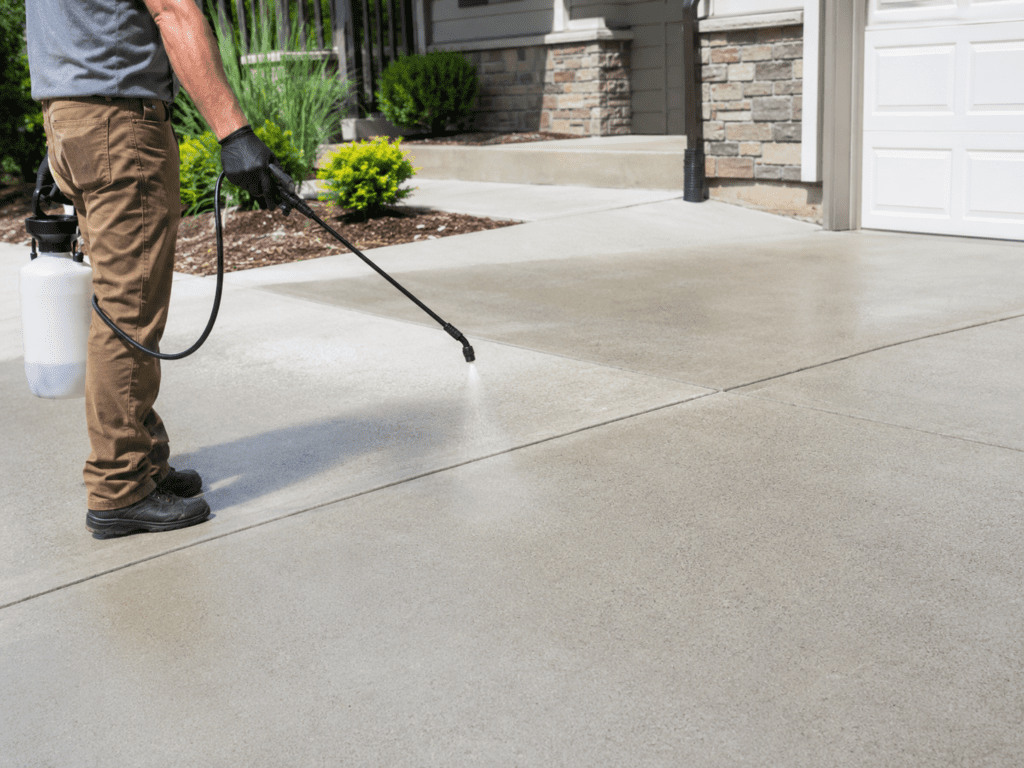
Use a pump sprayer for many penetrating sealers. Use a 3/8-inch nap roller for many acrylic and urethane sealers.
Best Sealer for Common Surfaces
Driveway
Use a silane-siloxane penetrating sealer for most driveways, especially in freeze-thaw climates.
Use acrylic only when color enhancement or wet-look finish matters. Avoid epoxy outdoors.
Garage Floor
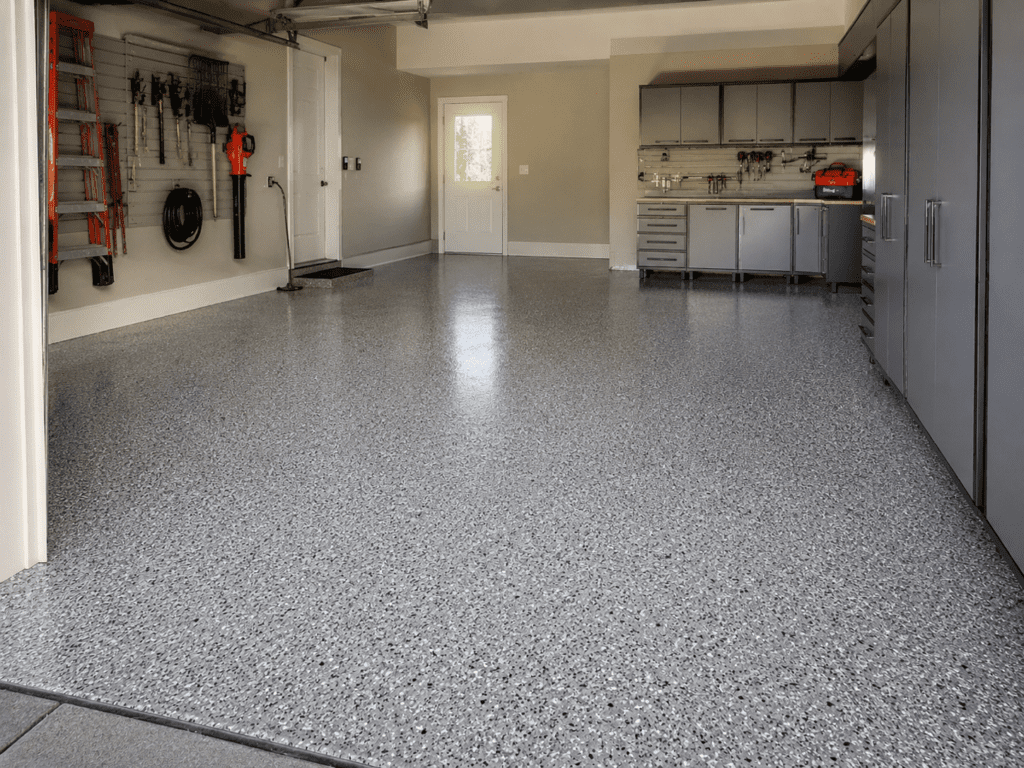
Use epoxy with a polyurethane or polyaspartic topcoat.
Garage floors need resistance to oil, salt, hot tires, and abrasion. Prep and moisture testing matter more than the coating brand.
Basement Floor
Test moisture before sealing.
Tape a plastic sheet to the floor for 24 hours. If moisture forms under it, avoid film coatings. Use a breathable penetrating sealer instead.
If the basement floor has leaking, widening, or wall-to-floor cracks, check whether it needs foundation crack repair before applying any coating.
For a dry basement slab, water-based acrylic, polyurethane, or polyaspartic may work.
Stamped Concrete
Use acrylic sealer to protect color and texture.
Add anti-slip grit to the final coat on patios, pool decks, walkways, and driveways.
Pros and Cons of Sealed Concrete
Sealed concrete works well because it:
- Improves stain resistance
- Reduces water absorption
- Reduces dusting
- Cleans easier
- Offers matte, satin, gloss, and wet-look finishes
- Costs less upfront than polished concrete
It also has limits.
Film sealers wear. Glossy sealers get slippery when wet. Poor prep causes peeling. Moisture vapor causes blistering. Sealer will not fix weak concrete, active cracks, or drainage problems.
How Long Does Sealed Concrete Last?
| Sealer Type | Light Traffic | Heavy Traffic | Failure Signs |
| Acrylic | 2 to 3 years | 1 to 2 years | Whitening, dullness, water absorption |
| Penetrating | 7 to 10 years | 5 to 7 years | Water stops beading |
| Epoxy | 7 to 10 years | 5 to 7 years | Yellowing, peeling, hot tire pickup |
| Polyurethane | 5 to 7 years | 3 to 5 years | Scratches, dull finish |
| Polyaspartic | 10 to 15 years | 7 to 10 years | Abrasion wear, gloss loss |
Table 8. Typical reseal intervals.
Sun, traffic, salt, freeze-thaw, and poor prep shorten these ranges.
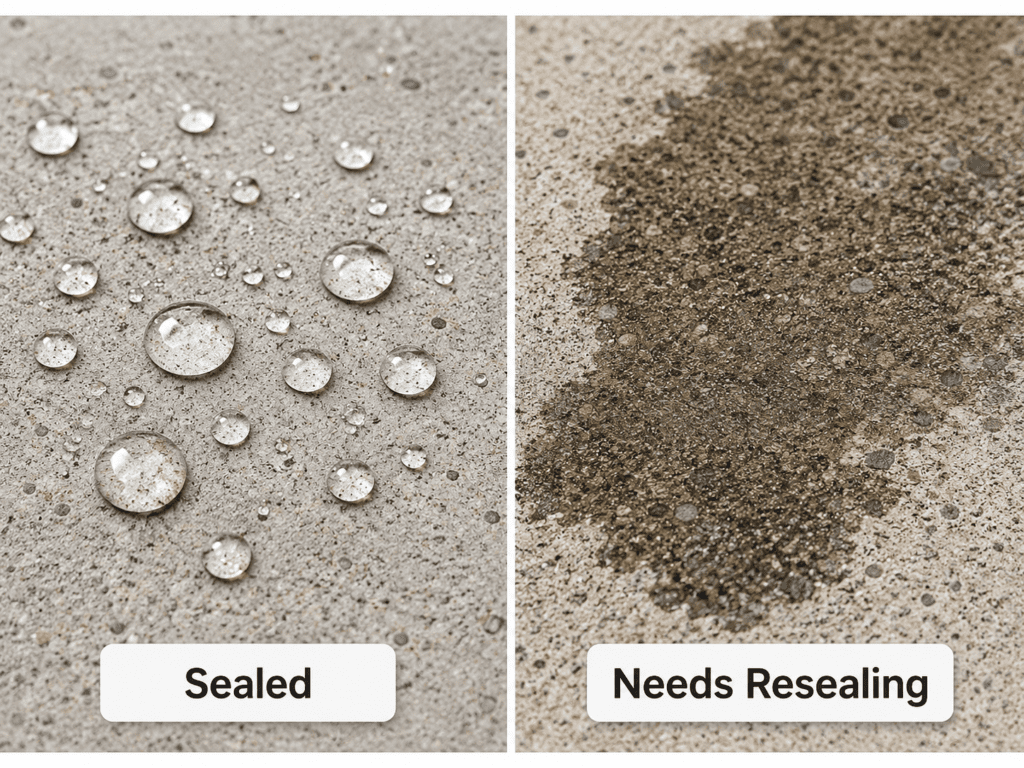
Water Bead Test
Pour a small amount of water on the concrete.
If the water beads, the sealer still works. If it darkens the concrete or absorbs fast, resealing is due.
| Result | Meaning |
| Water beads | Sealer still works |
| Water slowly darkens concrete | Sealer is wearing |
| Water absorbs fast | Resealing is due |
| Uneven beading | Old sealer or contamination may exist |
Table 9. Water bead test.
Failed Concrete Sealer
Failed sealer often shows as:
- White cloudy patches
- Peeling
- Bubbles
- Sticky surface
- Tiger striping
- Uneven gloss
- Worn traffic paths
Do not apply new sealer over failed sealer. Strip the failed layer first.
How to Clean Sealed Concrete
Use mild cleaning.
Sweep grit. Mop with warm water and a pH-neutral cleaner. Use a microfiber mop or soft broom. Clean spills quickly.
Avoid vinegar, citrus degreasers, muriatic acid, bleach, ammonia, abrasive pads, and steam cleaners on thin film sealers.
When Not to Seal Concrete
- Do not seal concrete in these cases.
- New concrete that has not cured enough.
- Damp concrete or a slab with moisture vapor.
- Cold conditions below the product limit.
- Existing unknown sealer that may be incompatible.
- Active cracks, spalling, or moving joints.
- Oil-contaminated slabs.
- Water pressure from below.
- Fix the surface first. Then seal it.
References
ACI 302.1R, Guide to Concrete Floor and Slab Construction
ASTM C309, Liquid Membrane-Forming Compounds for Curing Concrete
NRMCA, Joints in Concrete Slabs on Grade
Final Thought
Sealed concrete works when you match the sealer to the slab.
Check the surface. Check moisture. Decide the finish. Then choose the sealer.
That order prevents most failures.
Frequently Asked Questions
How much does it cost to seal concrete per square foot?
DIY material costs often range from $0.05 to $2.00 per sq ft. Professional installation often ranges from $0.50 to $8.00 per sq ft, depending on sealer type and prep work.
What is the difference between sealed and polished concrete?
Sealed concrete has a protective product applied to the surface or pores. Polished concrete is mechanically ground, densified, and refined. Sealed concrete costs less upfront. Polished concrete usually lasts longer indoors.
How long does sealed concrete last?
Acrylic often lasts one to three years. Penetrating sealer often lasts five to ten years. Epoxy and polyurethane often last five to ten years. Polyaspartic may last ten to fifteen years.
Is sealed concrete slippery when wet?
Glossy film sealers get slippery when wet. Use matte or satin finishes for wet areas. Add anti-slip grit to exterior stamped concrete, patios, pool decks, and walkways.
How long after pouring concrete should you seal it?
Many film sealers require about 28 days of curing before application. Some penetrating sealers require longer. Always follow the product data sheet.
What is the best sealer for a garage floor?
A two-part epoxy base coat with a polyurethane or polyaspartic topcoat works well for many garage floors. The slab must be dry and properly prepared.
Does sealed concrete work in freeze-thaw climates?
Yes, with the right sealer. Use a penetrating silane-siloxane sealer on exterior concrete in freeze-thaw climates.
Why is my concrete sealer turning white?
Whitening often comes from moisture trapped under a film sealer, overapplication, cold application, or old sealer failure. Strip failed sealer before recoating.
What cleaning products are safe for sealed concrete?
Use warm water and a pH-neutral cleaner. Avoid harsh acids, bleach, ammonia, abrasive pads, and steam cleaners on thin film sealers.