Internal Vibration of Concrete: Technique, Spacing & Common Mistakes
Internal vibration consolidates fresh concrete by inserting a vibrating head directly into the mix. The vibration releases entrapped air and helps concrete flow around reinforcement and against the forms. Insert the vibrator vertically at regular intervals, overlap the vibration zones, penetrate the previous fresh lift, and withdraw the head slowly.
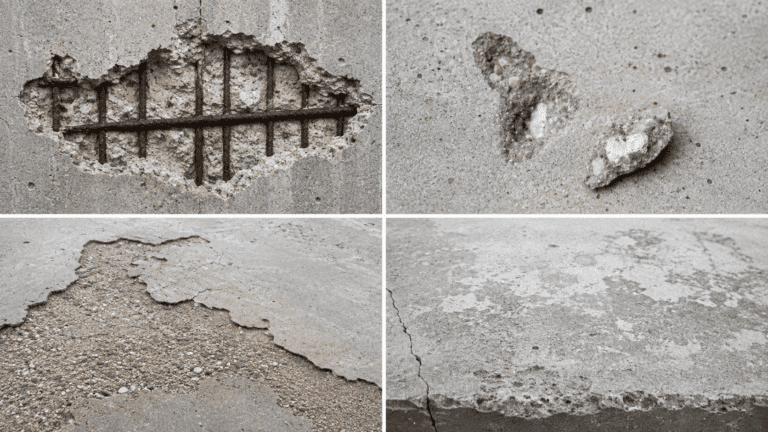
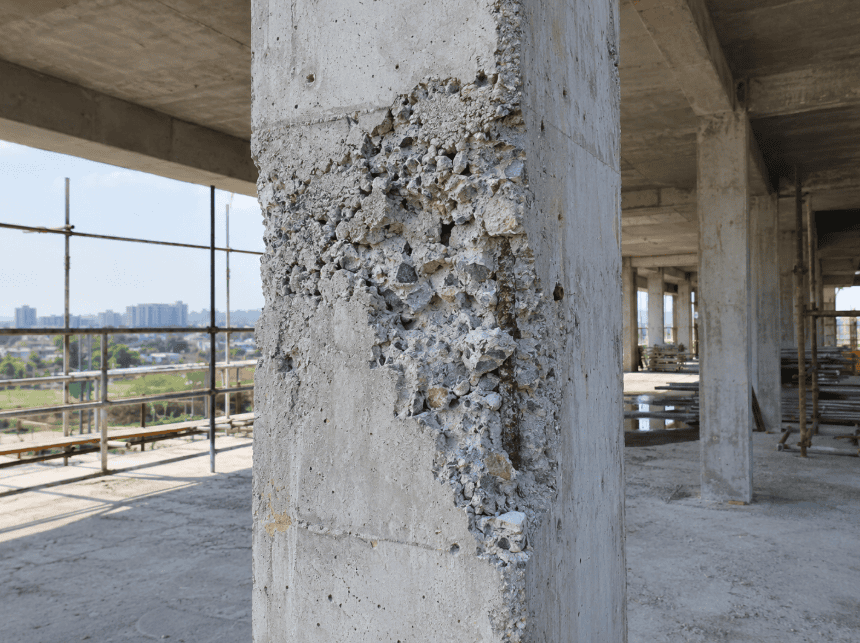
Poor vibration often becomes obvious only after the forms come off.
Honeycombing around reinforcement and voids along form faces are clear indicators of improper concrete consolidation.
What Is Internal Vibration of Concrete?
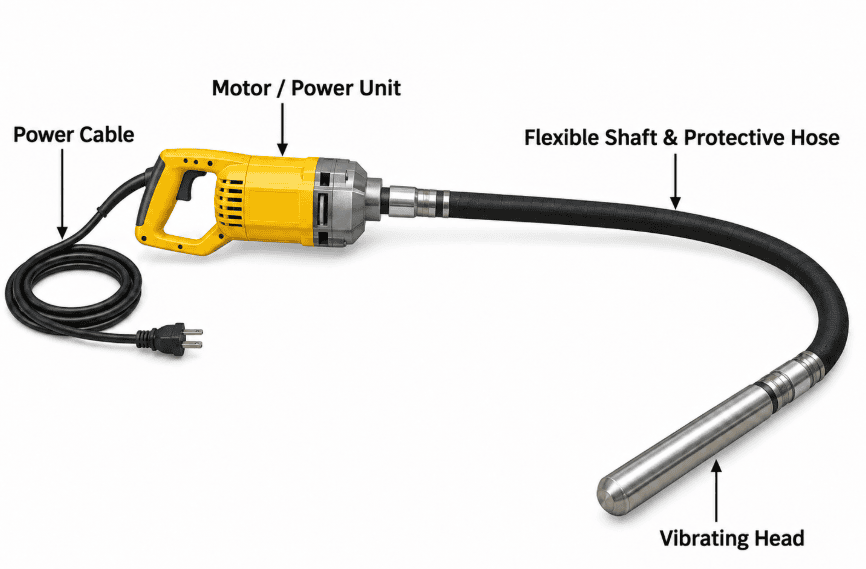
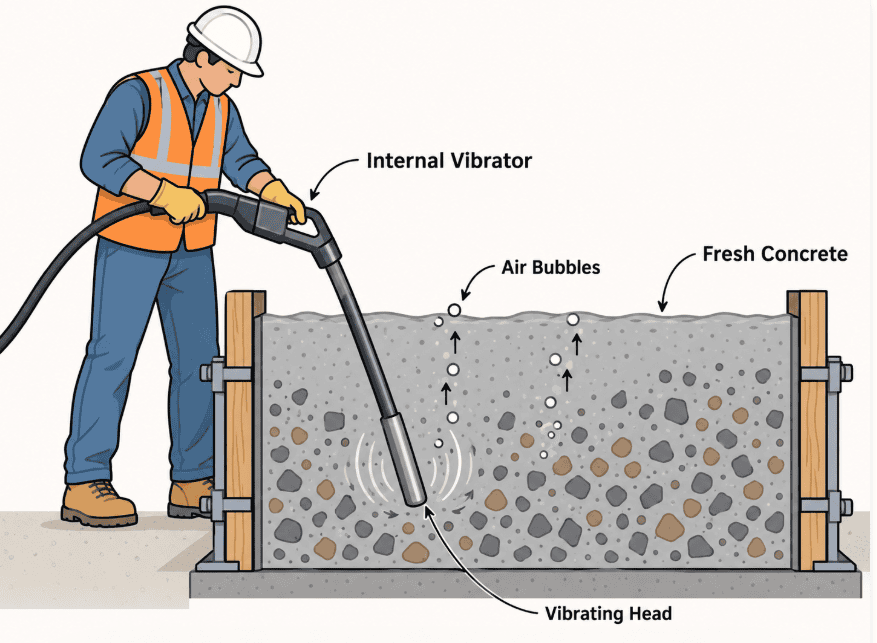
An internal vibrator has a vibrating steel head that goes directly into fresh concrete.
You may also hear the tool called a poker vibrator, needle vibrator, immersion vibrator, or spud vibrator.
The rapidly vibrating head makes the surrounding concrete temporarily more mobile.
Aggregate particles rearrange, entrapped air rises, and the concrete flows into spaces around reinforcing steel and against the formwork.
Once vibration stops, the concrete settles into a denser mass.
Internal vibration is widely used for walls, beams, columns, concrete footings and foundation walls, bridge elements, and other cast-in-place structural concrete.
Why Does Concrete Need Vibration?
Fresh concrete does not always fill every space under its own weight.
This becomes more important specially around congested reinforcement, narrow sections and corners.
Without adequate consolidation, unwanted air can remain inside the concrete.
That can lead to:
- honeycombing
- internal voids
- poor contact with reinforcement
- incomplete filling against forms
- lower density
- increased permeability
On site, the top surface can look satisfactory while voids remain deeper in the section.
This is why I would never judge the quality of placed concrete only by looking at the surface.
Entrapped Air vs. Entrained Air
These two terms are easy to confuse.
Entrapped air consists of relatively large, unwanted air pockets that remain during mixing and placement. Internal vibration is intended to remove these voids.
Entrained air consists of intentionally created microscopic bubbles used primarily to improve freeze-thaw durability.
Good vibration removes entrapped air without unnecessarily damaging the designed air-void system.
FHWA notes that inadequate vibration can leave poorly consolidated concrete, while excessive vibration can cause segregation and reduce the air-void system near the vibrator in susceptible concrete.
How Does Internal Vibration Work?
A concrete vibrator does more than shake bubbles to the surface.
The vibration temporarily reduces the internal resistance of the fresh concrete.
This allows aggregate particles to rearrange and lets mortar flow into spaces that may not fill properly under gravity alone.
Entrapped air then moves upward and escapes as shown in the figure below.
The vibration is strongest near the head and becomes weaker with distance. That creates a zone of influence, often called the vibrator’s radius of action.
This matters in the field because one insertion point cannot consolidate an unlimited area.
Adjacent insertion zones need to overlap.
How to Use an Internal Concrete Vibrator Properly
Good consolidation starts with placement.
Do not dump a large volume of concrete into one location and expect the vibrator to move it into its final position.
Place the concrete close to where it needs to remain, then use the vibrator to consolidate it.
1. Place Concrete in Manageable Lifts
Place the concrete in lifts that the vibrator can fully penetrate and consolidate.
The allowable lift thickness depends on the member, concrete mixture, vibrator, reinforcement, and project specification.
The important point is simple:
The vibrator needs to reach and consolidate the full depth of the fresh lift.
Very deep lifts make it easier to miss concrete around reinforcement or near the bottom of the form.
2. Insert the Vibrator Nearly Vertically
Lower the vibrating head vertically or close to vertical.
Do not drag it diagonally through the concrete.
Vertical insertion gives you a more predictable zone of influence and makes it easier to control the insertion pattern.
FHWA guidance also warns against using internal vibrators to push concrete laterally through the form.
3. Insert the Head Promptly
Lower the operating vibrator quickly to the required depth.
Do not spend several seconds vibrating only the upper part of the lift before reaching the bottom.
Once at depth, allow the vibration to consolidate the surrounding concrete.
The head should fit comfortably between reinforcing bars.
If you have to force the vibrator through the cage, the head may be too large for the available space.
4. Penetrate the Previous Fresh Lift
When concrete is placed in successive lifts, extend the vibrator slightly into the previous lift while that concrete is still plastic enough to be reconsolidated.
This helps the two layers act as one continuous placement.
As practical manufacturer guidance, Wacker Neuson recommends penetrating about 2 to 4 inches (5 to 10 cm) into the previous lift.
Do not treat that number as a universal code requirement.
Project specifications and actual placement conditions govern.
5. Vibrate Until Consolidation Is Achieved
Do not insert and immediately remove the vibrator.
Give the vibration time to work around each insertion point.
At the same time, do not keep vibrating one location after consolidation is complete.
Watch the concrete.
Useful field signs include:
- noticeable settlement slowing
- large air bubbles decreasing
- concrete closing around reinforcement
- a more uniform surface
- mortar appearing at the surface
FHWA guidance for concrete repair similarly describes adequate consolidation as the point where settlement stops, bubbles no longer emerge, and a smooth mortar layer appears at the surface.
6. Withdraw the Vibrator Slowly
Pull the head out gradually.
This gives the concrete time to close behind it.
Fast withdrawal can leave a channel or poorly consolidated path.
Once the head is clear, move it to the next insertion point.
Do not drag the operating vibrator horizontally through the concrete.
Concrete Vibrator Spacing
Each insertion consolidates only the concrete within its effective zone of vibration.
If you space the insertion points too far apart, poorly consolidated strips can remain between them.
The insertion pattern should therefore create overlapping zones of influence.
Wacker Neuson gives a practical spacing guideline of approximately 8 to 10 times the vibrator-head diameter.
Illustrative Spacing Using the 8–10× Guideline
| Vibrator head diameter | Approximate insertion spacing |
|---|---|
| 1 in. | 8–10 in. |
| 1.5 in. | 12–15 in. |
| 2 in. | 16–20 in. |
| 2.5 in. | 20–25 in. |
These values are field guidance, not a universal specification.
Actual spacing depends on the vibrator’s power and amplitude, concrete consistency, reinforcement, member geometry, and radius of action.
I would focus more on overlap than on memorizing one spacing number.
How Long Should You Vibrate Concrete?
There is no single vibration time that works for every placement.
You will often see practical guidance in the range of several seconds per insertion.
That can be useful as a starting point, but concrete behavior should control the final duration.
A stiff mix may require more vibrating energy compared with more workable mix. The concrete slump test helps check fresh-concrete workability before placement, although slump alone does not determine the vibration required.
A small vibrator may also require a different insertion pattern and duration than a larger unit.
Instead of watching only a stopwatch, watch for consolidation.
Move on when:
- the concrete has substantially stopped settling
- large bubbles have mostly stopped rising
- the surface becomes more uniform
- the vibrator no longer produces meaningful additional consolidation
Do not keep the head in one location simply because a fixed time has not expired.
Likewise, do not pull it out after two seconds if the concrete is still visibly consolidating.
Frequency, Amplitude, and Head Size
Not all internal vibrators produce the same vibration.
Frequency describes how rapidly the head oscillates.
Amplitude describes the movement produced by those oscillations.
Together with head size and concrete consistency, these characteristics affect how quickly the concrete consolidates and how far the vibration effectively travels.
Head diameter also matters.
A larger head can provide a larger zone of influence, but it must physically fit through the reinforcement.
A smaller head works better in congested cages but usually requires more insertion points.
| Placement condition | Practical consideration |
|---|---|
| Tight reinforcement | Use a head that passes freely between bars |
| Narrow wall or form | Smaller head may improve access |
| Large open section | Larger effective radius can reduce insertions |
| Congested embedded items | Plan vibrator access before placement |
| Low-workability mix | May require greater consolidation effort |
I prefer to check vibrator access before the concrete truck arrives.
Once concrete is flowing into a congested cage, it is too late to discover that the available vibrator cannot reach the areas that need consolidation.
Under-Vibration vs. Proper Vibration vs. Over-Vibration
Both too little and too much vibration can cause problems.
Under-Vibration
Insufficient vibration leaves entrapped air and poorly consolidated zones.
Typical signs after stripping the forms include:
- honeycombing
- exposed aggregate
- large surface voids
- cavities around reinforcement
- incomplete filling at corners
The problem can extend well beyond what you see at the surface.
Proper Vibration
Properly consolidated concrete fills the available space, surrounds the reinforcement, and contacts the formwork without obvious large voids.
The aggregate remains uniformly distributed.
This is the condition we want.
Over-Vibration
Continuing vibration after effective consolidation adds little benefit.
In unstable or overly wet concrete, excessive vibration can encourage segregation.
Coarse aggregate may settle while mortar rises.
For air-entrained concrete, excessive vibration can also disturb the intended air-void system locally.
FHWA specifically warns that over-vibration may cause segregation and loss of air voids close to the vibrator path.
| Condition | Main effect | Possible result |
|---|---|---|
| Under-vibration | Entrapped air remains | Voids and honeycombing |
| Proper vibration | Air escapes and mix consolidates | Dense, uniform concrete |
| Excessive vibration | Mix may become unstable | Segregation or air-system disturbance |
Common Internal Vibration Mistakes
Using the Vibrator to Move Concrete
Do not use the vibrator as a concrete-moving tool.
Push concrete laterally with the vibrator and you can create segregation or leave poorly filled areas behind reinforcement.
FHWA specifically instructs that vibrators should not be used to push or distribute concrete laterally.
Spacing Insertions Too Far Apart
The concrete directly around each insertion may look good while untreated areas remain between the vibration zones.
Use an insertion pattern that provides overlap.
Withdrawing Too Quickly
Fast withdrawal can leave a channel behind the head.
Withdraw gradually and let the concrete close behind it.
Missing the Previous Lift
If you stop the vibrator at the exact interface between two fresh lifts, the interface may remain poorly consolidated.
Penetrate the preceding fresh lift where the placement procedure allows it.
Vibrating One Location Too Long
Once consolidation is complete, move on.
More vibration is not automatically better.
Using the Wrong Head Size
A vibrator that cannot pass between reinforcement cannot consolidate the areas you cannot reach.
A very small head may fit easily but require many more insertion points.
Match the equipment to the member before placement begins.
Vibration Around Reinforcement
Reinforcement congestion is one of the locations where proper vibration matters most.
Concrete has to pass between bars before it can fill the spaces behind and underneath them.
Large aggregate, tight bar spacing, ducts, anchors, and embedded items can all restrict movement.
Plan the vibrator path through the cage before the pour.
The head should work close enough to the reinforcement to consolidate the surrounding concrete, but do not deliberately hammer the vibrator against bars or embedded items.
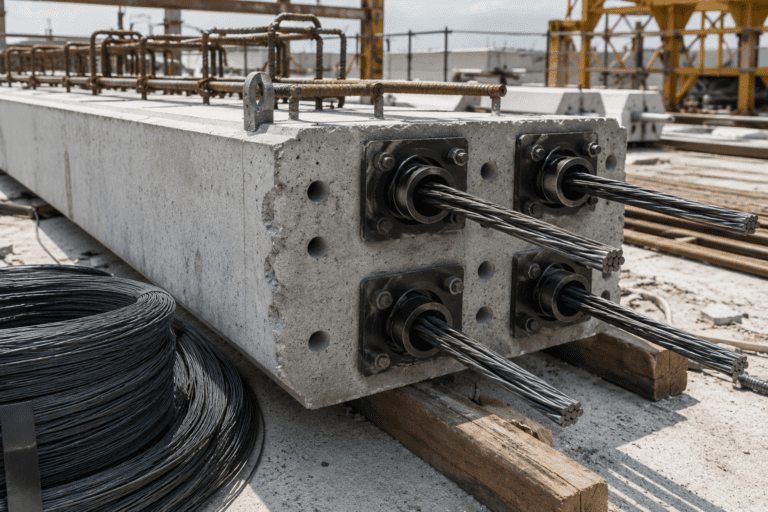
FHWA warns that aggressive vibrator contact can displace or damage sensitive post-tensioning ducts.
Should All Concrete Be Vibrated?
No.
Conventional cast-in-place concrete generally requires adequate consolidation, and internal vibration is one of the most common methods.
Self-consolidating concrete (SCC) is different.
SCC is designed to flow into forms and around reinforcement under its own weight without conventional vibration.
FHWA SCC guidance states that SCC does not require vibration to achieve full consolidation.
Do not automatically apply conventional vibration procedures to SCC.
Follow the approved mix design and placement procedure.
Internal vs. External Vibration
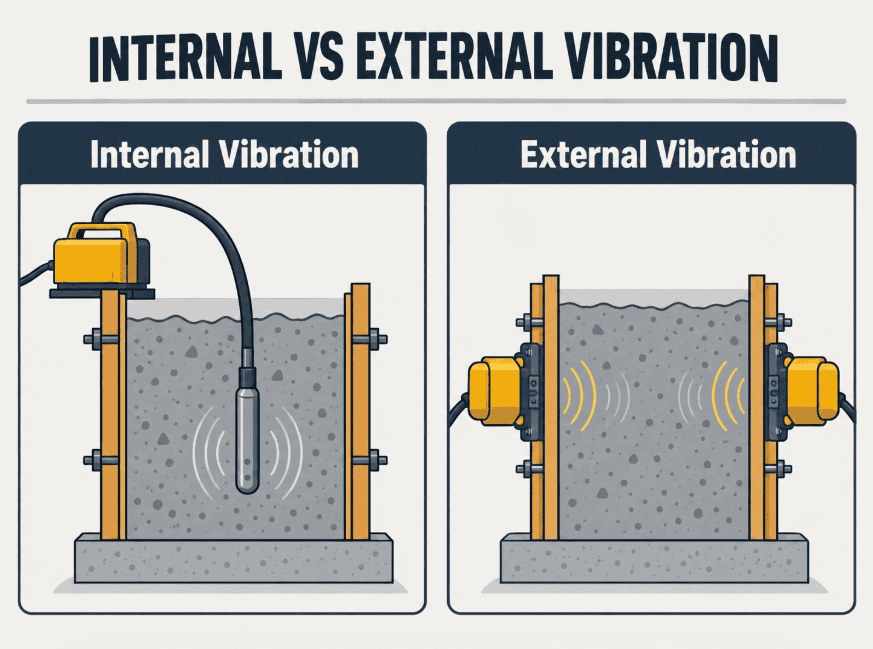
Internal vibration applies the vibration directly inside the concrete. External vibration transfers vibration through the formwork.
This concept is shown in the figure below.
| Internal vibration | External vibration |
|---|---|
| Head inserted into concrete | Vibrator acts through formwork |
| Common for cast-in-place concrete | Common in some precast applications |
| Produces local zones of influence | Transfers energy through the form |
| Requires access between reinforcement | Useful when internal access is difficult |
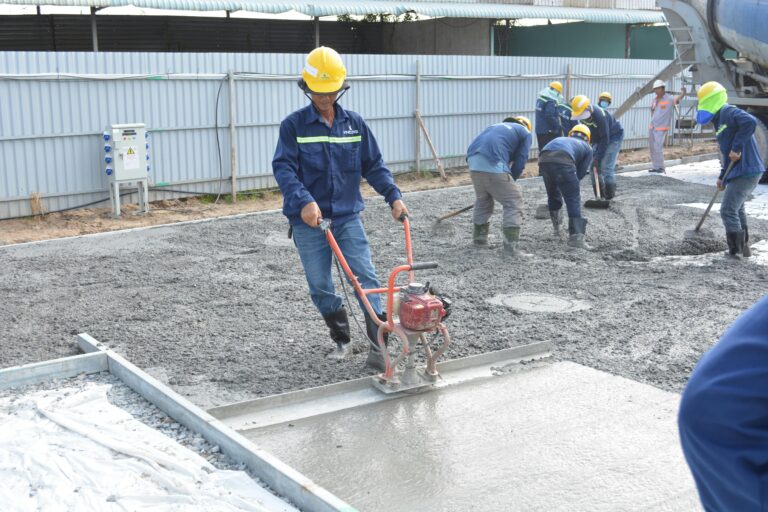
Surface vibrators form another category and are commonly used for relatively thin slabs and pavement applications.
How Do You Know When Concrete Is Properly Vibrated?
No single surface sign proves that an entire member is perfectly consolidated.
The operator has to combine several observations.
I look for the concrete to settle, large bubbles to decrease, mortar to become visible at the surface, and the mix to close behind the vibrator during withdrawal.
At that point, continued vibration usually provides little benefit.
The practical rule is straightforward:
Place the concrete close to its final position, vibrate each area completely, overlap the vibration zones, and move on when consolidation stops improving.
FAQs
How long should concrete be vibrated?
There is no universal time. Several seconds per insertion may be enough in many placements, but the concrete should control the decision. Stop when settlement slows, large air bubbles have largely stopped, and further vibration is no longer improving consolidation.
What happens if concrete is vibrated too much?
Excessive vibration can promote segregation in unstable mixes and may locally disturb the air-void system of air-entrained concrete. Once a location has consolidated properly, move the vibrator to the next insertion point.
What happens if concrete is not vibrated?
Insufficient vibration can leave entrapped air, honeycombing, voids around reinforcement, poor form contact, and localized weak or permeable concrete.
Can a concrete vibrator touch reinforcement?
Occasional contact may occur, but do not deliberately hold or hammer the vibrator against reinforcing steel. Aggressive contact can also damage or move sensitive embedded components.
Should self-consolidating concrete be vibrated?
Normally no. SCC is designed to fill the form and pass around reinforcement under its own weight without conventional internal vibration. Follow the project-specific placement procedure.
Sources
- Federal Highway Administration — structural concrete construction guidance
- Federal Highway Administration — materials-related distress in concrete pavements
- Federal Highway Administration — self-consolidating concrete
- Federal Highway Administration — Post-Tensioning Tendon Installation and Grouting Manual
- Wacker Neuson — concrete consolidation with internal vibrators