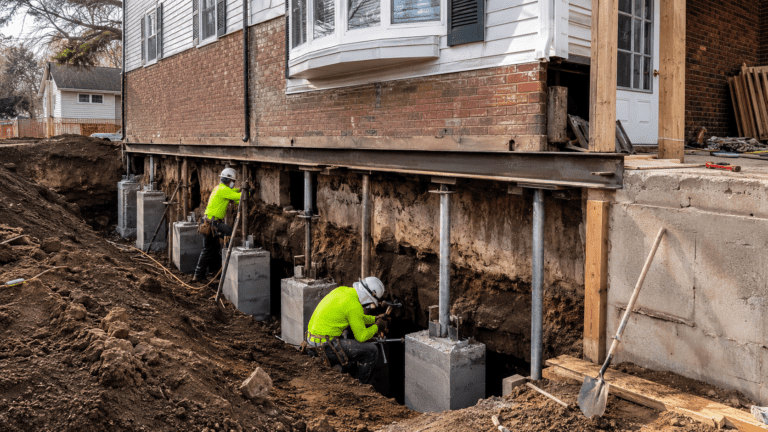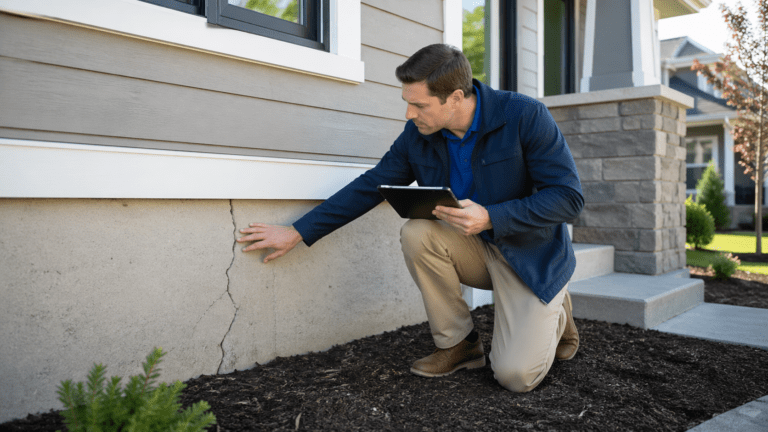
Basement Wall Crack Repair Cost: 2026 Prices by Crack Type
Most stable basement wall cracks that only need professional injection cost about $350 to $900 per crack. Longer cracks, difficult access, extensive preparation, or some epoxy repairs can push the price toward $1,500.
The bill rises quickly when the crack comes with wall bowing, foundation settlement, or a larger water problem. In those cases, you are no longer paying only to fix a crack. You are paying to stabilize the wall or foundation.
Table below quick reference repair scope and planning costs for typical basement wall issues.
| What you see | Typical repair scope | 2026 planning cost |
|---|---|---|
| Stable hairline or vertical crack | Injection or sealing | $350–$900 typical; up to about $1,500 for more involved repairs |
| Stable leaking crack | Polyurethane injection | $350–$900 per crack |
| Horizontal crack, wall still straight | Evaluation plus appropriate crack repair | Often $350–$1,500 if injection is suitable |
| Horizontal crack with wall bowing | Wall stabilization | Often $3,000–$15,000+ per wall/project |
| Bowed basement wall | Carbon fiber, braces, anchors, or tiebacks | Several thousand dollars in many cases |
| Stair-step crack with settlement | Foundation diagnosis and possible stabilization | Project-specific |
| Severe wall displacement or deterioration | Structural repair or reconstruction | Often five figures |
These are planning ranges, actual prices may vary. Crack direction can help identify the problem, but the repair method and amount of structural work dictate the final price.
Basement Wall Crack Repair Cost by Crack Type
Two basement cracks that look similar can lead to very different repair bills.
The key question is whether the wall is stable. A stable crack may need a minor localized repair. A wall that is bowing, shifting, or settling requires a larger structural solution.

Vertical and horizontal basement wall cracks can lead to very different repair scopes and costs.Vertical Basement Wall Crack Repair Cost
A stable vertical crack in a poured concrete basement wall is often one of the less expensive repairs.
If water is entering through the crack and the wall is not moving, polyurethane injection may be appropriate. If a suitable dormant concrete crack needs bonding, epoxy injection may be used.
For planning, CED uses:
| Repair | Planning cost |
|---|---|
| Polyurethane injection | $350–$900 per crack |
| Epoxy injection | $500–$1,500 per crack |
A vertical crack is not always harmless.
A crack that keeps widening, has displacement across it, or appears with other signs of foundation movement needs more investigation before anyone simply fills it.
If you are still trying to determine what the crack pattern means, start with our Foundation Crack Repair guide.
Horizontal Basement Wall Crack Repair Cost
A horizontal crack is often more serious and can become much more expensive when the basement wall is also moving inward.
Foundation walls resist lateral loading from the surrounding soil. That can cause horizontal cracking.
A horizontal crack by itself does not tell you that the repair will cost $10,000.
If the wall remains straight and the crack is stable, the repair may stay relatively localized.
If the wall has measurable bowing, rotation, or displacement, the contractor is usually pricing wall stabilization, not simply crack injection. This category is covered in next section.
Bowing Basement Wall Crack Repair Cost
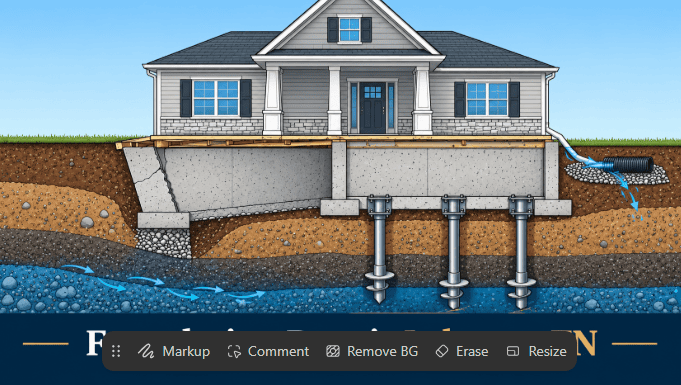
Once a cracked basement wall has bowed inward, the job moves into a different repair category. The diagram shows the possible consequences of bowed basement wall.

Bowing basement walls can develop horizontal cracks when lateral soil pressure pushes the wall inward.The useful question is no longer:
How much does it cost to fill this crack?
It becomes:
How much does it cost to stabilize this wall?
A bowing-wall project can often cost about $3,000 to $15,000 or more, depending on wall length, movement, access, and the repair system.
| Wall repair method | CED planning allowance |
|---|---|
| Carbon fiber strap | $400–$900 each |
| Wall anchor | $400–$1,000 each |
| Steel wall brace | $500–$1,200 each |
| Helical tieback | About $1,000–$3,000 each |
A complete wall usually needs several straps, braces, anchors, or tiebacks. Do not compare the price of one reinforcement point with the total cost of stabilizing the wall.
Carbon fiber repair method generally helps restrain further movement. It does not automatically straighten a wall that has already bowed significantly.
Stair-Step Crack Repair Cost in a Block Basement Wall
Stair-step cracks usually follow the mortar joints in a concrete block wall.
Concrete masonry behaves differently from a monolithic poured wall, so these cracks should not be priced using the same assumptions as a simple poured-concrete injection.
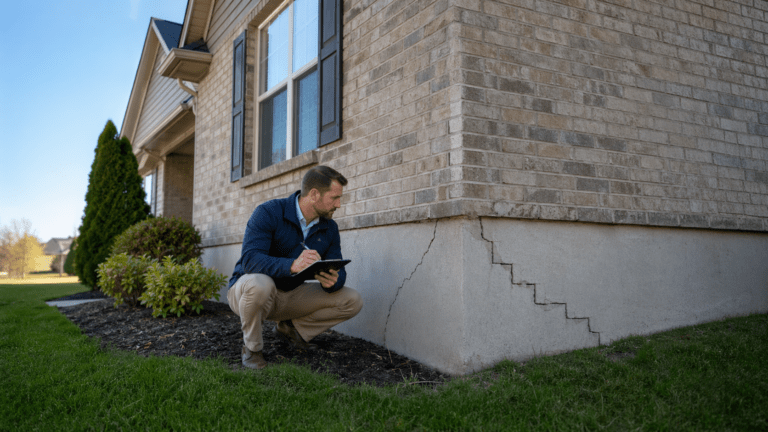
CMHA identifies differential foundation settlement as one possible cause of stair-step cracking in masonry. This concept is shown below.
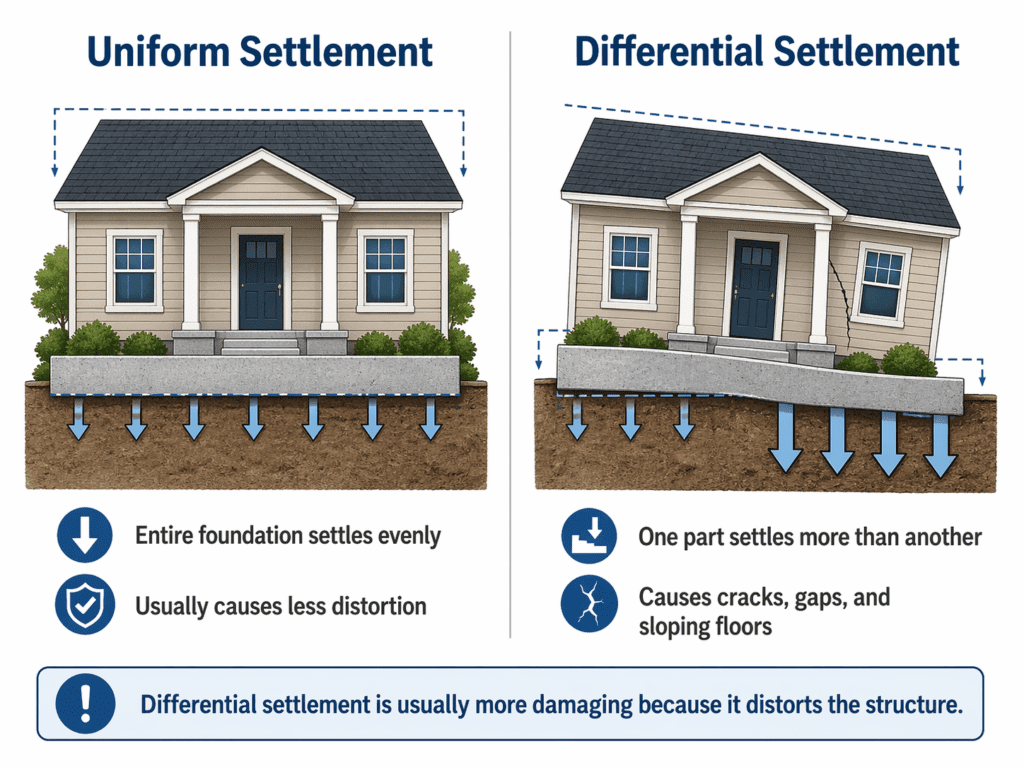
That does not mean every stair-step crack requires underpinning.
The important questions are whether the crack is stable, whether adjacent blocks have shifted, and whether the foundation is still moving.
If the problem is limited to masonry repair, the cost may remain relatively modest. If the footing or supporting soil is moving, foundation stabilization becomes the larger part of the job.
For more on CMU basement walls, see our Concrete Block Foundation guide.
Leaking Basement Wall Crack Repair Cost
A leaking basement crack does not automatically mean the wall has a structural problem.
A stable crack can simply provide a direct path for water through poured concrete.
For a localized leaking crack, CED uses about $350 to $900 per crack as a planning range for professional polyurethane injection.
The scope changes when water enters in several places.
Water along the wall-floor joint, widespread damp masonry, repeated seepage across several walls, or groundwater entering after heavy rain can indicate a broader drainage or waterproofing problem.
At that point, pricing one crack injection will not tell you the cost of fixing the basement.
Our Basement Waterproofing Cost guide covers that larger scope separately.
Why One Basement Crack Costs $500 and Another Costs $10,000
This is where many basement repair estimates become confusing.
A $600 crack injection and an $8,000 stabilization system are not necessarily competing prices for the same repair.
The work usually falls into one of four categories:
| Repair scope | What the contractor is solving |
|---|---|
| Crack repair | Closing, bonding, or sealing a stable crack |
| Wall strengthening | Resisting further basement-wall movement |
| Foundation stabilization | Correcting settlement or support problems |
| Water management | Reducing or redirecting water affecting the foundation |
A lower-cost quote may only involve cleaning and injecting a stable crack.
A higher quote may include carbon fiber, steel, anchors, or tiebacks because the wall has moved.
Another may include underpinning because the footing is settling.
Another may include excavation, drainage, or waterproofing.
9 Things That Change Basement Wall Crack Repair Cost
1. Whether the Wall Is Moving
This is usually the biggest cost divider.
A stable crack may remain a localized repair. A bowing or settling wall turns the project into structural work.
2. Crack Length and Condition
A longer crack can require more preparation, injection ports, material, and labor.
Crack width matters too, but width alone does not tell you whether the wall has a structural problem.
Movement and displacement matter more than one isolated measurement.
3. Water Leakage
A wet crack may require a different repair material.
Widespread water entry can change the project from localized crack repair to drainage or waterproofing.
4. Poured Concrete vs. Block
The wall construction changes how the crack behaves and which repair systems are practical.
5. Number of Cracks
Professional injection is commonly priced per crack.
Contractors may also have a minimum service charge. When several cracks are repaired during the same visit, later cracks may cost less per crack because mobilization and setup are already covered.
6. Finished Basement Walls
Drywall, framing, insulation, flooring, cabinets, or other finishes may need to be removed before the contractor can reach the foundation wall.
Ask whether putting those finishes back is included.
7. Interior and Exterior Access
Poor interior access can slow injection or bracing work.
Exterior excavation costs more when crews must work around patios, decks, driveways, utilities, landscaping, or narrow side yards.
8. Previous Repairs
Old sealants, coatings, hydraulic cement, or failed repairs can increase preparation time.
9. Local Labor and Permit Costs
Labor rates, contractor minimums, permit requirements, and competition vary across the United States.
Use national prices for early planning. Replace them with local quotes once you know the actual repair scope.
Common Basement Wall Crack Repair Methods
Epoxy Injection
Epoxy injection can bond an appropriate concrete crack and restore continuity across the cracked section.
It should not be treated as a universal foundation repair.
The American Concrete Institute’s Structural Crack Repair by Epoxy Injection guidance emphasizes assessing the cause of cracking before choosing the repair. Epoxy is generally suited to cracks where significant subsequent movement is not expected.
CED uses:
$500 to $1,500 per crack
as a planning range for professional epoxy injection.
The price can increase when the crack is long or access is poor. The cost can also increase if previous patching must be removed, or extensive surface preparation is needed.
Polyurethane Injection
Polyurethane injection is commonly used when the main objective is controlling water leakage through a crack.
CED uses:
$350 to $900 per crack
as a planning range.
Epoxy and polyurethane are not interchangeable simply because both can be injected. The table below can be used to differentiate between different repair methods.
| Method | Main role |
|---|---|
| Epoxy injection | Bonding an appropriate stable concrete crack |
| Polyurethane injection | Sealing a leaking crack |
| Carbon fiber | Strengthening or restraining a wall |
| Anchors, braces, or tiebacks | Stabilizing a bowed wall |
| Piers or underpinning | Stabilizing settlement-related foundation movement |
Neither injection method stabilizes a wall that continues to bow inward.
Carbon Fiber Straps
Carbon fiber changes the scope from crack filling to wall strengthening.
CED uses about $400 to $900 per strap as a planning allowance.
A complete wall normally needs several straps, so the total project can reach several thousand dollars.
The wall must also be suitable for the system. Carbon fiber does not lift a settling footing or correct severe foundation displacement.
Wall Anchors, Steel Braces, and Tiebacks
These systems are used to stabilize some bowed basement walls.
For early budgeting, CED uses approximately:
- Wall anchors: $400–$1,000 each
- Steel braces: $500–$1,200 each
- Helical tiebacks: about $1,000–$3,000 each
The total depends on the number of reinforcement points required.
Some anchor or tieback systems also require exterior access and adequate working space outside the wall.
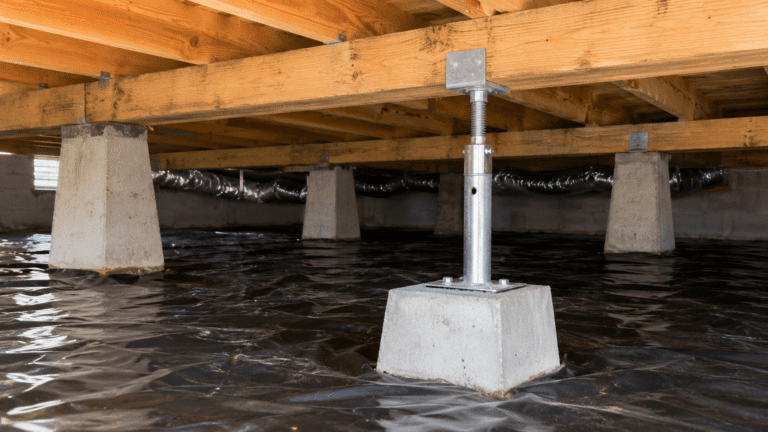
Underpinning and Foundation Piers
Underpinning is not an expensive way to fill a basement crack.
It addresses a foundation support problem.
If the wall cracked because the footing or another part of the foundation is settling, that movement may need to be stabilized before the crack itself becomes the main repair issue.
Signs such as worsening stair-step cracks, sloping floors, sticking doors, or growing gaps elsewhere can support a settlement diagnosis, although none proves settlement by itself.
Severe Wall Damage or Reconstruction
Some basement walls are too displaced or deteriorated for injection or a simple reinforcement system to provide a sensible repair.
Major work can include excavation, temporary support, demolition, rebuilding, reinforcement, waterproofing, drainage, backfill, and restoration.
At that point, a cost per crack no longer means much. The contractor is repairing or rebuilding a structural wall.
Poured Concrete vs. Block Basement Wall Repair
Wall construction changes both the repair method and the cost.
A poured concrete wall has a relatively continuous section. An isolated stable crack can often be accessed and injected from inside the basement.
A concrete block wall contains separate units, mortar joints, and hollow or grouted cells. Cracks can pass through the blocks or follow the joints.
Water can also move through several parts of a masonry wall instead of one obvious crack.
A block-wall repair may therefore involve masonry work, reinforcement, grouting, drainage, wall stabilization, or reconstruction rather than one simple injection.
Do You Need a Structural Engineer?
Not every basement crack needs an engineer.
For a straightforward stable crack, a specialist contractor may be able to identify and repair the problem without a separate structural design.
I would consider an independent structural evaluation when the wall is visibly bowed or displaced, cracks continue changing, settlement symptoms appear elsewhere, previous repairs have failed, or contractors are proposing major structural work.
For budgeting, allow roughly $300 to $900 for a foundation-focused structural engineer inspection and report in many U.S. markets.
Detailed calculations, repair drawings, additional visits, or stamped plans can cost more.
The engineer’s job is not simply to confirm that a crack exists.
The value is determining what is moving, why it is moving, and what actually needs to be stabilized before you commit to an expensive repair.
DIY vs. Professional Basement Crack Repair
DIY crack-repair kits cost much less than professional work.
The main risk is not the cost of the kit. It is misdiagnosing the problem.
A stable, well-understood crack may be reasonable for a homeowner to seal.
I would not treat the job as a simple DIY crack repair when the wall is bowing, masonry has shifted, the crack keeps reopening, significant water entry continues, or other settlement symptoms are present.
The expensive DIY mistake is assuming the wall only needs epoxy when the wall is still moving.
What Should a Basement Wall Crack Repair Quote Include?
Compare contractor prices only after confirming that they cover the same work.
A useful proposal should identify the wall type, crack location, suspected cause, repair method, number of cracks, number of straps or anchors, drainage or waterproofing work, excavation, removal of interior finishes, engineering, permits, cleanup, restoration, warranty, and exclusions.
A $700 injection quote and a $7,000 wall-stabilization quote are not necessarily two prices for the same repair.
Read the scope before comparing the totals.
Basement Wall Crack Repair Cost: What to Budget
For a typical stable basement wall crack, start with about $350 to $900 per crack for professional injection.
More involved injection repairs can approach $1,500.
If the wall is bowing or the crack is tied to foundation movement, stop thinking in terms of a price per crack. The project may require several thousand dollars of wall stabilization or a larger foundation repair.
The most useful way to compare estimates is to determine what each contractor is actually repairing.
For a broader estimate that includes crack injection, carbon fiber, wall anchors, steel braces, piers, drainage, engineering, permits, and other foundation work, use our Foundation Repair Cost Calculator.
FAQs
How serious is a crack in a basement wall?
A stable crack can remain a localized repair. A crack deserves more investigation when it is widening, displaced, associated with wall bowing, or appears with other signs of foundation movement.
Can a basement wall crack be repaired from the inside?
Yes. Many accessible poured concrete cracks can be professionally injected from inside the basement.
That does not mean every drainage or structural problem can be corrected from inside.
How much does epoxy injection cost for a basement crack?
CED uses $500 to $1,500 per crack as a 2026 planning range for professional epoxy injection.
Access, crack length, preparation, previous repairs, and contractor minimum charges can change the final price.
Is a horizontal basement wall crack expensive to repair?
Not simply because it is horizontal.
The price becomes much higher when the wall has also bowed or moved and needs structural stabilization.
How much does it cost to fix a bowing basement wall?
A bowing-wall project often costs several thousand dollars, with many larger projects falling around $3,000 to $15,000 or more depending on wall length, movement, access, and the stabilization system used.
Does homeowners insurance cover basement wall crack repair?
Coverage depends on the cause of the damage and the wording of the policy.
Gradual settlement, deterioration, and long-term water problems may be treated differently from damage caused by a sudden covered event. Check the policy and ask the insurer about the specific cause before assuming the repair is covered.
When should I call a structural engineer?
Consider an engineer when the wall is visibly bowed or displaced, cracks continue changing, settlement symptoms appear elsewhere, major structural work is proposed, or contractors recommend very different high-cost repairs.